14 June 2026
Daily Newsletter
UK: Starmer Orders Social Media Companies to Add Nudity Filters for Children
The Facts
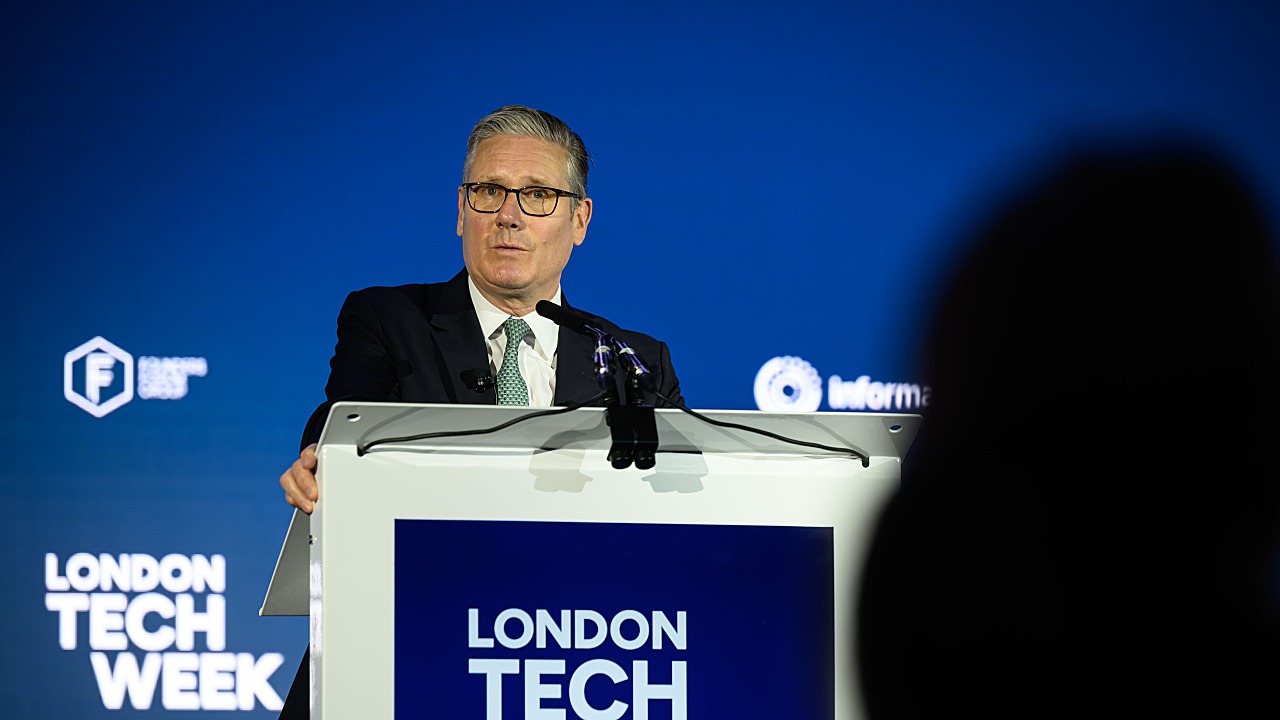
U.K. Prime Minister Keir Starmer announced in a speech at London Tech Week on Monday that Apple and Google have three months to install nudity-detection software on devices to prevent children from taking, sharing or viewing explicit images, or face legislation.
Starmer also claimed that, if tech companies fail to comply within 90 days, the government will introduce legislation that could expose firms to fines, restrictions on device sales to minors or criminal penalties.
This comes as multiple news sources reported on Sunday evening that the prime minister is set to announce a full ban on some social media platforms for under-16s ahead of the Makerfield by-election on June 18.
The Spin
Pro-government narrative
By becoming the first country in the world to ban youth from taking, sharing or viewing nude images on social media, this government is positioning itself as a leading advocate for ensuring child safety online. Consultation submissions from parents and carers overwhelmingly show that platforms are not deemed conducive to adolescent wellbeing, damaging the next generation. The message is now clear Big Tech must finally step up or face the full weight of the law.
Government-critical narrative
Starmer's three-month ultimatum to Apple and Google is toothless. Tech giants have every incentive to drag their feet and every reason to believe nothing will happen after years of poor enforcement, while the data shows social media has already exposed millions of children to direct harms like sextortion and cyberbullying. The threat of legislation, rather than actually enforcing changes, is yet another sign of weakness in the face of Big Tech.
Techno-optimist narrative
Apple, Google and Meta already have robust, industry-leading child safety tools in place ranging from on-device nudity detection to hash-matching technology and zero-tolerance exploitation policies. These companies actively collaborate with NGOs, law enforcement and global partners to protect kids online. Threatening new legislation shows a lack of awareness surrounding the ongoing investment tech platforms have already made in keeping children safe.
Establishment-critical narrative
By implementing age-dependent guardrails, Big Tech firms will necessarily have to scan all social media communications on behalf of the government, constituting an unprecedented infringement of data privacy. Meanwhile, an under-16 social media ban forces youth to consume only propaganda from the established legacy media. Under the guise of child safety, Starmer is quietly realizing an Orwellian state.
Nerd narrative
There is a 50% chance that at least 79.8% of the world will use the internet by 2032, according to the Metaculus prediction community.
UK Invests £1.1B on Sovereign AI at London Tech Week
The Facts
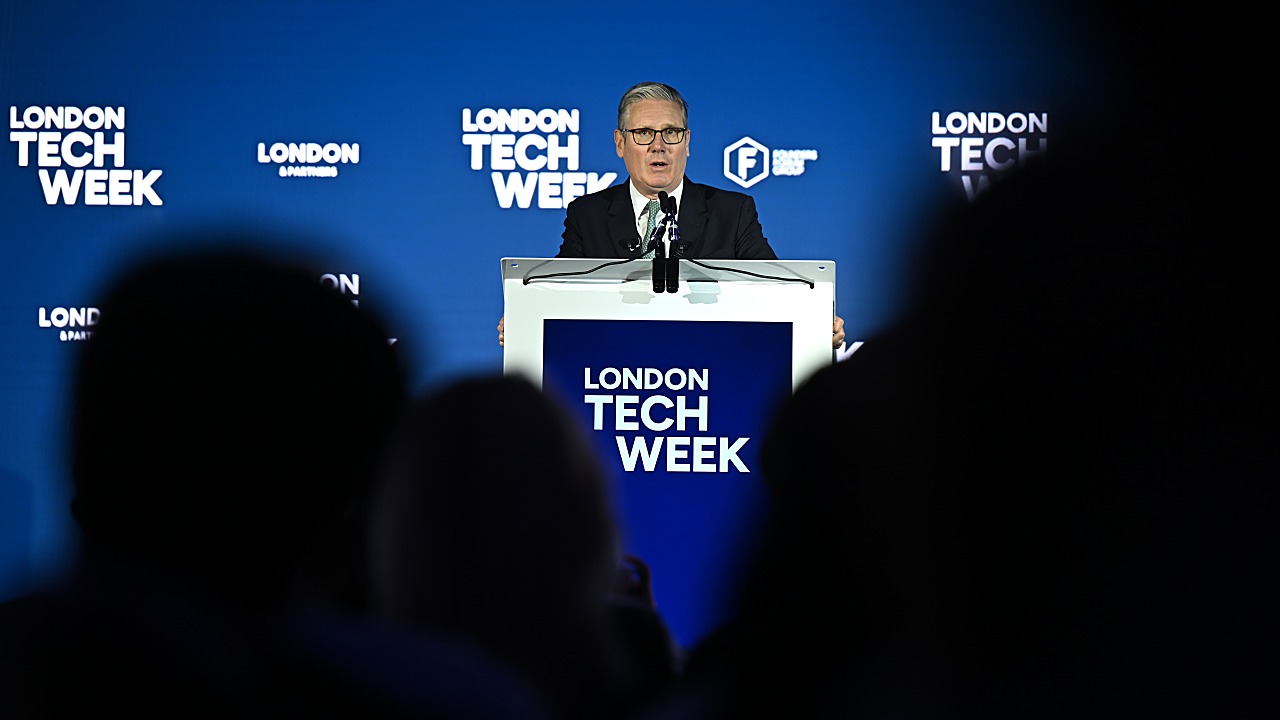
U.K. Prime Minister Keir Starmer used the opening of London Tech Week to announce a £400 million ($534 million) commitment to purchase specialist AI chips as part of a broader sovereign compute strategy, saying Britain's next AI champions should "start here, scale here and stay here."
British AI startup Cosine has assembled a coalition of major U.K. institutions — including BT, HSBC, Lloyds Banking Group, NatWest, BAE Systems and Babcock — to co-design Lumen Sovereign, described as Britain's first sovereign frontier AI model.
Lumen Sovereign will be trained entirely on Isambard-AI, an Nvidia-powered supercomputer based in Bristol, using compute awarded under the U.K. government's £500 million Sovereign AI program, which named Cosine in its first cohort in April.
The Spin
Pro-government narrative
Britain's £1.1B AI Hardware Plan is exactly the kind of bold, strategic investment that keeps the U.K. competitive in the global AI race. Backing domestic chip companies, expanding supercomputing capacity and funding skills pipelines ensures Britain builds and controls the technology its economy depends on. This is a deliberate push to make Britain an AI maker, not just a consumer of foreign-built systems.
Government-critical narrative
Lumen Sovereign is still a collection of memoranda, not contracts, and training a frontier model from scratch to defense-grade assurance standards by the end of 2026 is a formidable challenge Britain has stumbled on before. The coalition partners already rely on foreign AI, raising real questions about commitment. Sovereign ambition means little when the chips powering it, including Isambard-AI itself, are still American-made.
OpenAI Confidentially Files for US IPO

The Facts
OpenAI on Monday filed a confidential S-1 with the U.S. Securities and Exchange Commission, moving toward a potential initial public offering. The company said it has not decided on timing, noting "it may be a while" as some steps are easier to complete as a private company.
OpenAI is working with Goldman Sachs and Morgan Stanley on a potential listing as soon as autumn 2026. The company also plans to conduct a share tender offer in the coming weeks to provide employees with liquidity ahead of any public offering.
OpenAI's confidential filing follows rival Anthropic's disclosure that it, too, had filed for a U.S. IPO, while Elon Musk's SpaceX, which absorbed xAI in a February 2026 merger, is also on the verge of going public at a roughly $1.77 trillion valuation.
The Spin
Narrative A
OpenAI's confidential S-1 filing marks a turning point for AI — public markets are finally opening up to the biggest names in the space. With a valuation north of $850 billion, OpenAI joins SpaceX and Anthropic in a historic sprint toward public listings. The next chapter of AI won't just be written in research labs; it'll be written by everyday investors.
Narrative B
The hottest name in tech, OpenAI, started as a nonprofit meant to benefit humanity and is now chasing an $850 billion stock market valuation — that's a pretty telling reversal. Rushing to cash out at insane multiples while missing internal revenue targets looks less like a new AI era and more like a classic top signal.
Narrative C
Retail investors should approach high-profile IPOs with caution. If enormous profits truly remained on the table at the offered valuation, insiders would likely keep those gains for themselves rather than share them with the public. Companies often go public when early investors seek liquidity and an exit path. That doesn't guarantee poor returns, but it does mean retail buyers may be purchasing after much of the easy upside has already been captured.
Nerd narrative
There's a 50% chance that OpenAI will reach its profit cap for the first round of investors by 2035, according to the Metaculus prediction community.
Apple Unveils Overhauled Siri AI at WWDC 2026
The Facts
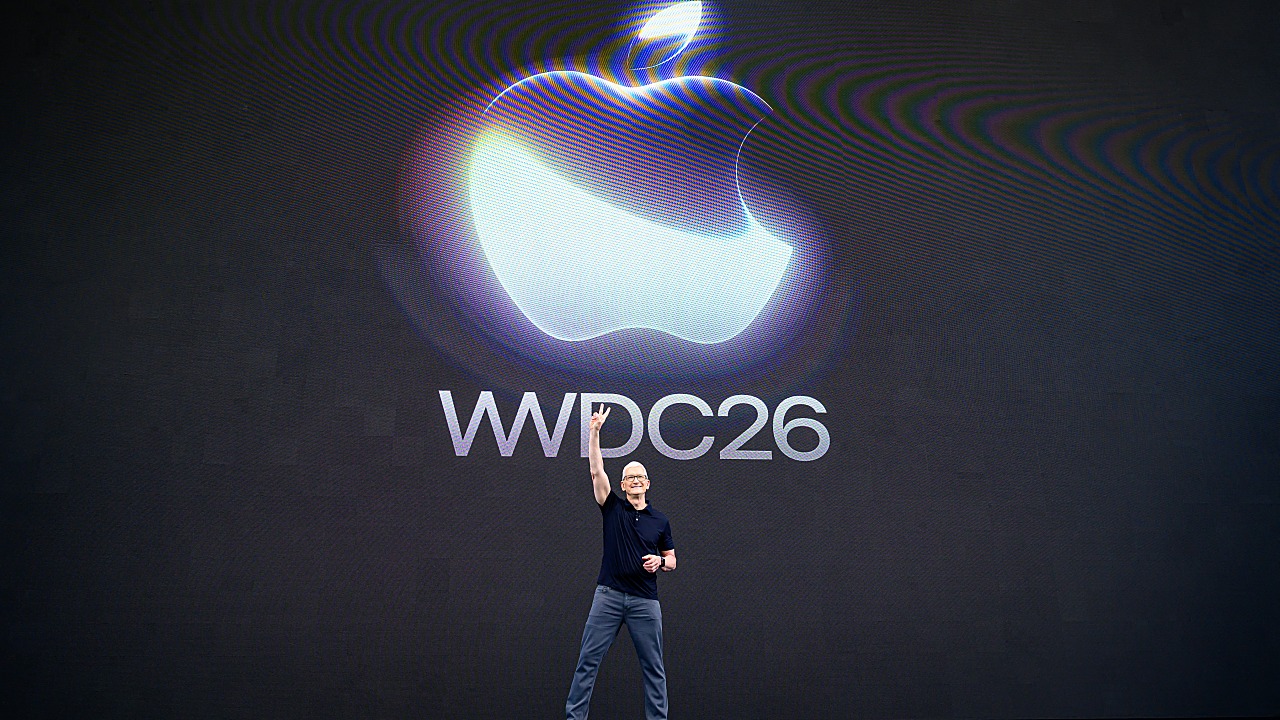
Apple unveiled Siri AI at its annual Worldwide Developers Conference (WWDC) in Cupertino, California, on Monday, an overhaul of its voice assistant that includes a new dedicated app, integrated writing tools and expanded Visual Intelligence.
The feature will initially launch later in the year in English on supported devices, with additional languages to follow. The assistant, however, will not be available on iPhones or iPads in the EU at launch, and will be absent entirely from China while Apple addresses regulatory requirements.
It is powered by Apple Intelligence, a system that runs on Apple's next-generation Foundation Models developed in collaboration with Google. These models, in turn, run both on-device and on servers via Apple's Private Cloud Compute system, which does not store or share user data.
The Spin
Narrative A
Apple's Siri overhaul sets the right foundation for what's coming next. Crucially, it finally introduces functions users have always wanted searching messages, contacts and Maps history while taking practical actions like adding calendar events and sending iMessages. This update isn't flashy, but it builds a solid, functional AI core heading into the next wave of Apple devices.
Narrative B
While Apple wasted years delaying Siri's overhaul, consumers got comfortable with the expansive experience offered by the likes of ChatGPT and Gemini. As a result, when Apple finally announced Siri AI, it landed with a thud, with AAPL shares falling in real time. Simply put, the product is too limited to compete with its rivals, which are light-years ahead.
Nerd narrative
There's a 50% chance that OpenAI will release GPT-6 by November 2026, according to the Metaculus prediction community.
Report: Ukraine Killed Russian Soldiers With Autonomous Drones

The Facts
According to a New Scientist interview with Ukrainian drone-maker Alexander Kokhanovskyy published on Wednesday, the Ukrainian military tested 10 AI-controlled "Terminator" drones two years ago near Bakhmut and Chasiv Yar, resulting in confirmed casualties of Russian soldiers and a truck.
Kokhanovskyy, who supplied the technology, said the drones, which can cover 3 to 5 kilometers (1.8-3.1 miles), were programmed to destroy everything in a designated area, with human-piloted drones sent in afterward to verify results. He said the test was never implemented more widely.
Ukraine's government currently bans fully autonomous AI operations at the final targeting stage, though AI is used throughout earlier phases. Major Danylo Polozhukhno of Ukraine's 21st Separate Unmanned Systems Regiment said his unit always keeps a human in the loop.
The Spin
Pro-Ukraine narrative
Ukraine's AI drone program represents a genuine leap forward in modern defense, automating up to 95% of Shahed interception without removing human oversight at the critical final stage. The one-off Terminator test near Bakhmut showed what's possible, but Ukraine has kept strict rules in place and is actively working with defense firms to ensure accountability. This is responsible innovation under fire, not reckless experimentation.
Pro-Russia narrative
Ukraine's AI drones can't reliably distinguish military from civilian targets, and the record of stray Ukrainian drones hitting Romania, Finland, Estonia, Latvia and Greece proves the program is dangerously out of control. Five Azerbaijani sailors were killed when Ukrainian drones struck civilian cargo ships, and a Latvian government collapsed over an errant strike. Calling this responsible innovation ignores a mounting body count of unintended victims.
Cynical narrative
Some of these new AI drones may be more accurate than yesterday's weapons, but that's missing the larger point. Every breakthrough in autonomy makes war cheaper, faster and easier for governments to wage. Today the debate is whether humans remain "in the loop." Tomorrow it will be how much oversight can be removed without sacrificing effectiveness. As swarms, AI targeting and autonomous navigation spread to every major military, the real danger isn't who gets the technology first. It's a future where war becomes so low-cost and politically painless that leaders have fewer reasons to avoid it in the first place.
Anthropic CEO Urges Federal AI Rules, Warns of Job Losses

The Facts
Anthropic CEO Dario Amodei on Wednesday published an essay titled "Policy on the AI Exponential" calling for binding federal AI regulations, proposing a framework modeled on the FAA, mandating third-party safety testing for frontier models.
Amodei released the essay alongside Anthropic's two formal policy proposals — the Advanced AI Framework and the Economic Policy Framework — and the launch of Claude Fable 5 and Mythos 5, his firm's most powerful models to date.
Amodei cited Anthropic's Claude Mythos Preview as evidence that frontier AI models pose cybersecurity risks to financial systems and critical infrastructure, warning that biological threats and AI autonomy risks could follow.
The Spin
Narrative A
Federal AI regulation is long overdue, and the risks are no longer theoretical — frontier models already pose real cybersecurity threats to critical infrastructure and national security. Mandatory third-party testing, deployment authority and strong safety standards are the bare minimum needed to keep pace with exponential AI progress. Job displacement is a genuine danger too, and wage insurance, retention incentives and long-term income support must be part of any serious policy response.
Narrative B
Amodei's policy framework is sedation dressed up as solution — FAA-style testing cannot regulate a technology dissolving invisibly into every workflow on Earth. The labor proposals amount to a velvet-lined coffin tracking displacement, bribing firms to keep workers and offering wage coupons for downward mobility. Once a CEO concedes labor demand may never recover, the conversation stops being about incentives and starts being about who controls the economy when wages no longer matter.
Nerd narrative
There is a 10% chance the CEO of OpenAI, Meta, or Alphabet (Google) will publicly commit to specific limitations on their company’s AI system autonomy before Jan. 1, 2027, according to the Metaculus prediction community.
Munich Court Says Google Liable for 'AI Overviews'

The Facts
The Regional Court of Munich issued an injunction on May 28 against Google, barring it from repeating false claims about two Munich-based publishers after its AI Overviews linked them to scams and questionable business practices.
It classified Google as a direct infringer, ruling that AI Overviews generate "independent, new, and substantive statements" by combining third-party content — unlike traditional search results, which only direct users to websites.
The court found the AI had mixed up information about unrelated companies, creating connections that did not appear in any linked sources. Google was ordered to cover 80% of legal costs, with each publisher paying 10%.
The Spin
Narrative A
Google's AI Overviews are original documents the company creates, and a Munich court got that right. The AI invents claims out of thin air, confidently presents false information as fact, and reaches 2 billion users monthly, meaning billions of incorrect queries every year. Letting Google dodge liability by calling it a search engine would be a legal fiction that lets a defective product keep harming real people.
Narrative B
The Munich ruling is a troubling legal overreach that could spread through international courts and distort how AI-powered search is regulated globally. Holding Google liable for AI-generated content sets a dangerous precedent that misclassifies algorithmic output as editorial speech — a framework that would be unworkable for generative AI at scale. This signals that activist courts are willing to dismantle the platform liability protections underpinning an open web.
Nerd narrative
There is a 0.1% chance an AI model will be developed before 2030 that can accurately predict local weather patterns up to 6 months in advance, according to the Metaculus prediction community.
Study: 1 in 5 Young Americans Use Chatbots for Mental Health

The Facts
A nationally representative survey of 1,009 U.S. adolescents and young adults aged 12 to 21, conducted in November 2025 and published in JAMA Pediatrics on June 1 this year, found that 19.2% reported using AI chatbots for mental health advice — up from 13.1% in a similar survey a year earlier.
Researchers estimate the 2025 figure represents about 8.2 million young people nationwide, a share now nearly equal to the percentage of adolescents who report receiving counseling from a licensed mental health professional.
Among those who used AI chatbots for mental health advice, 42.8% did so at least monthly and 91.7% rated the advice as somewhat or very helpful, though researchers note this may reflect chatbots' tendency to flatter users rather than the actual quality of guidance.
The Spin
Pro-establishment narrative
Millions of teens are quietly turning to AI chatbots for mental health support, which is a sign that these tools are filling a real gap. With a shortage of licensed professionals and skyrocketing demand, AI is stepping in where the system has failed young people. While adults and mental health professionals should be children's primary sources of help, if chatbots are to be involved, the priority now should be smart regulation and open conversations.
Establishment-critical narrative
Big Tech created the youth mental health crisis through engagement-driven social media, and now it's offering AI companions as the cure. Chatbots are designed to maximize attention and emotional attachment, not promote well-being. Children need real relationships, not synthetic ones engineered for profit, so instead of normalizing AI companions, society should limit children's access to them and ensure the next generation develops empathy, resilience and identity through human connection.
Nerd narrative
There's a 36.6% chance that there will be a major AI-related health care class action lawsuit before 2028, according to the Metaculus prediction community.
Study: Data Center Backlash Blocked $130B in US Projects During Q1 2026
The Facts
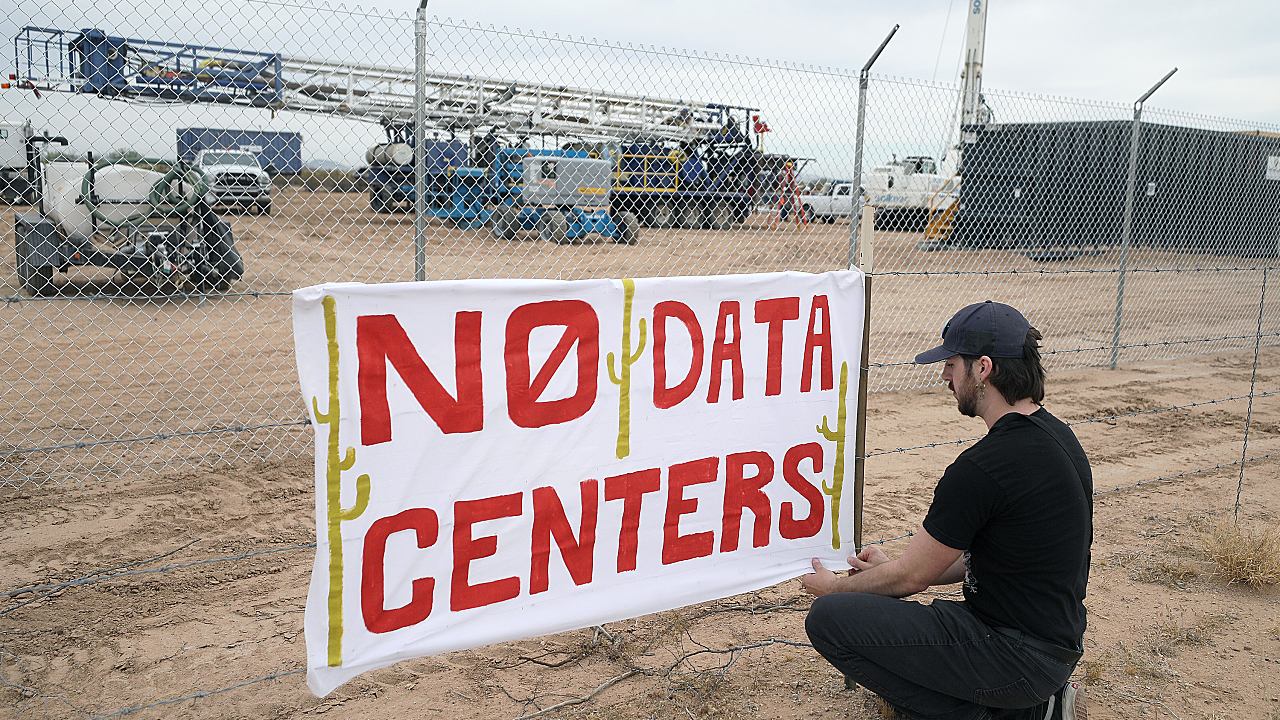
At least 75 data center projects worth roughly $130 billion were blocked or delayed nationwide in the first quarter of 2026, the highest total for any three-month period since tracking began in 2023, according to Data Center Watch.
In New York, lawmakers passed a one-year moratorium on June 5 on permits for new large data centers with peak demand of at least 20 megawatts, sending the bill to Governor Kathy Hochul, who has not committed to signing it.
Maine Governor Janet Mills vetoed a bill that would have imposed an 18-month moratorium on data centers using more than 20 megawatts of power, citing its failure to exempt a proposed $550 million redevelopment at the former Androscoggin Mill in the town of Jay.
The Spin
Establishment-critical narrative
Data center opposition is the working-class pushing back against tech oligopolies that want to extract resources from neighborhoods with little benefit in return. These fights are where real democratic governance of AI is happening, with farmers, union members and indigenous activists demanding a say in how this infrastructure reshapes their lives. Slowing the buildout of capital equipment that enables mass automation and surveillance is one of the few tools left to contest unchecked corporate power.
Pro-establishment narrative
Data center moratoriums don't protect working people — they saddle them with higher costs and fewer jobs while politicians dodge accountability for the energy policies that actually drove up electricity rates. Lumping essential edge facilities in with hyperscalers and burying developers in open-ended environmental reviews guarantees economic stagnation, not equity. Piling on union mandates, renewable-only energy rules and community deal requirements make these laws a job-killing regulatory trap dressed up as public protection.
Narrative C
This doesn't have to be a black-and-white issue, as shown by certain municipalities that have already found common ground between residents and companies, leading to lower property taxes and higher tax revenue. Data centers are enormously profitable, which means they should fund construction themselves and ensure water cooling systems are closed-loop to save resources. The AI boom doesn't have to be a winner-take-all phenomenon, so long as local governments pass mutually beneficial policies.
Trump Admin Order Forces Anthropic to Pull Mythos AI Systems Offline
The Facts
Anthropic disabled its Fable 5 and Mythos 5 AI systems on Friday after U.S. Commerce Secretary Howard Lutnick issued a directive to CEO Dario Amodei placing them under export controls, barring their use by foreign nationals inside and outside the U.S.
Anthropic said it received the directive at 5:21 pm ET and disabled both systems for all customers to ensure compliance, marking what appears to be the first time a leading AI company has taken a publicly deployed system offline due to federal government intervention.
The government cited a potential "jailbreak" — a technique to bypass safety guardrails — as the basis for the order. Anthropic said the vulnerability was narrow and that other publicly available AI systems could expose the same weaknesses without requiring a bypass.
The Spin
Establishment-critical narrative
This appears to be retaliation for Anthropic's refusal to meet Pentagon demands. The jailbreak cited as justification was demonstrated verbally, had no written explanation and involves capabilities already available in public systems. Forcing foreign-national employees — who helped build these systems — out of access is the kind of heavy-handed overreach that drives talent to China and spooks investors.
Pro-establishment narrative
Anthropic's leadership has spent years pushing for regulatory capture and opposing open systems — not out of concern for humanity, but to consolidate power and profit. Fable 5 being a great coding system doesn't excuse that. Doctors and cancer researchers can't afford months of delay while Anthropic plays politics — the real threat to humanity is the small group of people maneuvering to control it.
Narrative C
This is a monster signal — the moment frontier AI ceased being mere software and became strategic infrastructure. The focus is not customers but foreign-national employees, revealing a shift from controlling hardware to controlling cognitive access itself. That is weapons-control logic applied to intelligence. It's clear that advanced AI now sits within a national security perimeter, where access, collaboration and deployment are subject to sovereign authority.
Narrative D
This is your wake-up call. Frontier AI access can disappear overnight, revoked by corporate decisions, regulation or geopolitical pressure. But local systems are different. Once the capability sits on hardware you control, it becomes far harder to restrict. As AI grows more powerful, governments and companies will exert greater influence over access. The emerging divide is not just between systems, but between dependence and technological self-sufficiency.
Nerd narrative
There's a 41.9% chance that the U.S. government will mandate security clearance for employees who lead research and development on the top systems at OpenAI, DeepMind or Anthropic before 2028, according to the Metaculus prediction community.


© 2026 Improve the News Foundation.
All rights reserved.
Version 7.18.3