18 June 2026
Daily Newsletter
Trump, Pezeshkian Sign US-Iran MoU
The Facts
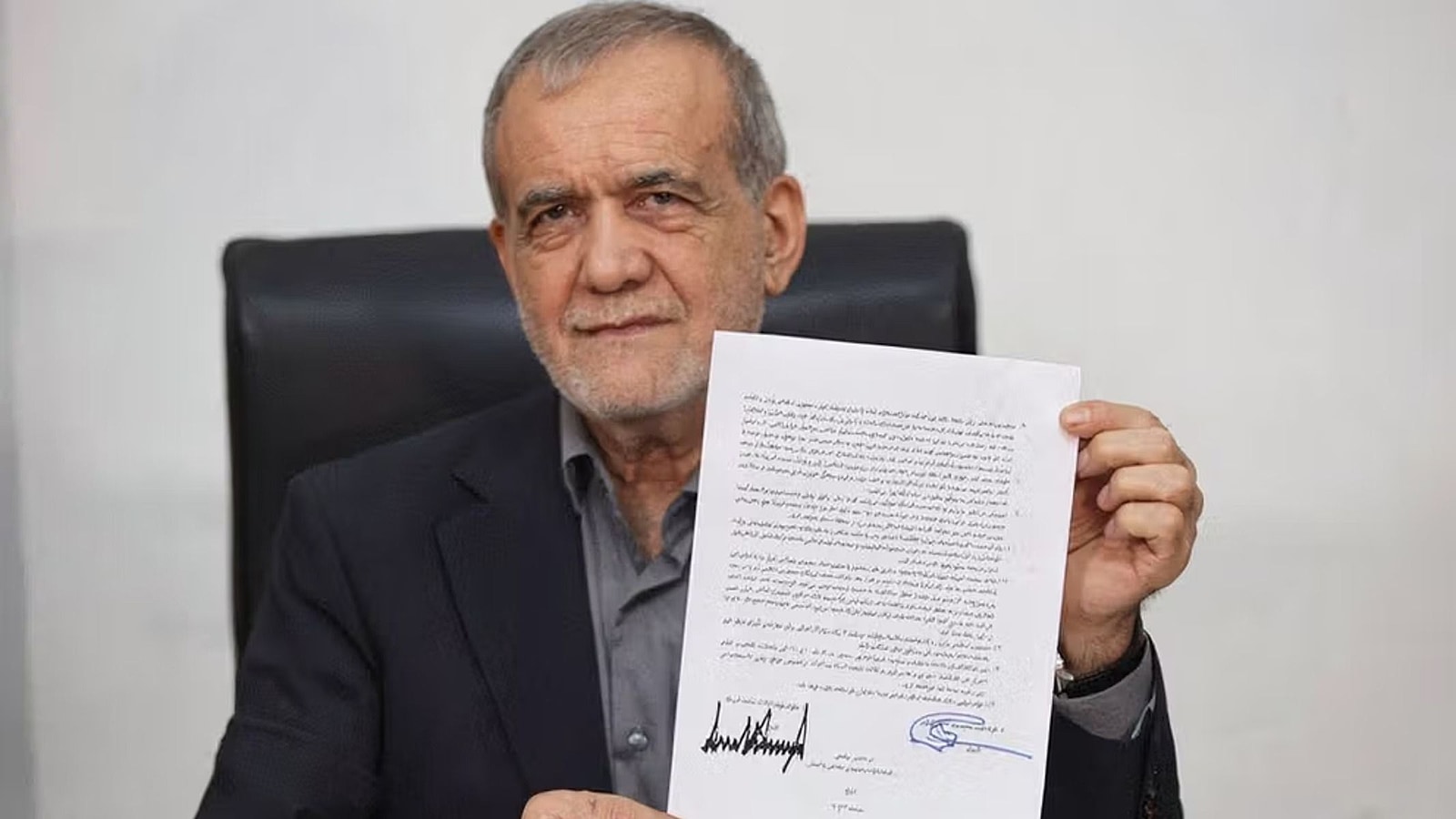
U.S. President Donald Trump on Wednesday signed a memorandum of understanding with Iran at the Palace of Versailles during a G7 summit dinner hosted by French President Emmanuel Macron. Iranian President Masoud Pezeshkian subsequently signed the document to finalize the accord.
The 14-point agreement commits both nations to negotiating a final deal within 60 days and declares the immediate and permanent end of military operations on all fronts, including in Lebanon. The final deal is to be endorsed by a binding U.N. Security Council resolution.
Under the accord, the U.S. will begin lifting its naval blockade immediately and fully end it within 30 days, while Iran will ensure free passage for commercial vessels through the Strait of Hormuz for 60 days. Pakistan's Prime Minister Shehbaz Sharif said the Strait would reopen "instantly."
The Spin
Pro-Trump narrative
The U.S.-Iran memorandum of understanding is a smart, flexible framework that prioritizes stopping Iran from ever building a nuclear weapon — the only goal that truly matters. Trump made clear the day window isn't a hard deadline, signaling a pragmatic approach over rigid timelines. Keeping Iran in check while leaving room for diplomacy is the kind of deal-making that protects American interests.
Pro-Iran narrative
Iran signed this MoU from a position of strength, not surrender — missile capabilities aren't off the table, enriched uranium stays in Iran, and oil sanctions are already being lifted. The agreement reflects Iran's military and diplomatic achievements, and Tehran will monitor every U.S. commitment without leniency. Any failure by Washington to comply means Iran walks back its own obligations, period.
Anti-Trump narrative
Iran emerged from the conflict with its core objectives intact control of the Strait, a surviving regime and an undamaged ballistic missile program. Meanwhile, Trump abandoned Obama's JCPOA, only to spend billions on an illegal war, leave hundreds of Americans injured, contribute to the deaths of over 150 children and drive up oil prices — ultimately seeking a deal that closely resembled the one he had dismantled in the first place.
Pro-Israel narrative
For Israel, the U.S.-Iran deal risks turning military gains into a strategic defeat. Iran's regime survives, its missile program remains largely untouched and sanctions relief could help rebuild its regional influence. While Washington celebrates de-escalation, Israel is left facing the same threats that sparked the conflict. A deal that rewards Tehran without dismantling its ability to project power may buy temporary calm at the cost of long-term security.
Nerd narrative
There's a 51% chance that the United States and Iran will sign a new agreement restricting Iran's nuclear program before 2029, according to the Metaculus prediction community.
EU Greenlights Offshore Migrant 'Return Hubs'

The Facts
The European Parliament approved an overhaul of EU migration rules on Wednesday by a vote of 418 to 218, with 30 abstentions, granting member states broader detention powers and allowing for the creation of deportation centers outside the bloc.
The legislation permits member states to establish "return hubs" in non-EU countries to hold migrants subject to deportation orders, with unaccompanied minors exempt. Agreements may only be concluded with countries that "uphold human rights, international law and the principle of non-refoulement."
Greek Prime Minister Kyriakos Mitsotakis said Sunday that the goal is "to conclude the first agreements for the creation of these structures in 2026." Denmark, Austria, Greece, Germany and the Netherlands are exploring return hubs that could begin operating in 2027.
The Spin
Pro-establishment narrative
Europe finally has a real migration system that works. After nearly 20 years of paralysis, the EU Parliament passed tough new return rules that put member states back in control. Less than 30% of people ordered to leave actually do, and the new measures aim to change that through stronger enforcement and return hubs outside the bloc. For years, deportation orders existed largely on paper and were rarely enforced. Smugglers no longer get to decide who stays in Europe or who leaves.
Establishment-critical narrative
The EU's new return rules double down on a failed and expensive experiment. Italy's Albania detention centers have become a symbol of a migration policy that burns through public money while delivering little in return. Families, including children, could face detention in offshore facilities beyond public oversight. By embracing Trump-style detention policies, the EU is doubling down on deterrence over migration's root causes. The priority is no longer protection but expulsion.
Nerd narrative
There is a 3.9% chance that any country will trigger Article 50 to leave the European Union before 2030, according to the Metaculus prediction community.
Apple Warns Price Hikes Unavoidable Amid AI Chip Surge

The Facts
Apple CEO Tim Cook on Wednesday said price increases on the company's products are "unavoidable" due to surging chip costs driven by AI demand. Cook did not specify which products would be affected or when increases would take effect.
Research firm TechInsights estimates Apple would need to make the next iPhone Pro more expensive by about $270 to maintain profit margins. Apple's next major product launch is expected in September with the iPhone 18 lineup.
Memory and storage chip prices have quadrupled since major tech firms like Google, Microsoft, Meta and Amazon hiked AI capital spending. Morgan Stanley forecasts U.S. Apple prices will rise 15% this year.
The Spin
Narrative A
Memory chip costs are surging industrywide, and Apple is doing more than most to shield consumers from the fallout. Unlike PC makers already announcing 15% to 20% price hikes, Apple is leveraging its scale and supplier relationships to absorb pressure for longer. When prices do move, it reflects a genuine supply crunch — datacenters alone are projected to consume 70% of memory chips produced in 2026.
Narrative B
Apple sitting on $200 billion in cash while announcing price hikes is a choice, not a necessity. Samsung faced immediate backlash for raising prices, yet Apple gets framed as a victim of market forces — that double standard should raise eyebrows. Apple skipped the long-term chip deals that competitors secured, and now consumers are being handed the bill for that miscalculation.
Nerd narrative
There is a 14% chance Apple will buy Peloton before 2050, according to the Metaculus prediction community.
Gunmen Attack Airport in Niger’s Capital

The Facts
Gunmen attacked Diori Hamani International Airport in Niger's capital of Niamey early Thursday, triggering explosions and sustained gunfire. The first blasts were reported around 6 a.m. local time, with fighting continuing for nearly two hours before security forces secured the area.
No group immediately claimed responsibility for the attack. However, the Islamic State Sahel Province (ISSP) previously claimed responsibility for a separate assault on the same airport in January, saying it targeted air command headquarters and drone assets.
Niger's Defense Minister Salifou Modi said the January attack lasted "about 30 minutes" before being repelled by a combined "air and ground response." The military said 20 attackers were killed and 11 others were arrested during the operation.
The Spin
Pro-establishment narrative
The latest attack on Niamey's airport is another reminder that Niger's junta has not delivered the security turnaround it promised after seizing power in 2023. Islamic State claimed the January assault on the same airport, yet the regime chose to blame France instead. Months later, militants are still striking strategic targets despite Russian support and security guarantees. The real story is not French sabotage but a security crisis the junta has failed to contain.
Establishment-critical narrative
Though it is too early to draw firm conclusions, the latest attack on Niamey's airport fits a pattern that has become increasingly difficult to ignore. France lost its military foothold and privileged position in Niger after the 2023 coup, yet pressure on the country has not stopped. The January attack on the same airport already carried France's fingerprints. Another assault only reinforces the sense that Paris has never accepted Niger's break from its sphere of influence.
Nerd narrative
There is a 67% chance that Niger will experience a civil war before 2036, according to the Metaculus prediction community.
Ukrainian Drones Target Moscow, Again Striking Oil Refinery

The Facts
A barrage of Ukrainian drones targeted Moscow on Thursday, striking an oil refinery in the Russian capital's Kapotnya district that left its skyline blanketed in thick plumes of smoke.
It was the second time the Gazprom Neft site was hit this week after an attack on the facility on Tuesday led to the suspension of operations, according to reporting from Reuters.
Thursday's attack — described by Russian media as the largest on Moscow in two years — also prompted disruptions at all four of the city's airports and damaged a number of civilian buildings from falling drone debris. A high-rise building in Zhukovsky, a city in the wider Moscow region, was also directly struck by a drone.
The Spin
Pro-Ukraine narrative
For the second time this week, long-range Ukrainian sanctions once again reached Moscow. This is a fully justified response to Russian attacks on Ukrainian cities and communities and deprives Russia of the resources it needs to wage its war.
Pro-Russia narrative
Kyiv's attacks on Russia — such as the recent attack on the Bryansk region in which the Belarusian youth soccer team was struck — do nothing to facilitate a meeting between Putin or Zelenskyy, nor do they bring the prospect of a peace deal any closer.
Nerd narrative
There's a 50% chance there will be a bilateral ceasefire or peace agreement between Russia and Ukraine by January 2028, according to the Metaculus prediction community.
Sanders Introduces $7T AI Wealth Fund Bill
The Facts
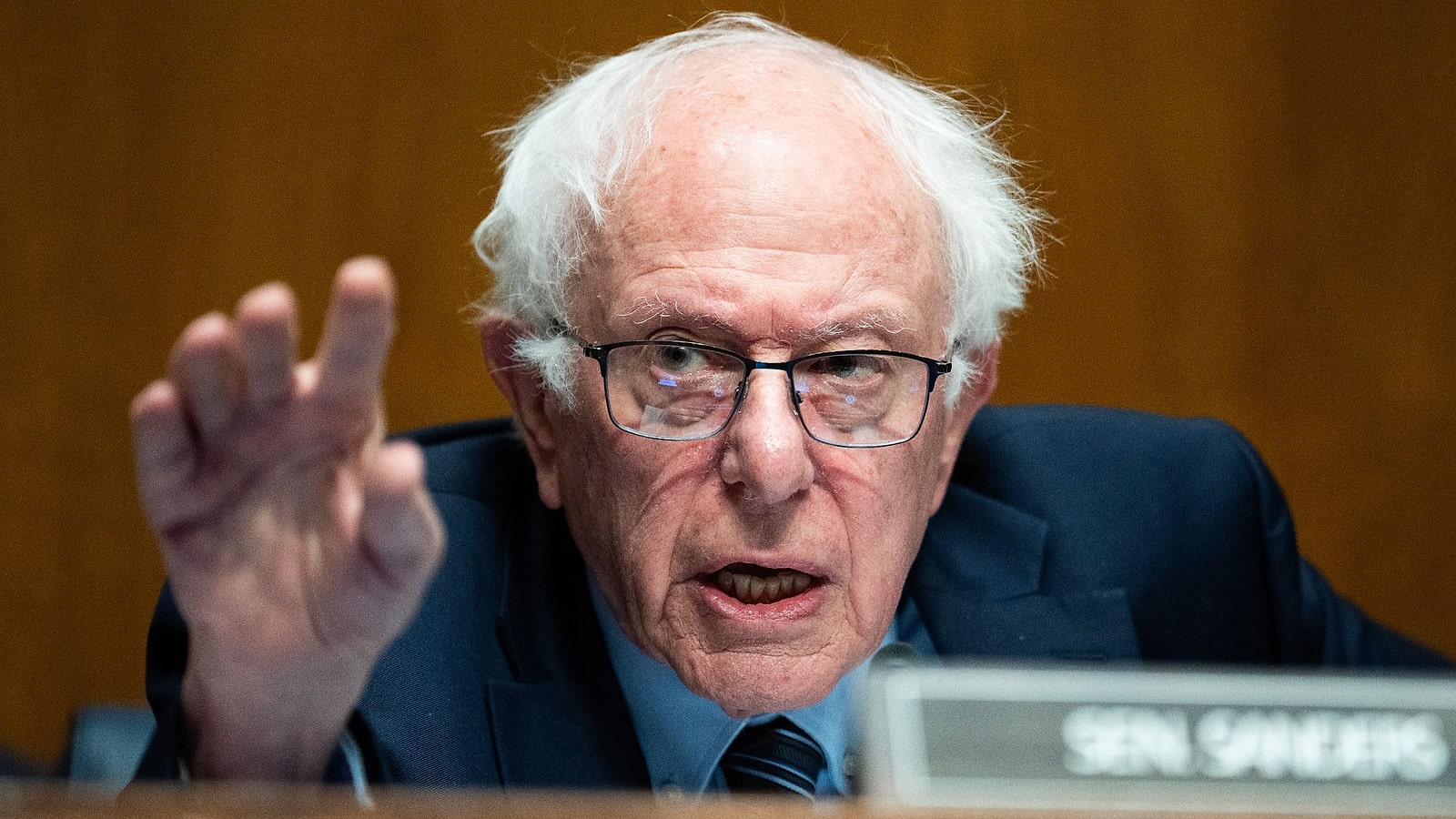
U.S. Sen. Bernie Sanders (I-Vt) introduced the American AI Sovereign Wealth Fund Act on Thursday, proposing a one-time 50% stock tax on the largest AI companies to create a federally managed sovereign wealth fund estimated at around $7 trillion. This follows Sanders' announcement of the proposal earlier this month.
Under the bill, AI companies generating at least $200 million in annual revenue would be required to transfer half their shares to the fund, which would be overseen by a seven-person independent commission nominated by the president and confirmed by the Senate.
The fund would distribute a 5% annual dividend, which Sanders estimates would provide every American with a direct payment exceeding $1,000 per year. Additional proceeds could fund public programs, including health care, education and housing.
The Spin
Narrative A
Sanders' AI wealth fund is a corporate bailout disguised as reform — the tech giants stay in private hands, run by the same profit-driven executives, while workers own nothing and control nothing. Negotiating the terms of this bill with Sam Altman himself exposes the scheme for what it is. The capitalist state won't redirect AI toward eliminating poverty; it'll harness it for war and surveillance.
Narrative B
AI was built on the collective knowledge of humanity, and the wealth it generates must benefit humanity — not just a handful of Silicon Valley billionaires. This fund would give the public direct ownership and board representation in the biggest AI companies, blocking decisions that hurt working families. When a public resource generates wealth, the public deserves a share of it.
Narrative C
Prosperity should reward those who take risks, innovate and build successful enterprises. The proposal to redistribute ownership or profits is a familiar extension of socialist thinking — one that seeks to transfer value from creators to non-creators. Just as socialist policies struggle to deliver sustained prosperity, they can also discourage innovation and economic growth.
Nerd narrative
There's a 50% chance that concern about artificial intelligence will go mainstream in the United States by Nov. 10, 2027, according to the Metaculus prediction community.
Canada: Panel Urges Permanent MAID Ban for Mental Illness

The Facts
A special joint parliamentary committee released a report Wednesday recommending the Canadian government amend the Criminal Code to indefinitely exclude people whose sole underlying medical condition is a mental illness from eligibility for medical assistance in dying (MAID).
The 98-page report, released on the 10th anniversary of MAID being legalized in Canada, was the product of six committee meetings held between March 24 and May 5, 2026, during which 44 witnesses testified and 32 written briefs were received.
The committee's sole recommendation was not unanimous. Four senators issued a dissenting report calling the process "fundamentally flawed" and "biased," noting more than two-thirds of witnesses had publicly opposed expanding MAID for mental illness.
The Spin
Right narrative
The committee's report is right. Expanding MAID to cover mental illness as a sole condition is reckless, as psychiatrists cannot reliably determine irremediability, and clinicians admit distinguishing suicidal ideation from a genuine MAID request may be impossible. Canada's mental health system is underfunded and unprepared, meaning vulnerable people could be pushed toward death instead of recovery. Parliament must pass Bill C-218 and permanently close this door.
Left narrative
MAID is about dignity, autonomy and compassion — and the parliamentary committee process was stacked against expansion from the start, hearing mostly opponents while sidelining clinicians and patients who support access. Denying people with intractable mental illness the same end-of-life options available to those with physical conditions is discriminatory. The politics need to come out of this, and Canadians deserve better policy.
Narrative C
The committee's recommendation to indefinitely exclude mental illness from MAID is a welcome reprieve, but the battle is far from over. As long as euthanasia remains embedded in Canadian law, vulnerable people remain at risk of being offered death instead of treatment and support. Canada must work toward replacing this culture of death altogether with one rooted in care, compassion and protection.
California Billionaire Tax Hits Ballot
The Facts
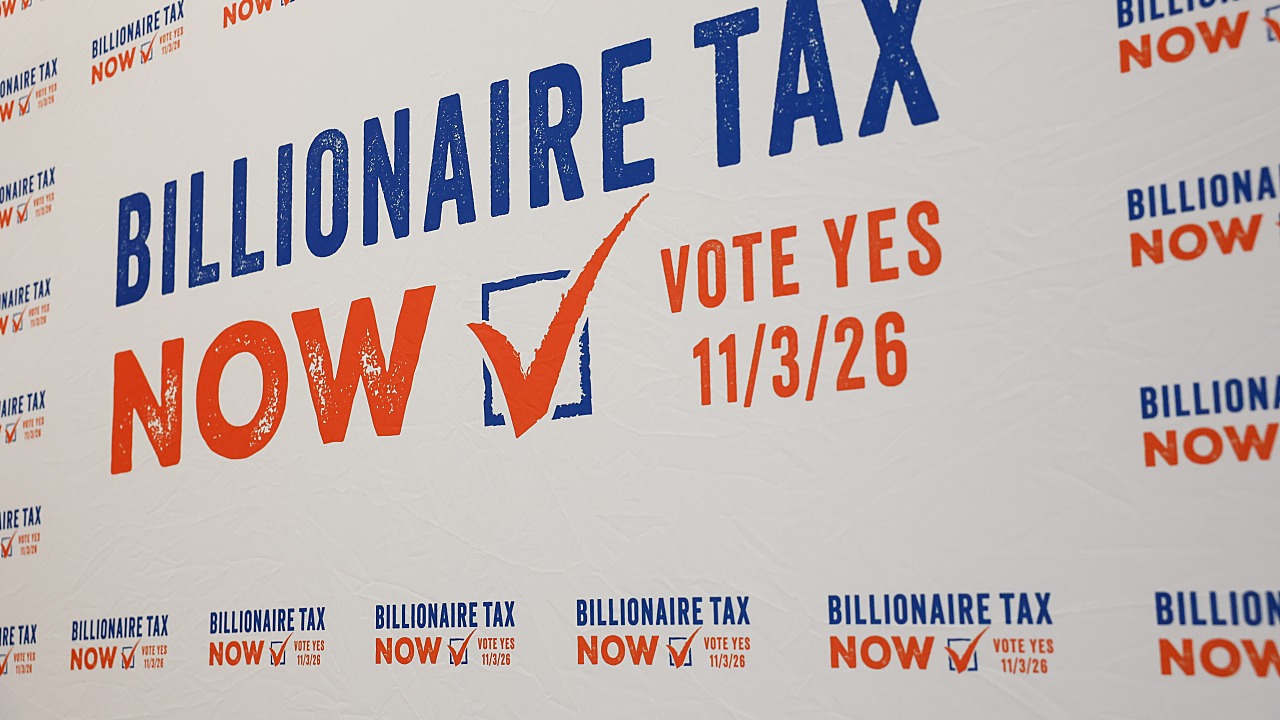
California Secretary of State Shirley Weber announced Wednesday that a proposed one-time 5% tax on residents with assets exceeding $1 billion had qualified for the November ballot after supporters submitted more than 1.55 million signatures, roughly double the required threshold.
Proponents have until June 25 to decide whether to proceed, leaving open the possibility the measure could be withdrawn as part of a negotiated deal. Gov. Gavin Newsom is reportedly working to broker a last-minute agreement to pull the initiative before the ballot is finalized.
The initiative would direct 90% of revenue toward health care programs and 10% toward food assistance and education. SEIU-UHW, which represents more than 120,000 workers, says the measure is needed to offset an estimated $100 billion gap caused by federal Medicaid cuts.
The Spin
Right narrative
California's billionaire tax is a wealth-killing scheme that's already driving top earners and their tax dollars out of the state. The top 1% of California taxpayers fund a massive share of the budget, so chasing them off with a 5% wealth levy is fiscal self-sabotage that will benefit other states. Newsom himself called it "really damaging"— and he's right.
Left narrative
Billionaires and their political allies are pouring tens of millions into killing a tax that would raise roughly $100 billion for health care, food assistance and education. Newsom is running cover for the ultra-wealthy by fearmongering and downplaying wealth inequality. The SEIU-UHW collected over 1.5 million signatures — Californians clearly want this.
Nerd narrative
There's a 42.6% chance that California will pass a wealth tax before 2051, according to the Metaculus prediction community.
US Supreme Court: Marijuana Users Can't Be Banned From Gun Access
The Facts
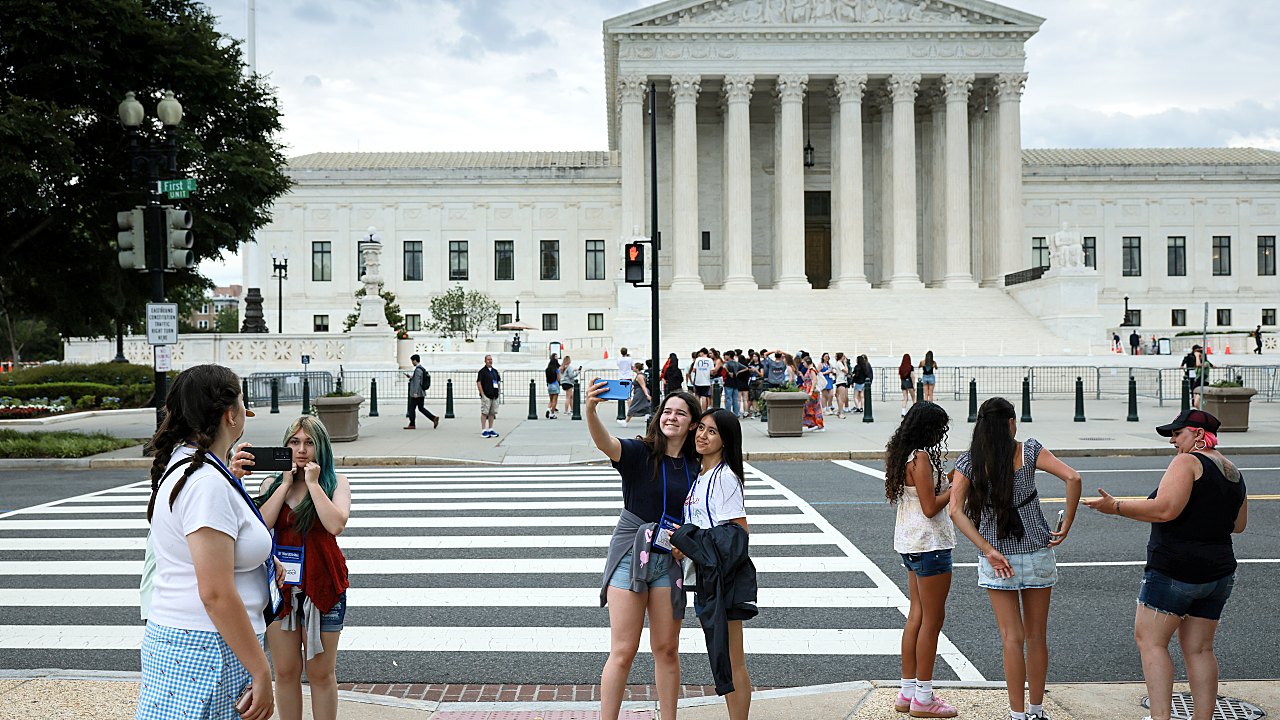
The U.S. Supreme Court ruled unanimously on Thursday that the federal government cannot prosecute a person solely for possessing a firearm while using marijuana, finding the law overbroad under the Second Amendment. The decision came in the case U.S. v. Hemani.
The case centered on Ali Hemani, a Texas man whose home was searched by FBI agents in 2022 under suspicion that family members had ties to terrorism-related activities. Agents found a handgun, roughly 60 grams of marijuana and cocaine during the search.
Conservative Justice Neil Gorsuch wrote the majority opinion, stating the ruling was "a narrow one" that did not address efforts to ban addicts or those presently intoxicated from possessing firearms, leaving open the possibility of future prosecutions with additional evidence.
The Spin
Government-critical narrative
Every single justice understood that no Founding-era law ever stripped sober citizens of firearms just because they sometimes consumed intoxicants. The statute was also dangerously vague, leaving millions of Americans unable to know whether their conduct makes them a felon, which invites arbitrary enforcement. Treating a locked-away gun as a felony offense without any proof of reckless behavior or contemporaneous intoxication is exactly the kind of status-based punishment the Constitution forbids.
Pro-government narrative
Categorical firearm prohibitions have been a cornerstone of American law since the Founding, and gutting them would cripple the Brady background check system that blocks tens of thousands of dangerous gun purchases every year. Legislatures — not courts — are the proper bodies to weigh public safety tradeoffs, and history is full of examples where entire categories of people were disarmed based on potential future dangerousness, not just past acts.
Nerd narrative
There's a 50% chance that by 2029, there will be at least 1.39 small firearms per capita in the U.S., according to the Metaculus prediction community.
US, Bolivia Sign $20M Anti-Drug Trafficking Deal

The Facts
The U.S. Embassy in Bolivia confirmed on Wednesday that the two countries reached an agreement under which Washington will provide up to $20 million to help La Paz to fight drug trafficking and other transnational organized crime.
Earlier this week, Bolivia's Ministry of Foreign Affairs reported that Foreign Minister Fernando Aramayo and U.S. Chargé d'Affairs in Bolivia Debra Havie had signed the letter of agreement.
Under the new cooperation deal, which targets international drug trafficking networks, financial crimes and accountability within police and judicial system, the U.S. will channel money for training, technical assistance and specialized equipment to bolster Bolivian institutions.
The Spin
Pro-establishment narrative
This $20 million deal marks a genuine turning point after nearly two decades of frozen bilateral relations. Bolivia's return to security cooperation with Washington signals a government serious about dismantling trafficking networks and prosecuting money laundering. This realignment also builds the diplomatic trust that foreign investment in Bolivia's massive lithium reserves depends on.
Establishment-critical narrative
Signing a million-dollar anti-drug deal while tons of high-purity cocaine slip out of Bolivia in wood shipments exposes the deal as theater to give a struggling government political cover. Bolivia's own vice president has questioned whether the DEA's return has done anything but coincide with some of the country's largest drug scandals. Welcoming Washington's security apparatus hasn't stopped drug trafficking in Bolivia at all.

© 2026 Improve the News Foundation.
All rights reserved.
Version 7.18.3