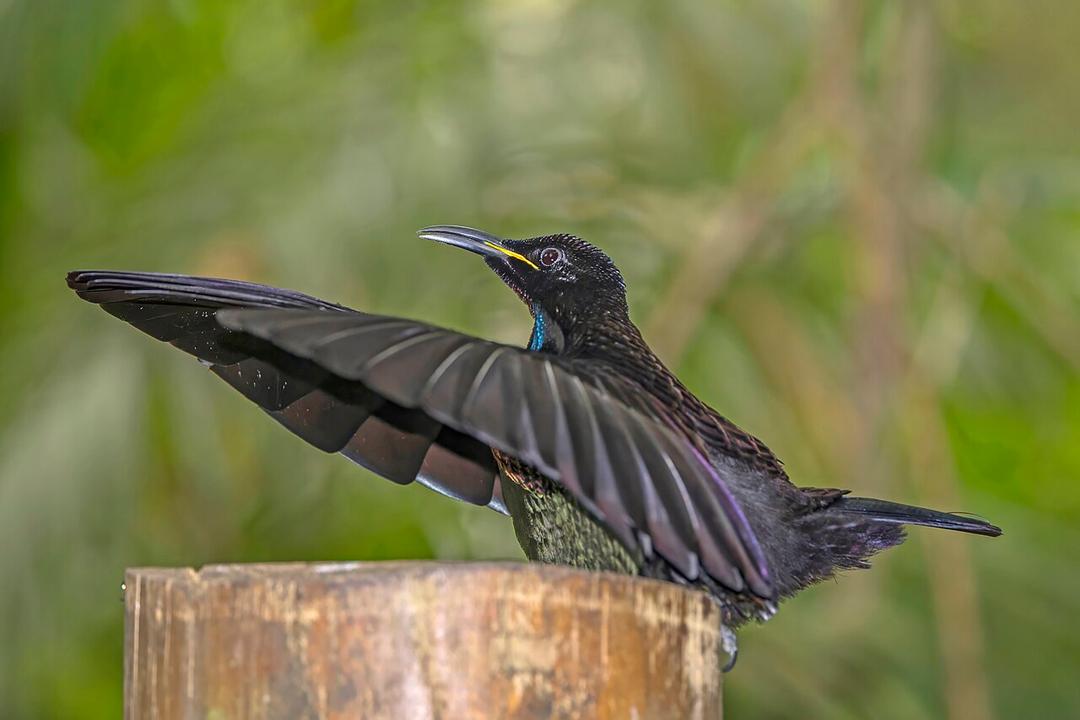
The Facts
- Scientists from the American Museum of Natural History and the University of Nebraska-Lincoln have discovered widespread biofluorescence in birds-of-paradise, discovering that 37 of 45 known species can absorb and re-emit light in different colors.
- The research — published in the journal Royal Society Open Science — revealed that male birds display biofluorescence primarily on their plumage and skin in areas highlighted during mating displays, including the inner mouth, bill, feet, and feathers on the head, neck, and belly.
- Female birds of paradise reportedly exhibit more subdued biofluorescent patterns, typically restricted to plumage on the chest and belly, suggesting different evolutionary purposes for biofluorescence between sexes.


Sources Split
LEFT
CENTER
RIGHT
+1
ESTAB
CRIT
CENTER
PRO
ESTAB
The Spin
Metaculus Prediction
© 2026 Improve the News Foundation. All rights reserved.Version 7.17.1
© 2026 Improve the News Foundation.
All rights reserved.
Version 7.17.1