First Images From Vera C. Rubin Observatory Released
The Facts
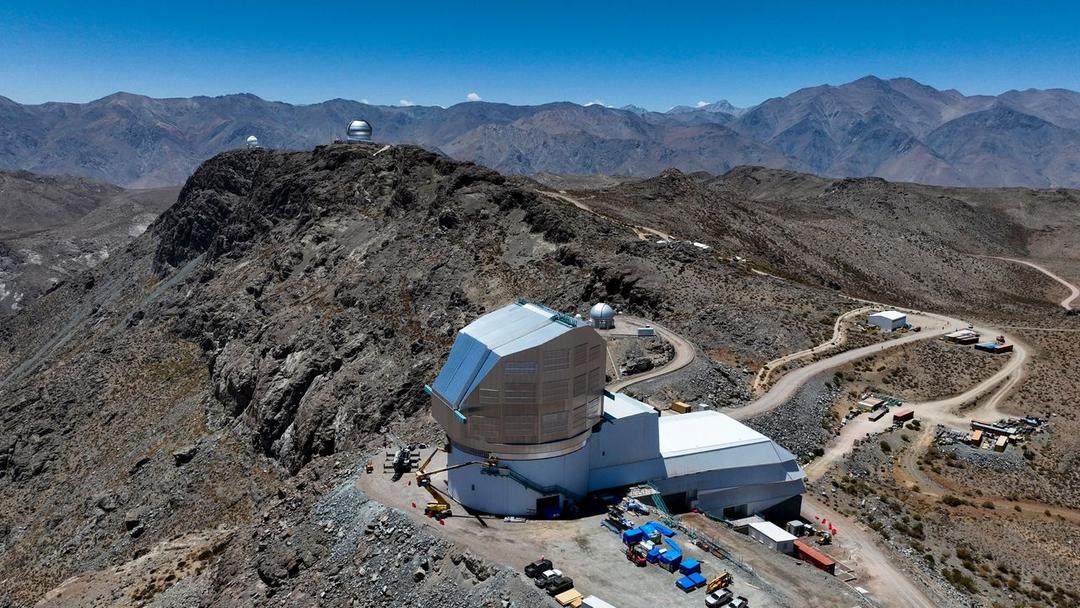
- The Vera C. Rubin Observatory in Chile released its first test images showing millions of distant stars and galaxies captured with the world's largest digital camera during just 10 hours of observations. The facility, jointly funded by the National Science Foundation and the Department of Energy, features an 8.4-meter (27.5-foot) telescope that will survey the entire southern sky every few nights over 10 years.
- During its initial test observations, the observatory discovered 2,104 previously unseen asteroids, including seven near-Earth asteroids that pose no threat to Earth. The telescope is expected to uncover millions of asteroids within its first two years, compared to the 20,000 typically spotted annually by existing ground and space-based telescopes.
- The first released images include a composite of the Trifid and Lagoon nebulae created from 678 separate images taken over seven hours, revealing unprecedented detail in star-forming regions located several thousand light-years away in the Sagittarius constellation. The observatory also captured views of the Virgo Cluster, showing approximately 2,000 galaxies in a single wide-field image.


Sources Split
LEFT
CENTER
RIGHT
+2
+2
+1
+2
ESTAB
CRIT
CENTER
PRO
ESTAB
The Spin
Techno-optimist narrative
This observatory is a quantum leap in astronomical capability, combining unprecedented field of view with rapid imaging speed to revolutionize our understanding of the cosmos. The facility is expected to generate more astronomical data in its first year than all previous observatories combined, opening entirely new research avenues and likely discovering phenomena we haven't even imagined yet.
Techno-skeptic narrative
While the technical achievements are impressive, the observatory's massive data collection raises concerns about information overload and the astronomical community's ability to process such enormous datasets effectively. The facility's focus on automated surveys may also divert resources away from targeted observations that have historically driven significant astronomical discoveries.


© 2026 Improve the News Foundation.
All rights reserved.
Version 7.18.0