Report: 2025 Was Third Warmest Year on Record

The Facts
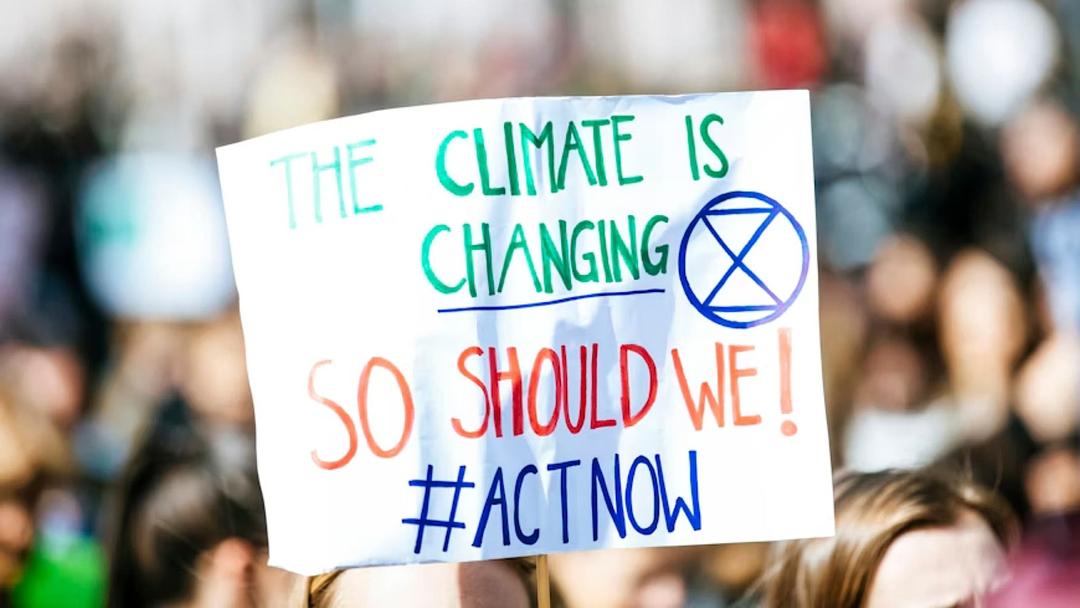
- EU scientists said Wednesday that the planet recorded its third-hottest year in 2025, with global temperatures averaging 1.47°C above pre-industrial levels. According to their monitoring, the last 11 years have been the warmest on record, while 2024 remained the hottest year and 2023 was in second place.
- The data published by Copernicus, the European Union’s climate change monitoring service, found that global temperatures exceeded 1.5°C relative to pre-industrial levels for the first time. on average over a three-year period, from 2023 to 2025.
- The Antarctic experienced its warmest year on record, while the Arctic saw its second-hottest year in 2025. Sea ice at both poles was at record lows, and approximately 770 million people reportedly experienced record-warm annual conditions in their regions.


Sources Split
LEFT
CENTER
RIGHT
+2


+1


+1
ESTAB
CRIT
CENTER
PRO
ESTAB
The Spin
Climate-skeptic narrative
Climate forecasting has systematically overpredicted warming for three decades while demanding massive economic sacrifices that kill people through energy scarcity and higher costs. The entire agenda functions as a money laundering scheme, replacing fossil fuel profits with government-subsidized renewable investments that enrich corporations while ignoring that Earth remains far colder than historical norms.
Climate-concerned narrative
The 1.5°C threshold has been breached over three years, driven by rising greenhouse gas levels, marking a dangerous climate breakdown that threatens food systems, water supplies and human civilization itself. Rapid fossil fuel elimination remains urgent as extreme weather escalates, yet progress remains devastatingly slow despite renewable energy offering economic benefits and energy security.
Optimist narrative
Climate change is real, but it is manageable through innovation and human progress. The focus should be on improving lives, not fear. Advances in renewables, electric vehicles, and nuclear energy have already cut projected emissions by over 40%. Lowering the Green Premium and investing in affordable zero-carbon technologies can help the world adapt and thrive while continuing the progress already underway.

Narrative D
The science of climate is evolving as rapidly as the climate itself. Traditional models that focused narrowly on carbon now struggle to explain complex processes such as the water cycle, forests' roles, and biosphere feedbacks. Emphasis should be on a biosphere-centered understanding in which forests and moisture dynamics shape climate stability as much as greenhouse gases — reshaping how we study and address global change.

Metaculus Prediction
Public Figures
The Controversies
Go Deeper

© 2026 Improve the News Foundation.
All rights reserved.
Version 7.17.1