40 Years of Data Reveals Sun's Interior During Quiet Phases
The Facts
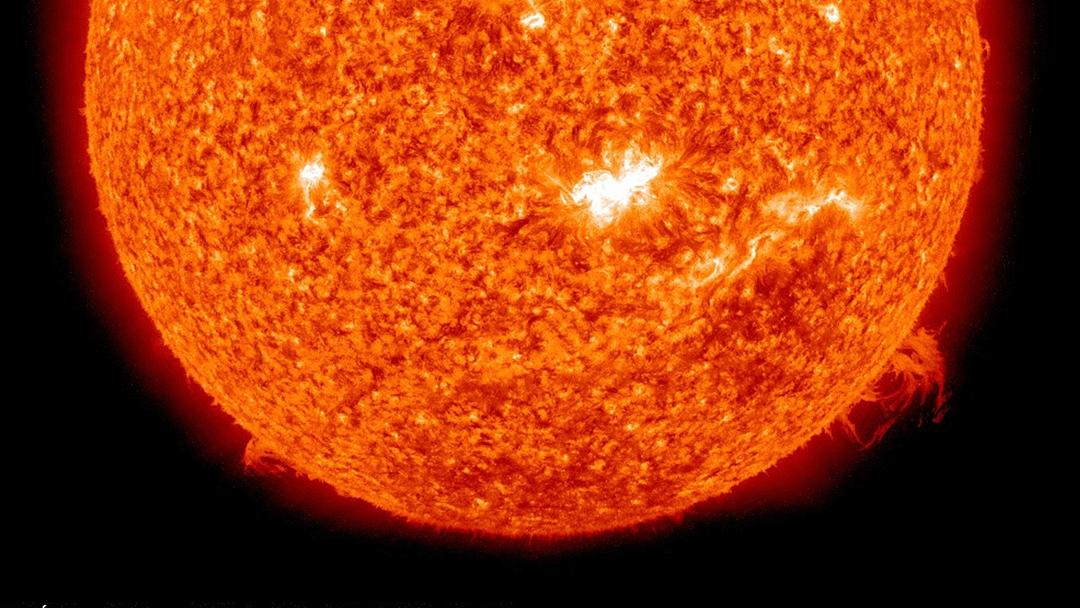
- Researchers from the University of Birmingham and Yale University analyzed over 40 years of data from the Birmingham Solar-Oscillations Network to study the sun's internal structure during four successive solar cycle minima, spanning from the end of cycle 21 to the beginning of cycle 25.
- The study, published in Monthly Notices of the Royal Astronomical Society, used helioseismology, which examines tiny vibrations inside the sun formed by trapped sound waves, to infer changes below the sun's surface. These sound waves make the sun oscillate at about three thousandths of a cycle per second, roughly one oscillation every five minutes.
- The solar minimum between cycles 23 and 24, occurring in 2008-09, was the deepest and longest on record. During this period, the helium ionization zone signature was significantly larger and the sound speed in the sun's outer layers was slightly higher compared to the other three minima studied.


Sources Split
LEFT
CENTER
RIGHT
+2


ESTAB
CRIT
CENTER
PRO
ESTAB
The Spin
Narrative A
Tracking the sun's hidden musical "notes" during quiet periods could revolutionize space weather forecasting and protect critical infrastructure. Scientists discovered that subtle shifts in solar oscillations reveal internal changes that directly influence dangerous solar eruptions. These insights could help safeguard Earth and orbital assets from solar storms that disrupt satellites, power grids and communications.
Narrative B
Forty years of helioseismic data reveal persistent discrepancies between solar models and observations, especially during quiet phases, challenging the precision of some assumptions in stellar physics. While the sun's overall structure is well-constrained, these gaps show that refinements are still needed in modeling stellar interiors and in drawing conclusions about space-weather impacts and forecasting.

Metaculus Prediction
Editor's Note
The Controversies
Go Deeper

© 2026 Improve the News Foundation.
All rights reserved.
Version 7.17.1