AI: Health Care
The Facts
- Overview: Medical AI began in the 1960s when researchers built early expert systems like DENDRAL and later MYCIN at Stanford, proving computers could emulate clinical reasoning. Progress stalled until the 1990s and early 2000s, when machine learning revived the field, followed by IBM's Watson. In the 2010s, deep learning transformed imaging, diagnostics and records analysis. Today, AI is increasingly embedded in health care, with applications expanding during the COVID-19 pandemic for tasks like diagnostic imaging and vaccine development.
- Diagnostics: AI can diagnose a wide range of conditions — including cancer, Alzheimer's, diabetes, cardiovascular diseases and brain tumors — rivaling human expertise in imaging, pathology and genomics. Real-world deployments include AI-assisted mammography screening, while research tools like Sybil — developed in 2023 by MIT, Mass General Cancer Center, and Chang Gung Memorial Hospital — predict an individual's lung cancer risk up to six years from a single low-dose CT scan, with 86–94% accuracy for one-year predictions in validation cohorts, though real-world performance may vary.
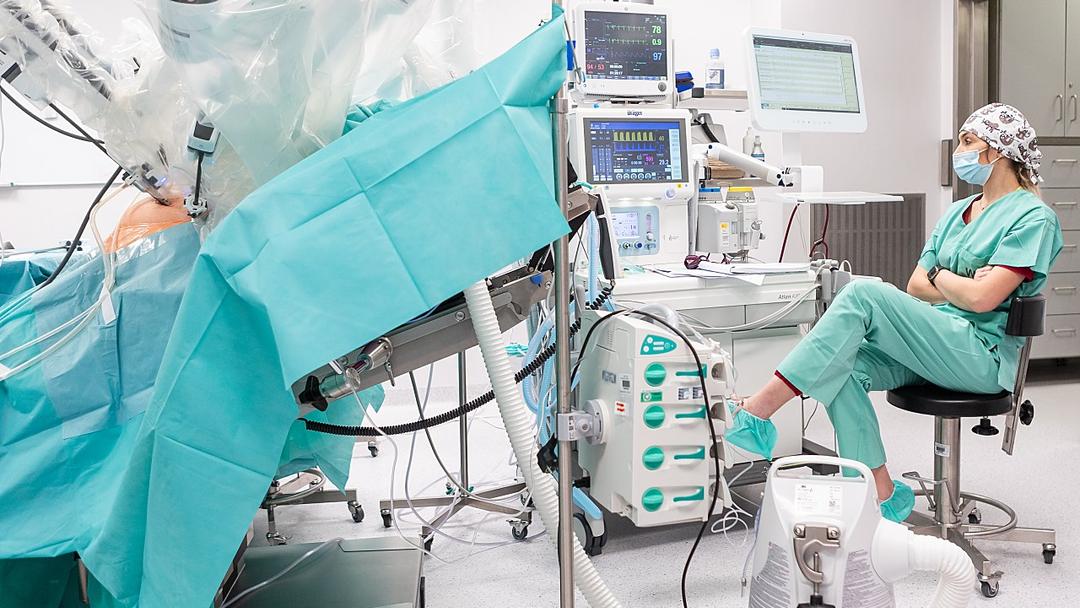
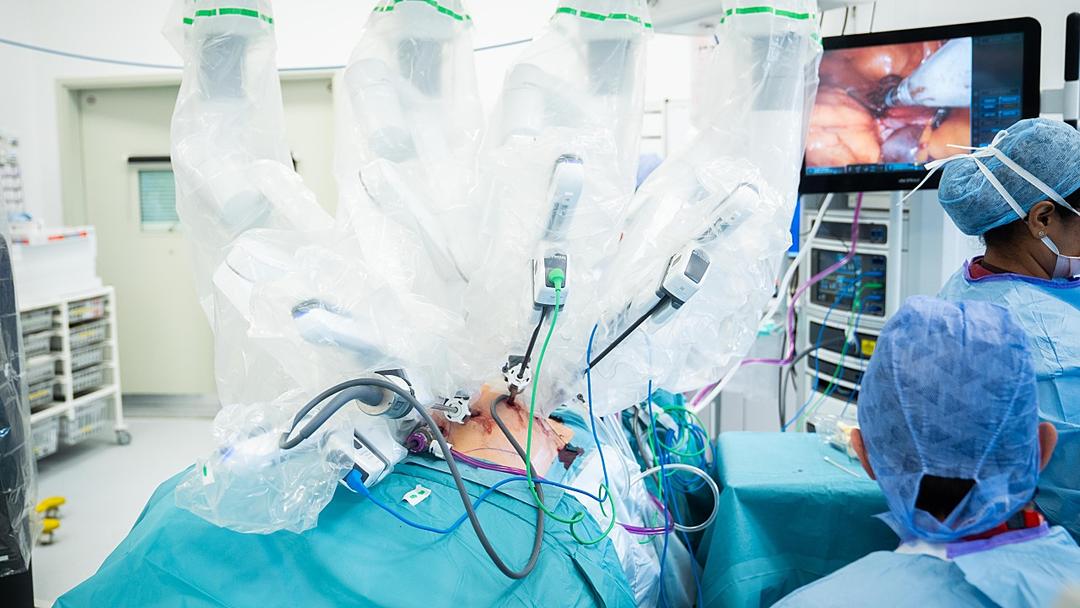
- Robotics & Surgery: The operating room has seen similar advances. AI-driven robotics fuse machine intelligence with human skill to improve precision. According to American medical device maker Intuitive Surgical, over 3.1 million global procedures were performed in 2025 using robotic systems like da Vinci alone, with AI enabling real-time guidance and semi-autonomous tasks like suturing. A 2025 meta-analysis of 25 studies in the Journal of Robotic Surgery found AI-assisted robotic surgeries reduced operative time by 25% and intraoperative complications by 30% compared to manual methods.


Sources Split
LEFT
CENTER
RIGHT
+1
+3
+1
+1

+6
ESTAB
CRIT
CENTER
PRO
ESTAB
The Spin
Pro-Industry
AI offers a direct response to some of medicine's most persistent failures. In the U.S., an estimated 400,000 deaths annually are linked to misdiagnoses and another 250,000 to preventable medical errors — systemic failures that human oversight alone has not solved. With patients suffering from chronic conditions often going months between evaluations, AI's ability to continuously monitor, flag early warning signs and prioritize high-risk cases before they escalate could prove transformative for patients and health systems alike.

Industry-Critical
AI risks amplifying the very biases it promises to correct. Tools designed to accommodate physician preferences may cause doctors to miss critical information, while chatbots that adapt to individual clinician patterns risk embedding those biases permanently into patient records. Without a clear understanding of AI's limitations, clinicians may defer to its guidance uncritically — and reports of malfunctions in FDA-cleared AI devices have surged following integration, raising questions about whether regulatory oversight is keeping pace with deployment.

Metaculus Prediction
Go Deeper
























© 2026 Improve the News Foundation.
All rights reserved.
Version 7.17.1