Hubble Confirms First Starless 'Failed Galaxy' Cloud-9
The Facts
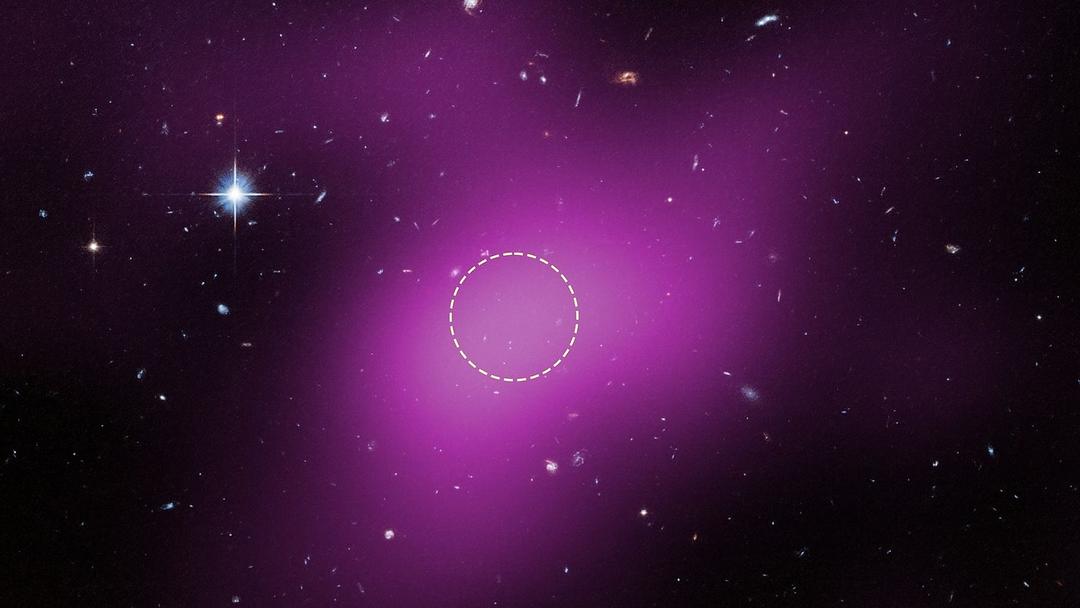
- Astronomers using NASA's Hubble Space Telescope observed a cosmic object called Cloud-9, described as a "failed galaxy" located 14 million light-years from Earth. The object is a cloud of dark matter that contains no stars, marking the first confirmed detection of such an object.
- Cloud-9 is scientifically known as a Reionization-Limited H I Cloud, or "RELHIC," where H I refers to neutral hydrogen. Scientists believe it represents a primordial building block of a galaxy that never fully formed stars, preserving conditions from the universe's earliest eras.
- The object's core consists of neutral hydrogen spanning approximately 4,900 light-years across, with gas mass estimated at roughly 1 million times that of the sun. Calculations indicate the entire structure contains approximately 5 billion solar masses of dark matter.


Sources Split
LEFT
CENTER
RIGHT

+1
+2
+2
+3
ESTAB
CRIT
CENTER
PRO
ESTAB
The Spin
Narrative A
Cloud-9 matters because it provides strong new evidence that dark matter exists even where no galaxy ever formed. By showing a massive cloud of gas shaped by gravity but containing no stars — a so-called “failed galaxy” — Hubble reveals a structure that can only be held together by unseen mass. This confirms a core prediction of dark-matter theory: that the universe is filled with invisible dark-matter halos, many of which never became galaxies at all.

Narrative B
The RELHIC classification remains premature without discovering similar objects to confirm Cloud-9 isn't just an anomaly. Its irregular shape contradicts theoretical expectations for such pristine remnants, and alternative explanations like circumgalactic gas interactions haven't been definitively ruled out. Confirming absolute starlessness proves nearly impossible given observational limits.

Metaculus Prediction
© 2026 Improve the News Foundation.
All rights reserved.
Version 7.17.1