IBM Unveils World's First Sub-1 Nanometer Chip Technology
The Facts
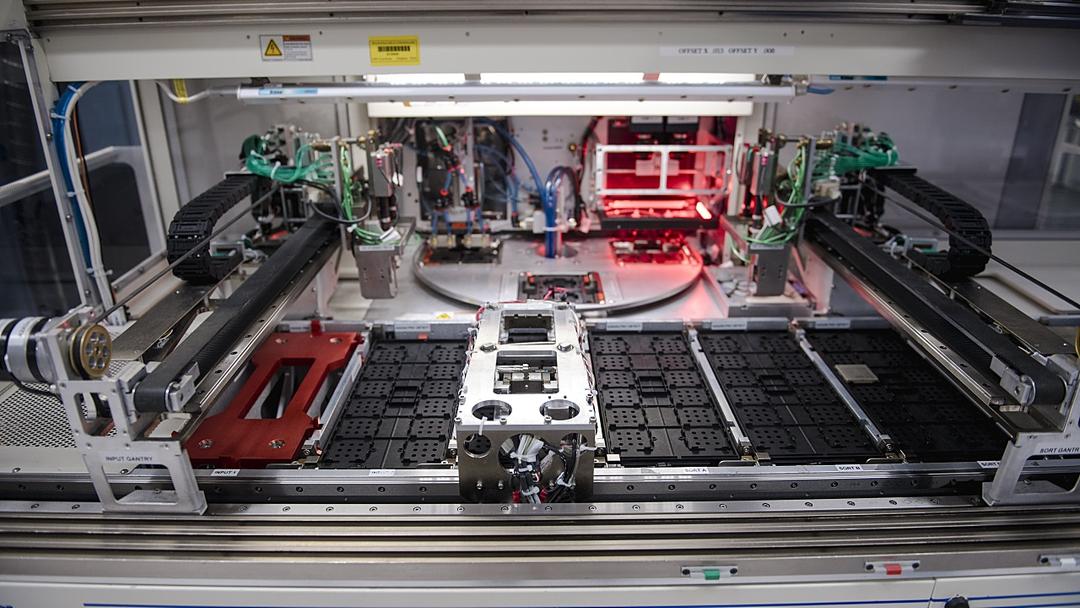
- IBM unveiled what it describes as the world's first sub-1 nanometer (nm) chip technology on Thursday, built on a new transistor architecture at the 0.7 nm node. The chip packs nearly 100 billion transistors onto a piece of silicon roughly the size of a fingernail.
- IBM's new nanostack architecture vertically stacks and staggers transistors through 3D sequential integration, nearly doubling the transistor density of its 2 nm chip introduced in 2021. The design also allows different materials to be used in each layer, enabling independent tuning of performance and power for each transistor.
- IBM projects the nanostack chip will deliver up to 50% more performance or 70% greater energy efficiency compared to its 2 nm node chips. The company also reported a 40% increase in on-chip memory, presented at the VLSI 2026 Symposium.


Sources Split
LEFT
CENTER
RIGHT
+3
+1
+2
ESTAB
CRIT
CENTER
PRO
ESTAB
The Spin
Techno-skeptic narrative
Moore's Law is dead, and no amount of hype changes that. Transistor miniaturization has slowed to a crawl, and the real gains now come from smarter software, better algorithms and hardware architecture — not shrinking silicon. Chasing smaller chips is expensive, slow and increasingly hits hard physical limits, so the future belongs to performance engineering, not nanometer bragging rights.

Techno-optimist narrative
IBM just blew past the supposed physical limits of chip scaling with the world's first sub-1 nm chip, packing nearly 100 billion transistors onto a fingernail-sized chip using a revolutionary nanostack architecture. The new design delivers up to 50% more performance or 70% greater energy efficiency than IBM's 2 nm chip. Semiconductor scaling isn't dead — it just needed a reinvention.
© 2026 Improve the News Foundation.
All rights reserved.
Version 7.17.1