US-Cuba Relations

Overview
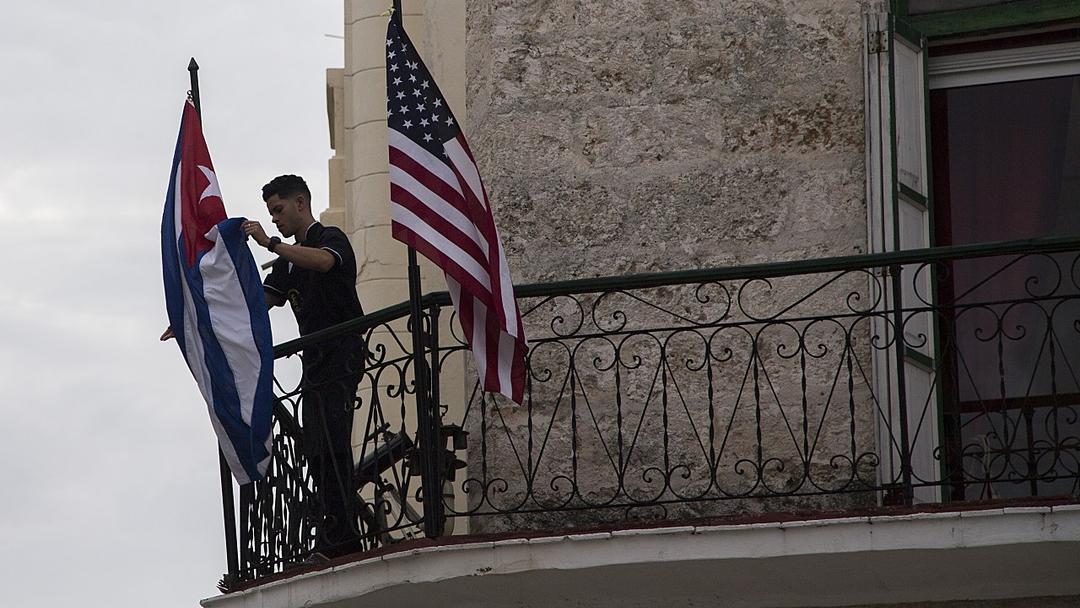
- Once economically and strategically allied, the United States and Cuba became Cold War adversaries after the 1959 Cuban revolution. The resulting geopolitical enmity brought the world to the brink of nuclear war in 1962 and has since alternated between maximum pressure and short-lived attempts at normalization for over six decades.
- In 1898, the U.S. helped end centuries of Spanish colonial rule over Cuba. Rather than granting the island full independence, the U.S. imposed the Platt Amendment, reserving its right to intervene militarily and securing a permanent naval base at Guantánamo Bay. Washington would come to exercise its right through three military occupations over the following three decades.
- The republic that emerged inherited a sugar-dependent economy and a political class marked by corruption. When Fulgencio Batista seized power in a 1952 coup, Washington recognized his government within weeks. The U.S. maintained close military and diplomatic ties with Havana even as Batista suspended the constitution and presided over widespread corruption and repression.


Sources Split
LEFT
CENTER
RIGHT
+5
+3


+3

+3
+2

+1
+6
+1

+1
+9
ESTAB
CRIT
CENTER
PRO
ESTAB
The Spin
Pro-establishment narrative
The U.S. and Cuba were close economic and strategic partners for decades. Fidel Castro's 1959 revolution broke that relationship by nationalizing hundreds of American companies without compensation and aligning with the Soviet Union, culminating in nuclear missiles stationed 90 miles from Florida. The embargo and decades of pressure since are a defensive and proportionate response to a regime that chose confrontation and authoritarianism.
Establishment-critical narrative
Pre-1959 "closeness" meant domination: military occupation under the Platt Amendment and backing for Batista's corrupt dictatorship. The revolution was a legitimate anti-colonial uprising, and nationalizing foreign holdings was standard postcolonial policy. Washington's response — embargo, invasion and espionage — was disproportionate and illegal, sustained for six decades largely by exile-lobby politics rather than strategic necessity, punishing Cuba's population for the crime of demanding sovereignty.


Early History of Cuba
Long before the two nations became rivals, the U.S. helped end Spanish colonial rule in Cuba.
When Christopher Columbus made landfall on the island now known as Cuba in October 1492, the island was home to three main indigenous groups: the Taíno in the east, the Siboney in the center and the Guanahatabey in the west.
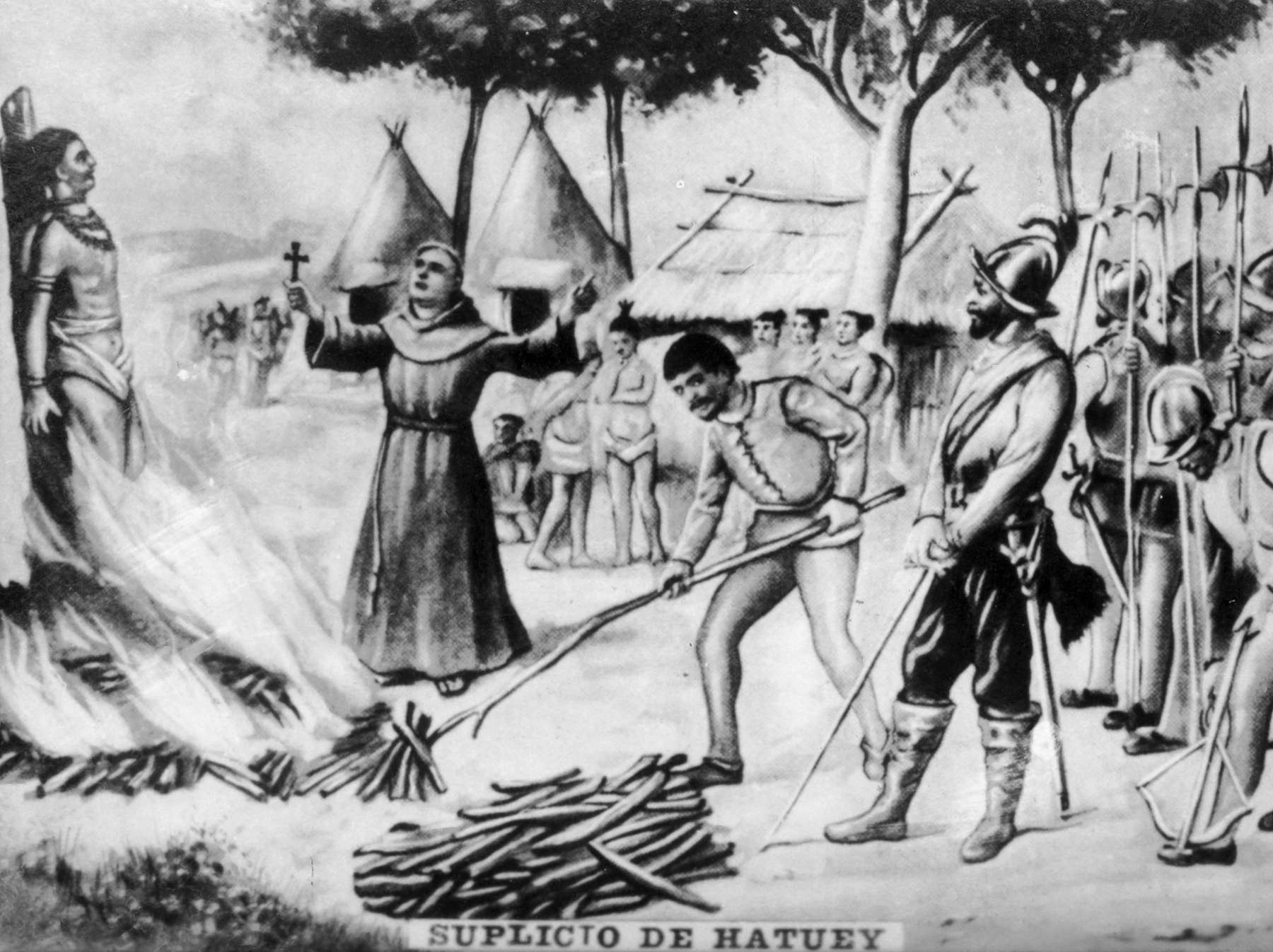
Spanish colonization followed two decades later. In the early 1510s, Diego Velázquez de Cuéllar landed from Hispaniola with a force of around 300 men, founding the first permanent Spanish settlement at Baracoa and a string of colonial towns, including Havana in 1519.
Not all indigenous groups submitted peacefully. The most prominent figure of armed resistance was Hatuey, a Taíno chief who had fled Hispaniola and led a campaign against Velázquez's forces for several months before his capture and execution in 1512.
As Spanish control consolidated, the surviving indigenous population was incorporated into the colonial system under the encomienda, by which the Crown granted conquistadors and settlers the right to extract labor and tribute from a designated group of indigenous people in exchange for their nominal protection and Christian conversion. This system was eventually reformed through Spain's New Laws of 1542, partly due to the advocacy of Friar Bartolomé de las Casas, who had documented its abuses firsthand in Cuba.
By then, demographic collapse was already well underway. The smallpox epidemic of 1518–19 killed the vast majority of the indigenous population, a catastrophe driven primarily by the absence of prior immunity to European diseases.
Sugar Boom
As early as 1513, Spain turned to the transatlantic slave trade to sustain the colonial economy as indigenous labor was exhausted, with the trade expanding steadily over the following centuries. The plantation system that took root was built primarily around sugar, and to a lesser extent tobacco and coffee.
For most of the colonial period, Cuba was more strategically than economically important to Spain, valued chiefly as a naval base and transit point for Atlantic trade. That changed when the Haitian Revolution broke out in 1791 and Saint-Domingue's sugar industry, then the most productive in the world, collapsed.
Cuban planters moved quickly to fill the void, accelerating the island's transformation into a sugar-export monoculture. Production more than doubled within fifteen years, and the slave population grew from fewer than 40,000 in the 1770s to some 400,000 by the 1840s, roughly a third of the total population.
By 1860, Cuba produced nearly a third of the world's sugar, its steam-powered mills among the most mechanized anywhere, making it Spain's most prized remaining colonial possession, as the rest of its empire in the New World had dissolved.
Frustrated with Spanish rule but wary of a Haitian-style slave uprising, local elites looked toward two alternatives: reform within the empire and annexation by the U.S. Neither agendas made significant headway.
The Madrid-convened Junta de Información produced no meaningful concessions, and annexation became untenable after the U.S. Civil War foreclosed the prospect of Cuba entering as a slave state. Out of this political deadlock, the independence movement began to gain broader support.
Three Wars for Independence
Planter and lawyer Carlos Manuel de Céspedes freed his slaves and declared independence at his estate La Demajagua in the so-called Grito de Yara on Oct. 10, 1868, triggering the Ten Years' War, Cuba's first war for independence. Within one month, the rebel army had grown to some 12,000 men.
They waged effective guerrilla warfare across the eastern provinces but never succeeded in extending the conflict to the wealthier west, where Havana and the sugar heartland lay. The war ended in stalemate on Feb. 10, 1878, with the signing of the Pact of Zanjón, which pardoned political offenses committed since 1868, freed slaves and Chinese indentured workers who had fought on either side, and granted Cuba the same status as Puerto Rico.
Some insurgents still refused to lay down their arms. Gen. Antonio Maceo issued the Protest of Baraguá on March 15, 1878, formally repudiating the peace agreement after his demands for full independence and immediate abolition of slavery were rejected. Fighting briefly resumed, but his forces were eventually compelled to stand down on May 28, 1878.
On Aug. 26, 1879, Gen. Calixto García launched a second uprising, the Little War, which Spanish forces suppressed the following year. In the years that followed, Spain formally brought Cuba within the Restoration's constitutional order and outlawed slavery on the island in 1886. The reforms, however, failed to resolve the underlying political tensions between Cuban aspirations and Spanish colonial rule.
The third war broke out with the Grito de Baire on Feb. 24, 1895, when uprisings erupted simultaneously in dozens of towns across the island. Gen. Máximo Gómez and Gen. Antonio Maceo carried the campaign forward with guerrilla tactics, spreading the conflict westward. José Martí, who organized the insurrection from his exile in the U.S., died in his first hostile engagement with Spanish troops at Dos Ríos on May 19, 1895, denying the independence movement its most important political architect at the moment it needed him most. Martí became a unifying symbol that has been invoked across the Cuban political spectrum.
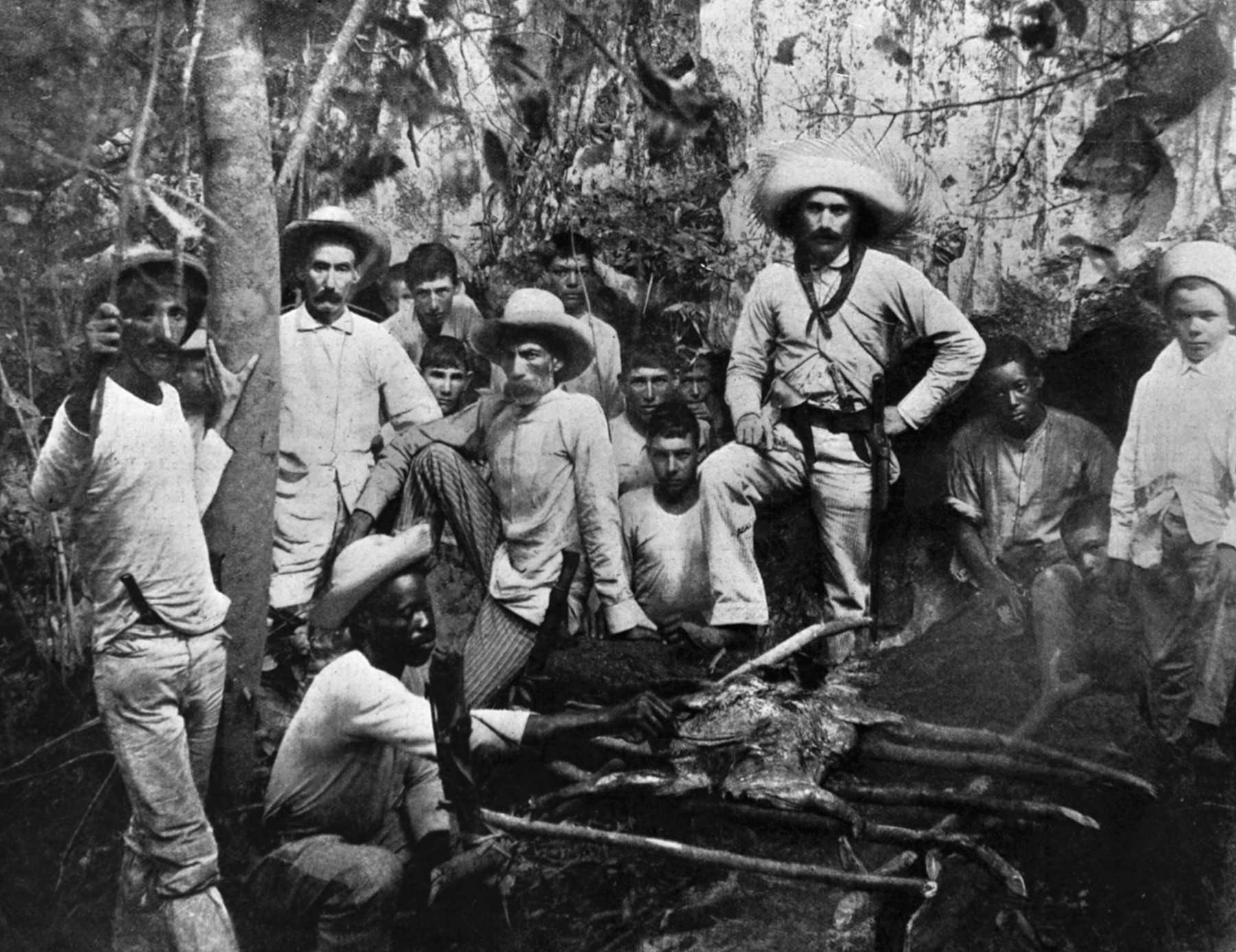
Spain responded with the brutal reconcentración policy, confining hundreds of thousands of rural Cubans to garrisoned camps where disease and starvation caused mass casualties, drawing widespread international condemnation, especially from the U.S.
By 1898, rebels controlled much of the countryside, but a decisive military outcome remained elusive — until the explosion of the USS Maine in Havana Harbor prompted the U.S. to intervene and defeat Spain.
Sources:


The Spin
Narrative A
Spanish rule in Cuba meant centuries of violent conquest and crushing exploitation. Resistance was fierce from the start: Hatuey's coastal defenses and a decade-long guerrilla war, which were undone by superior Spanish arms. By the 19th century slaveholders themselves freed slaves to fight Spain, defeated only by colonial military superiority. After thirty years of war, Spain's flag finally fell in 1898, ending four centuries of plunder.
Narrative B
The Spanish conquest was an act of liberation that brought civilization to the island. A few hundred Spaniards could not have wiped out vastly larger native populations by force, and the scale of death is better explained by epidemic disease than by massacre. While Spain was alone among colonial powers passing laws and sending inspectors to protect natives, its rivals seized on selective accounts of atrocities to build the Black Legend and discredit Spanish rule.
US Interest and Influence
The U.S. had its eye on the island long before the explosion of USS Maine.
Trade between Cuba and the North American mainland began as early as the 18th century despite imperial trade restrictions, following the 11-month British occupation of Havana in 1762. As both legal and contraband commerce flourished, the island became a comparatively prosperous trading partner and a center of tobacco and sugar production. Additionally, Cubans helped finance the U.S. Revolutionary War and even fought British troops along the Gulf Coast in campaigns that helped pave the way for American independence.
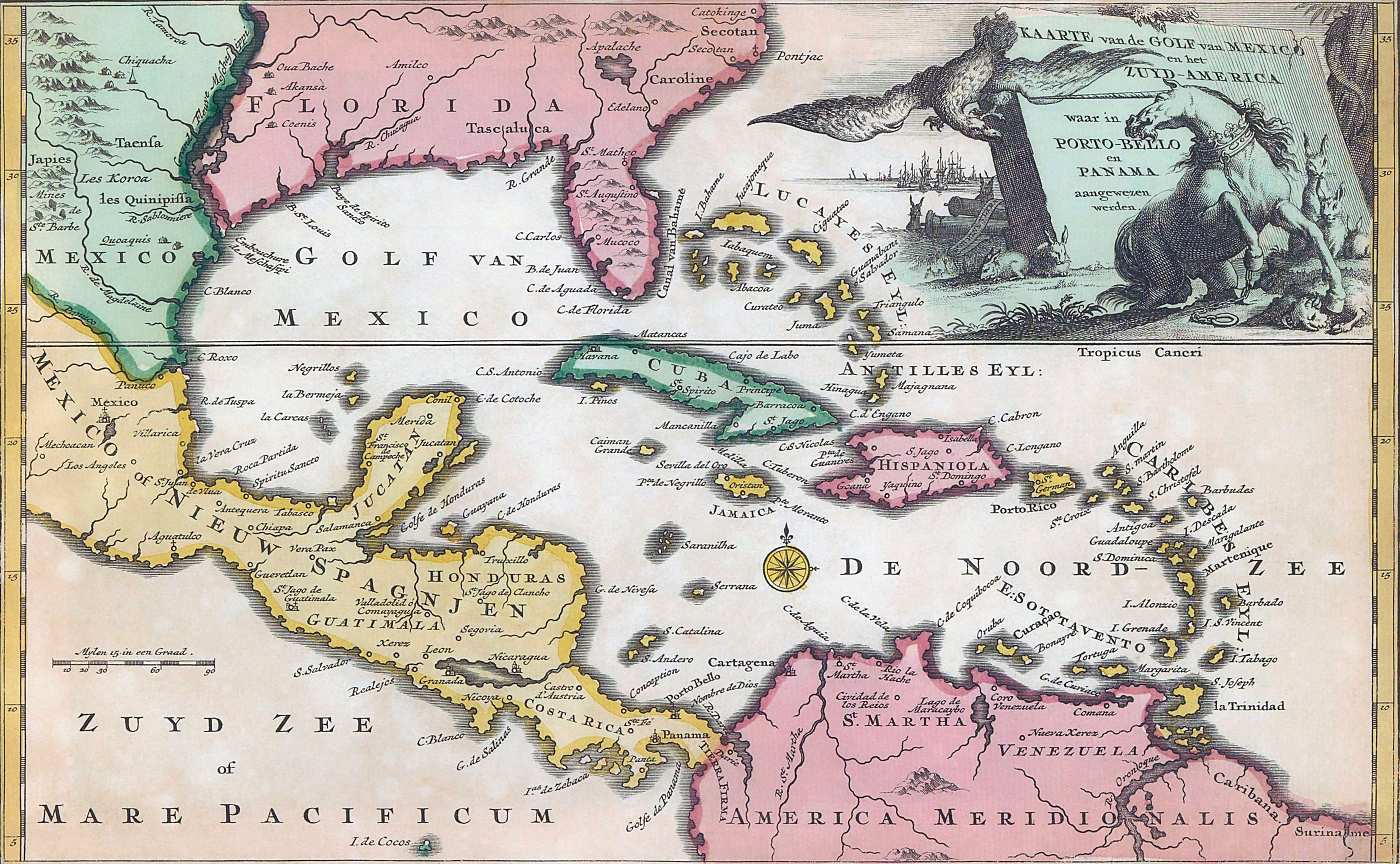
By the middle of the 19th century, around 40% of Cuban sugar was sold to the U.S., and American manufactured goods flowed in return. The economic relationship was matched by an equally strong strategic interest. The island's position at the entrance to the Gulf of Mexico, commanding the shipping lanes of the Western Hemisphere's middle latitudes, made it a fixation for American statesmen. Thomas Jefferson described the island as "the most interesting addition which could ever be made to [the American] system of states" in a post-presidential letter to James Monroe in 1823.
That same year, U.S. Secretary of State John Quincy Adams wrote to the U.S. Minister to Spain that Cuba was "an object of transcendent importance to the political and commercial interests of our Union" and that it was "scarcely possible to resist the conviction that the annexation of Cuba to our federal republic will be indispensable to the continuance and integrity of the Union itself," comparing Cuba to an apple that, severed from Spain, could only fall toward the U.S. in what became known as the "Ripe Fruit" theory.
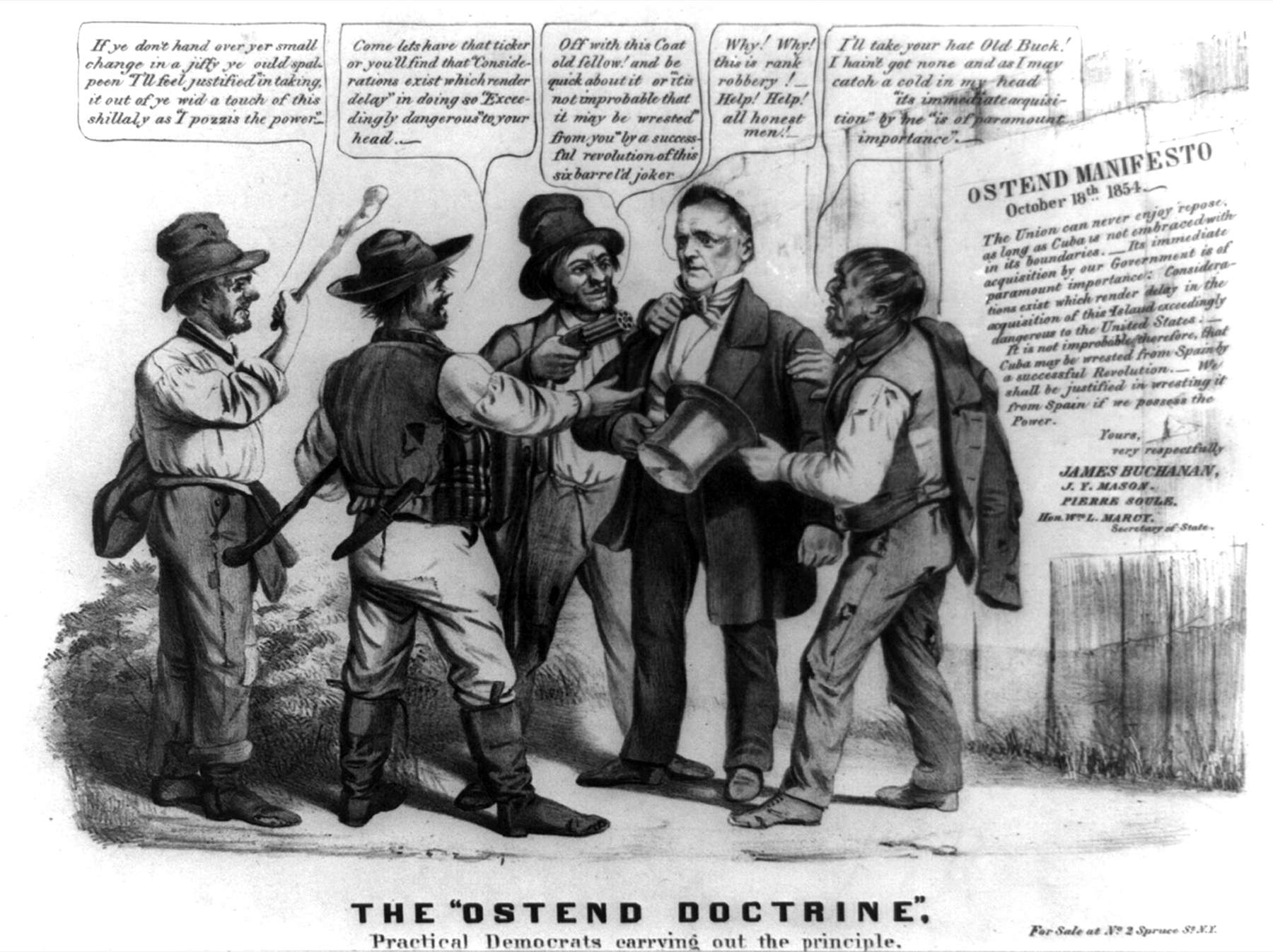
Several U.S. presidents tried to purchase Cuba from Spain in the 19th century, but to no effect. The most dramatic attempt was the last one, when U.S. Secretary of State William Marcy instructed the U.S. ambassadors to Britain, France and Spain to meet and propose a plan for acquiring Cuba.
They convened in Ostend, Belgium, and drafted the Ostend Manifesto, which declared Cuba vital to U.S. domestic interests and argued that if Spain would not sell, the U.S. would be justified in taking it by force. When its contents were made public, the manifesto was widely denounced and the Pierce administration was forced to abandon the plan.
Road to War
As Cuba's third independence war intensified after 1895, the U.S. found itself torn between competing pressures. American public opinion, shaped by extensive press coverage of Spanish repression, was broadly sympathetic to the Cuban cause, while economic interests favored stability as U.S. investors had committed significant capital to sugar plantations and other industries on the island. Strategic thinking, increasingly influenced by Alfred Thayer Mahan's arguments for Caribbean dominance, pointed toward intervention.
In January 1898, the USS Maine was sent to Havana to safeguard U.S. citizens and property following unrest in the city, after clearing the visit with Spanish authorities. The warship would never return.
On Feb. 15, 1898, an explosion sank the Maine in the harbor, killing 266 crew members. The cause has never been definitively established, with different investigations attributing it to a Spanish mine, an internal accident or a spontaneous combustion of coal. American popular opinion and the press blamed Spain immediately; the rallying cry "Remember the Maine" swept the country.
Congress declared war on Spain in April, just days after enacting the Teller Amendment, a commitment that the U.S. would not pursue the annexation of Cuba and would respect its will for independence, amid worries over the war becoming a vehicle for expansionism.
The Spanish-American War was brief. U.S. forces landed in Cuba in June, and within weeks the Spanish military position on the island had collapsed. In December, Spain and the U.S. signed the Treaty of Paris, under which Madrid transferred sovereignty over Puerto Rico, Guam and the Philippines, to the U.S. and relinquished its claim to Cuba, making the island nominally independent under temporary U.S. occupation.
Occupation and the Platt Amendment
The U.S. commenced formal military occupation of Cuba on Jan. 1, 1899, with Spain formally ratifying the Treaty of Paris on April 11. In 1900, the U.S. organized local elections and convened a constitutional convention to begin laying the groundwork for a Cuban government.
But Washington was not prepared to leave the island without guarantees. U.S. Secretary of War Elihu Root devised an amendment, introduced in Congress by Sen. Orville Platt of Connecticut and attached to the Army appropriations bill of March 1901.
The Platt Amendment stipulated the conditions for the withdrawal of U.S. troops and substantially limited Cuban sovereignty: Cuba could not transfer land to any foreign power other than the U.S., its treaty-making rights were restricted, and the U.S. reserved the right to intervene in Cuba "for the preservation of Cuban independence." Cuba was also required to cede rights to a naval base to Washington.
The Cuban constituent assembly adopted it, and on May 20, 1902, the U.S. ended the military occupation and formally inaugurated the Cuban Republic. A treaty signed in 1903 incorporated the amendment's provisions into a bilateral agreement between them.
One of the Platt Amendment's most enduring legacies was Guantánamo Bay. Pursuant to its provisions, on Feb. 23, 1903, the two nations entered into a lease agreement under which the U.S. would exercise complete jurisdiction and control while Cuba retained ultimate sovereignty. The Platt Amendment was abrogated in 1934 as part of Franklin Roosevelt's Good Neighbor Policy, a broader reorientation of U.S. relations with Latin America away from direct intervention and toward multilateral cooperation, but the two parties agreed to extend the lease indefinitely, unless both nations agree to terminate it.
Protectorate Era
The Platt Amendment gave Washington a legal basis for repeated intervention in Cuba.
From 1906 to 1909, the U.S. military occupied the country to put down an insurrection following the resignation of President Estrada Palma, governing the island through a provisional government led by Charles Edward Magoon.
In 1912, the U.S. sent hundreds of Marines to Cuba to protect American interests and help quell an armed uprising by the Partido Independiente de Color, an Afro-Cuban political organization that had been banned in 1910. Cuban forces suppressed the rebellion with overwhelming force, killing thousands.
American economic penetration accelerated in parallel. U.S. investments in Cuba before 1894 stood at $50 million; between 1898 and 1906 they grew to $160 million, with the bulk in agriculture — sugar, tobacco, fruit and cattle.
In 1917, renewed political turmoil in Cuba prompted the U.S. to land Marine detachments, mainly in Oriente Province, to protect U.S.-owned property, especially sugar cane plantations and mills — including from Germans after the U.S. entered World War I. Most of the regiment withdrew from the island in August 1919, though two companies remained at Camagüey until Feb. 15, 1922.
Cuba's share of U.S. sugar imports grew from 35% in 1900–03 to 91% a decade later and 98% by 1922–25. U.S. banks, railroads, utilities and landholding companies became deeply integrated into the Cuban economy at every level.
Underpinning this economic penetration was the Reciprocity Treaty of 1903, which gave Cuban sugar preferential tariff rates in the U.S. market while opening Cuba to U.S. manufactured goods at reduced rates in return. The arrangement accelerated Cuba's specialization as a sugar exporter and its dependence on U.S. industrial imports, deepening the structural asymmetry between the two economies. Cuban producers oriented their land, capital and labor toward a single crop destined for a single market, making any future break with the U.S. economic orbit correspondingly more costly.
The result was a republic whose formal sovereignty coexisted with significant economic and political dependence on its northern neighbor, one that would define Cuban political life and fuel nationalism for the next half-century.
The Batista Era
Independent Cuba inherited the structural problems that Spanish colonialism and American occupation had left behind.
The country still had an economy dependent on a single crop. Sugar accounted for around 80% of export earnings, leaving government revenues and living standards acutely vulnerable to price swings on the world market.
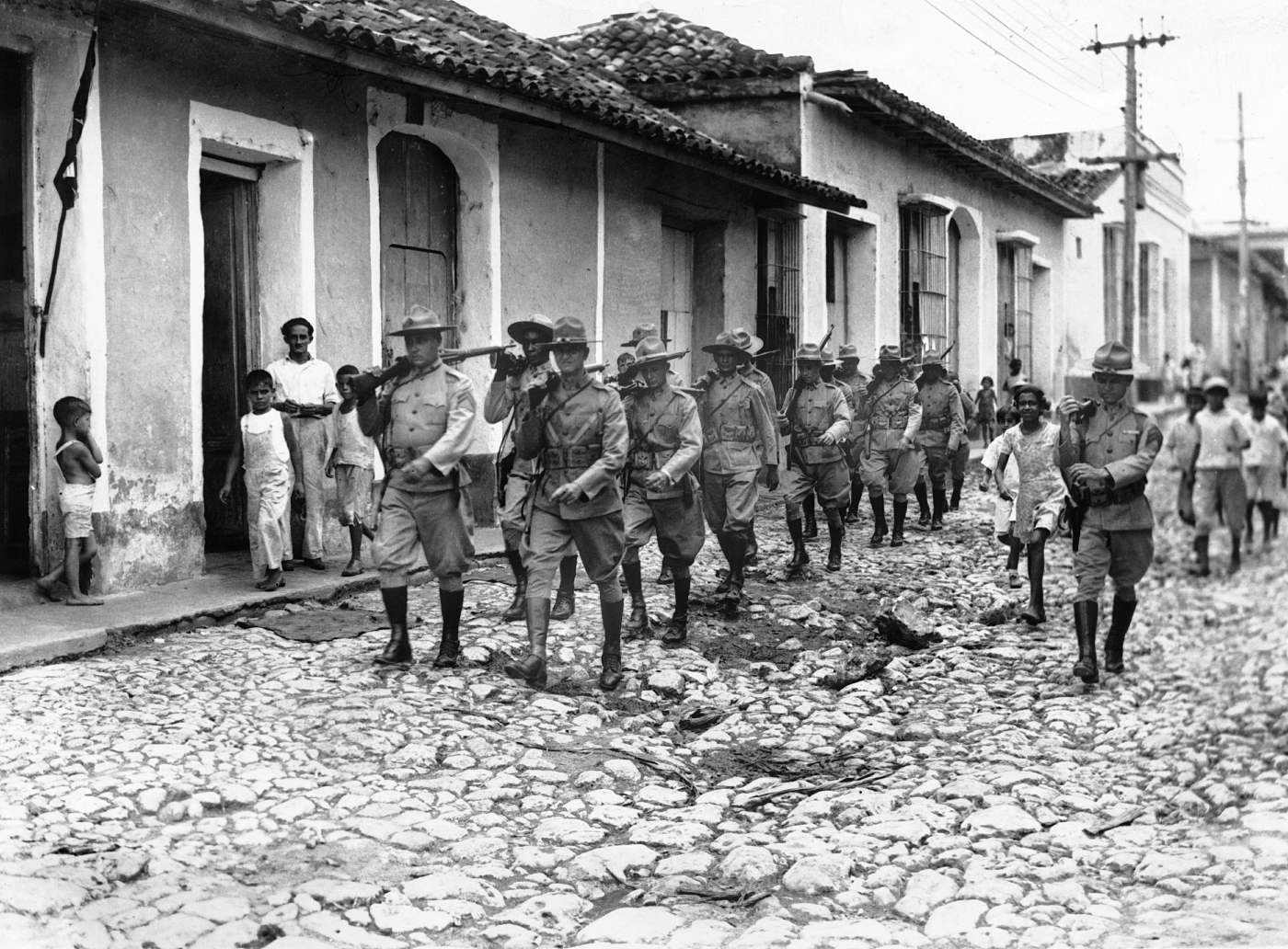
The sudden end of a post-World War I sugar-price boom in 1920 caused the collapse of many Cuban-owned banks and businesses almost overnight, further concentrating economic power in the hands of foreign investors. Meanwhile, most Cubans, particularly in rural areas, experienced poverty, limited access to education and few public services.
By the mid-1920s, corruption was widely seen as so deeply embedded in political life that the republic's institutions were incapable of self-reform. Promising reform and modernization, Gerardo Machado was elected president in 1925.
He delivered infrastructure and public works in his first term but then maneuvered to extend his stay in power, amending the constitution to allow his reelection and growing increasingly authoritarian as opposition mounted.
By the early 1930s, as the Great Depression devastated Cuba's sugar-dependent economy, confrontations between Machado's government and the political opposition — students, organized labor, the prominent clandestine organization ABC — had grown in violence and frequency.
In May 1933, U.S. President Franklin Roosevelt sent ambassador Benjamin Sumner Welles to Havana to broker a political solution. Welles successfully mediated a transition, and Machado fled the country in August 1933 amid a general strike and the withdrawal of military support.
1933 Seargents' Revolt
The political vacuum that followed opened the door for an unlikely figure: Fulgencio Batista. Born into a poor Cuban farming family, he had joined the army as a shorthand typist in 1921, risen to the rank of seargeant, and at the age of 32 took a leading part in the Seargeants' Revolt of 1933, which deposed the provisional government.
In the aftermath, Batista was promoted to colonel and became Army Chief of Staff. He then worked with U.S. officials to pressure Ramón Grau San Martín into stepping down after 100 days in office, becoming the strongman and kingmaker behind a succession of figureheads, consolidating his position as the dominant force in Cuban politics without ever formally holding the presidency.
In 1939, he sponsored the convening of a constituent assembly drawn from across the political spectrum, including communists, liberals and conservatives, to produce a new constitution. The 1940 Constitution guaranteed civil liberties, social rights and established limits on presidential power, remaining a reference in Cuban political life for years afterward.
Batista won the first presidential election held under the new constitution, defeating Grau in 1940. His term was marked by relative political stability and economic growth, partly driven by rising sugar prices during World War II. Governing within the bounds of the new constitution, he pursued a reformist domestic agenda: he expanded public education and rural schools, increased public health spending, introduced minimum wage protections and the eight-hour workday, and intervened in the sugar industry to stabilize prices and protect Cuban producers.
He maintained cooperative relations with Washington as well as close ties with the Communist Party of Cuba, which backed his candidacy and whose affiliated union federation, the CTC, became a pillar of his political coalition. Batista left office peacefully at the end of his four-year term, handing power to Grau in a rare moment of democratic normalcy in Cuban political history.
Rising sugar prices during and after World War II brought real economic growth, and the period saw significant investment in public works and social welfare. Cuba's middle class expanded and the university was a center of active political life. But the era became equally associated with corruption.
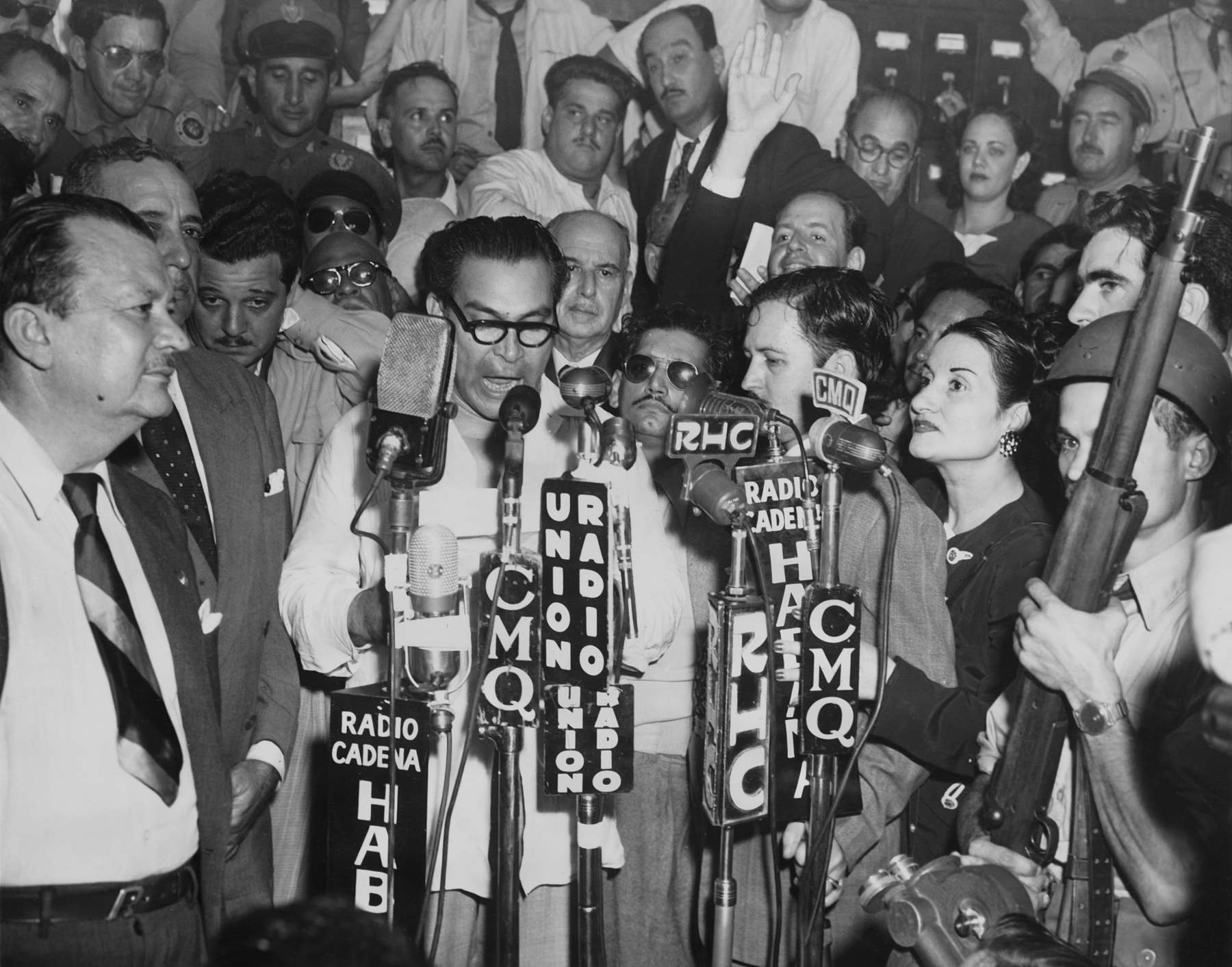
Government posts were treated as opportunities for personal enrichment; public funds were systematically diverted; and political violence between rival factions, including armed groups, became a feature of university and union politics. The gap between the reformist rhetoric and the reality of the governments produced deep cynicism about Cuban institutions.
Sen. Eduardo Chibás shot himself during a live radio broadcast in 1951, in a gesture of protest against what he called the corruption devouring the republic. He died days later. This became one of the defining political moments of the era and deepened the sense of institutional crisis.
Batista's Return
After leaving office, Batista spent years in Florida before returning to Cuba to contest the 1952 presidential election. Three months before the scheduled vote, trailing behind in pre-election assessments but with army backing, he seized power, ousting President Carlos Prío Socarrás and cancelling the elections.
The U.S. formally recognized his government within weeks, with an internal U.S. State Department assessment noting that Batista was friendly toward the U.S. and that his government would probably be no worse than the one he had replaced.
Back in power, Batista suspended the 1940 Constitution along with most protections and political liberties enshrined in it, including the right to strike. Political repression intensified steadily: his secret police, the SIM, became notorious for surveillance, torture and extrajudicial killings of regime opponents. Corruption pervaded the government at every level.
Meanwhile, sugar prices and tourism revenues kept the economy afloat through much of the decade, boosting GDP, and the island-nation ranked among the most developed countries in Latin America in per capita income, literacy rates, and the number of television sets and automobiles per household, comparable to parts of Southern Europe. Havana was a cosmopolitan city with a large and relatively prosperous middle class.
Batista cultivated close ties with American organized crime figures, most notably Meyer Lansky, who oversaw the expansion of Havana's casino industry into one of the most profitable gambling operations in the Western Hemisphere, with proceeds shared between the Mob and the regime.
Cuban Revolution
Beneath the surface, opposition to Batista had already begun to organize.
Arguing that Batista had destroyed Cuba's constitutional order, Fidel Castro, a lawyer and aspiring politician whose congressional candidacy had been cut short by Batista's 1952 coup, began organizing an armed movement to overthrow the government.
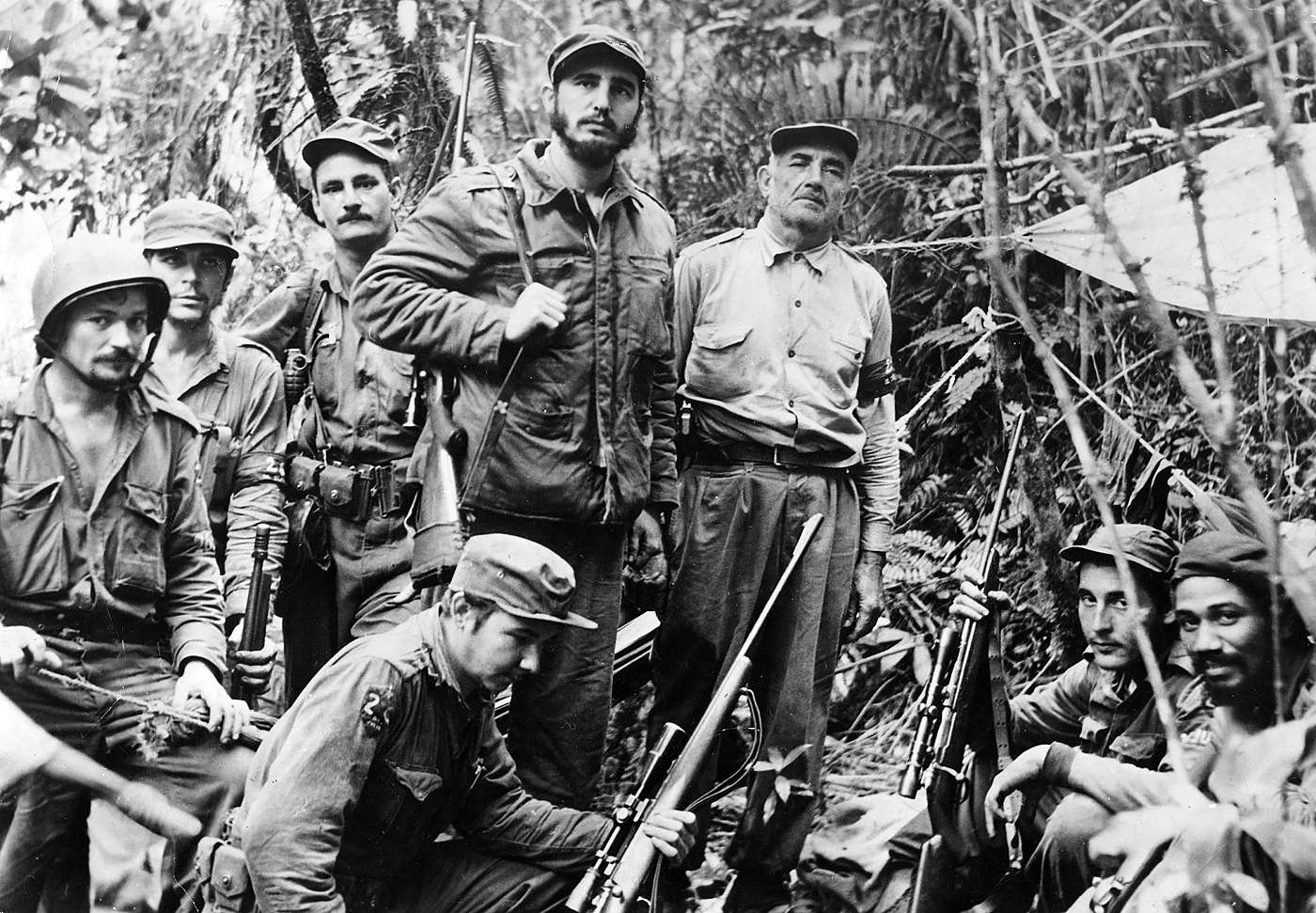
On July 26, 1953, he led over 160 armed followers, including his brother Raúl, in a coordinated attack on the Moncada army barracks in Santiago de Cuba and the Carlos Manuel de Céspedes barracks in Bayamo. The plan called for seizing the barracks' arsenal to arm supporters and spark a broader popular uprising. However, the attack failed.
Castro was captured, tried, and sentenced to fifteen years in prison. At his trial, he delivered a four-hour defense speech that concluded with the words "history will absolve me" — a text that was later circulated clandestinely as a manifesto.
Amid growing domestic and international pressure for political liberalization, many of the survivors were granted amnesty in May 1955 and moved to Mexico, where they continued planning a return. Castro and 81 companions set out from Tuxpán aboard the yacht Granma, landing in Cuba on Dec. 2, 1956, to begin the guerrilla struggle. The landing was a near-disaster: Batista's forces were waiting, and most of the group was killed or captured.
A small remnant of the band — later named the 26th of July Movement (M-26-7) in exile to commemorate the 1953 attack — including Fidel, Raúl and Argentine-born physician Ernesto "Che" Guevara, escaped into the Sierra Maestra mountains and later resumed their guerrilla campaign against Batista.
From their mountain base, the rebels built popular support slowly, combining military operations with efforts to present themselves as a national liberation movement. Sympathetic coverage by foreign journalists, notably from New York Times reporter Herbert Matthews, who interviewed Castro in the mountains in 1957, brought the movement international attention and undermined the Batista government's credibility, which had falsely claimed Castro was dead.
Urban resistance networks, student groups and labor unions operated in parallel, conducting strikes and sabotage in Havana and other cities. In February 1958, the M-26-7 kidnapped Argentine Formula 1 legend Juan Manuel Fangio during the Cuban Grand Prix, an act that drew further international attention and highlighted the government's vulnerability. In March 1958, Washington suspended arms shipments to Cuba.
Batista launched a major military offensive against Castro's forces that year, advancing to the foothills of the Sierra Maestra in late May and early June before the heaviest fighting developed in the summer. The campaign failed, and the 26th of July Movement fighters repelled the offensive. By early August, the offensive had stalled completely. The reversal marked a major turning point in the conflict: the military initiative shifted to the rebels and never returned to Batista. On Jan. 1, 1959, Batista fled the island, with Castro's forces entering Havana a week later.
Fidel Castro Takes Power
In his victory speech from Santiago de Cuba, Castro declared that the new revolution would not be like 1898, "when the North Americans came and made themselves masters of our country." The Dwight Eisenhower administration officially recognized the new government within a week.
In a memo to the president on Jan. 7, 1959, U.S. Secretary of State John Foster Dulles stated that the provisional government appeared free from communist influence and showed indications of pursuing friendly relations with Washington. That assessment reflected a broader uncertainty within the U.S. government in the face of a real ambiguity over the ideological nature of the revolution.
Castro visited the U.S. three months later, at the invitation of the American Society of Newspaper Editors, in a first major attempt to shape his government's international image. He met with Vice President Richard Nixon, as Eisenhower declined to receive him, and held widely covered press conferences in Washington and New York. He worked to project an image of a democratic nationalist rather than a communist revolutionary, denied any intention to nationalize foreign properties and played down Soviet influence in his movement.
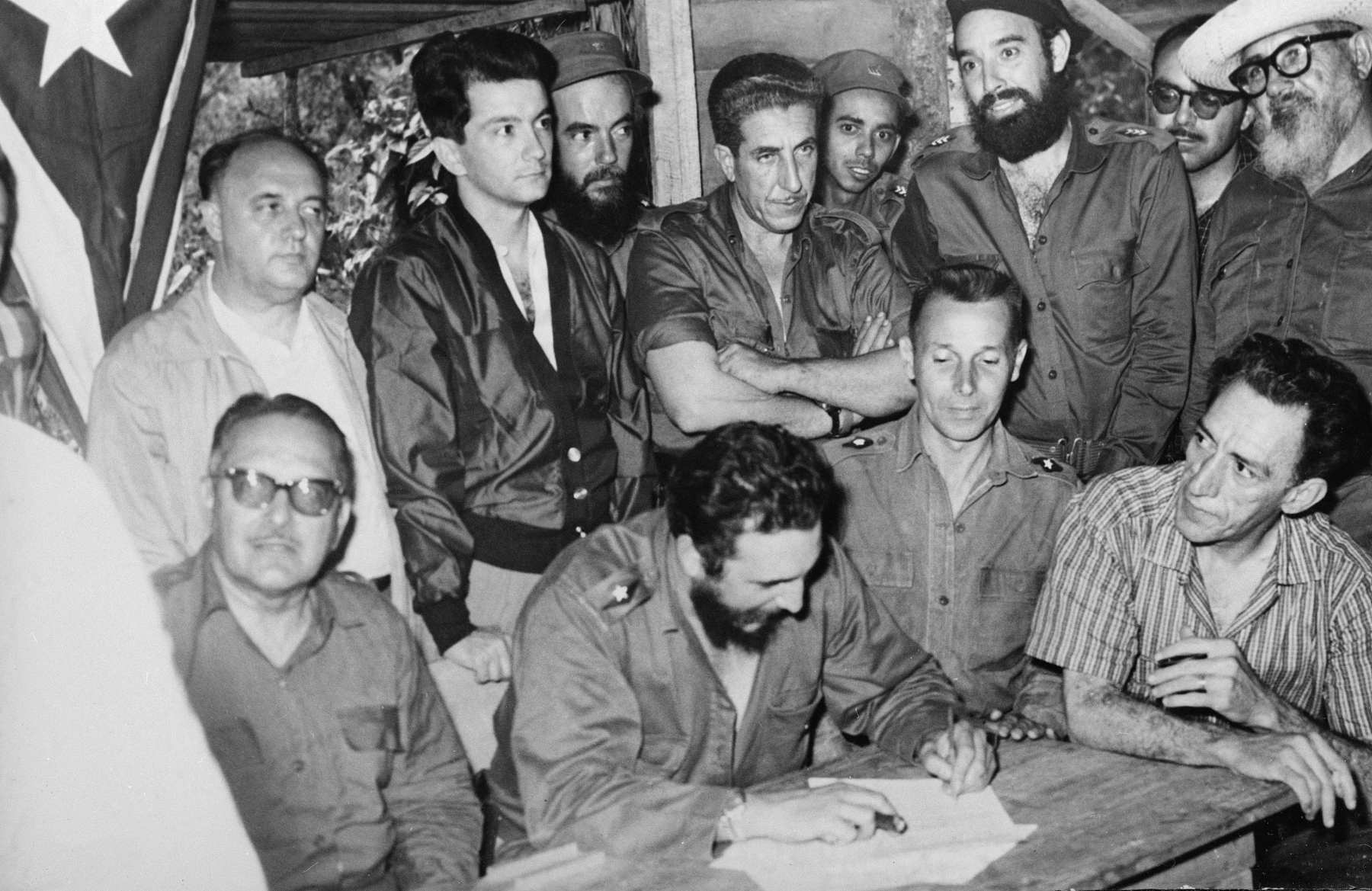
In a draft summary attached in an April 24 memo to Dulles, Nixon said that Castro "seem[ed] to be sincere" but noted that he was "either incredibly naive about communism or under communist discipline" and that the U.S. should work to orient him in the right direction — adding that his guess was the former.
The visit produced no diplomatic breakthrough and left both sides uncertain about the other's intentions, but it marked the last moment at which a different outcome was at least publicly imaginable. U.S. cautious optimism didn't last long.
Castro signed the First Agrarian Reform into law in May 1959, setting a cap on landholdings at 402 hectares (993 acres) per owner and prohibiting foreigners from obtaining Cuban land ownership. Around 200,000 peasants received title deeds as large landholdings were broken up. The measure was popular among the rural poor but alarmed both Cuban landowners and foreign investors.
Further reforms followed rapidly: rents were reduced, utility rates slashed and the assets of Batista-era officials seized. Castro embarked on a program of nationalization that gradually brought hundreds of American businesses and properties under Cuban state control. When U.S.-owned oil refineries refused to process Soviet crude oil in 1960, Castro also nationalized them.
The Eisenhower administration responded by canceling the U.S. purchase of Cuban sugar and, on Oct. 19, 1960, imposed the first trade embargo on Cuba, covering all U.S. exports except medicine and some foods. U.S. State Department Deputy Assistant Secretary for Inter-American Affairs Lester Mallory wrote in an April 1960 memo to the Assistant Secretary of State for Inter-American Affairs Roy Rubottom that "every possible means should be undertaken promptly to weaken the economic life of Cuba" with the ultimate goal to overthrow the government.
Cuba turned to the Soviet Union for economic support, and the spiral accelerated — deepening a relationship that was unlikely at first. According to later Soviet accounts, the Kremlin initially dismissed Castro as a bourgeois nationalist of little strategic interest and a potential CIA asset, only recognizing him as an ally after Havana began openly opposing anti-communism in late 1959. The two countries signed their first trade deal in early 1960.
Domestically, the Castro government also carried out a wave of revolutionary tribunals against Batista-era officials and alleged war criminals. "Che" Guevara was placed in command of La Cabaña fortress-prison, where tribunals convicted and executed opponents of the revolution, often with limited due process. According to a U.S. Embassy cable to Washington, the national total of government executions exceeded 500.
Eisenhower severed diplomatic relations entirely on Jan. 3, 1961, days before leaving office.
Bay of Pigs
The U.S. had begun planning Castro's removal almost a year earlier, with President Eisenhower approving a covert CIA program in March 1960 to train Cuban exiles for an invasion. The CIA set up training camps in Guatemala, and by November the operation had assembled a small army for an assault landing and guerrilla warfare.
Despite efforts to keep the invasion plans covert, they became common knowledge among Cuban exiles in Miami. Through Cuban intelligence, Castro learned of the training camps in Guatemala as early as October 1960. U.S. President John F. Kennedy authorized the invasion plan in February 1961, shortly after his inauguration.
Eight World War II B-26 bombers, painted to look like Cuban air force planes, left Nicaragua to bomb Cuban airfields on April 15, 1961. They destroyed a portion of Castro's air force but left enough aircraft operational to threaten the invasion. As news broke, photos of the repainted planes became public and revealed American involvement. Kennedy cancelled a second wave of strikes.
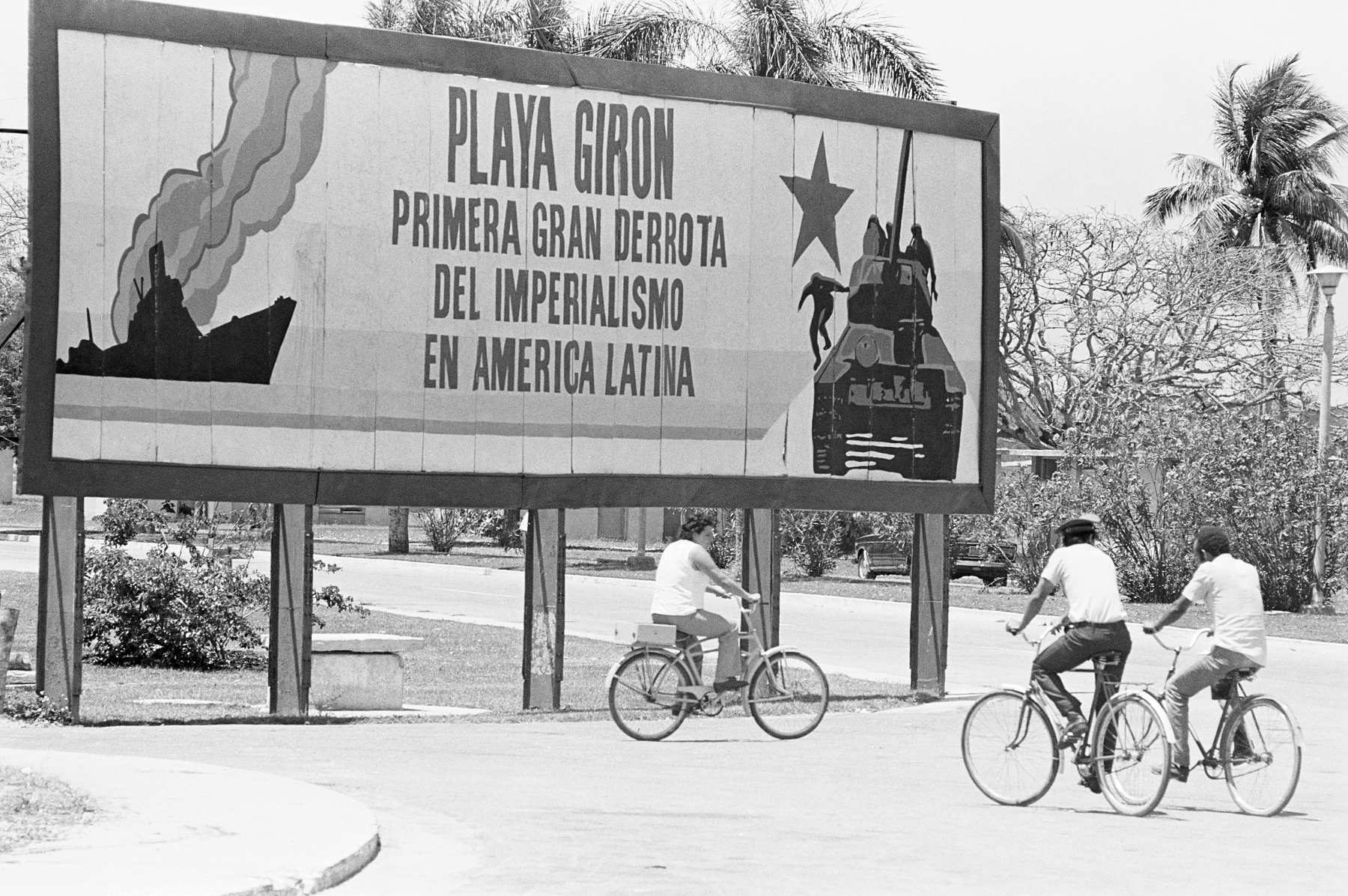
On April 17, 1961, the Cuban-exile invasion force known as Brigade 2506 landed at beaches along the Bay of Pigs and encountered heavy resistance. Cuban planes strafed the invaders, sank two supply ships and destroyed half of the exile's air support. CIA planners concluded that only direct U.S. military intervention could salvage the operation and pressed Kennedy to authorize air support. He refused.
Brigade 2506 surrendered on April 20, 1961. The three days of fighting left more than 100 Cuban exiles dead and nearly 1,200 captured, who were released only on Dec. 24, 1962, in exchange for $53 million in food and medicine. Castro used the attack by what he called the "Yankee imperialists" to solidify his power in Cuba, ordering thousands of arrests and requesting additional Soviet military aid.
Operation Mongoose
The Bay of Pigs debacle didn't end U.S. efforts to overthrow the Castro government. In the aftermath of the failed invasion, the CIA proposed a secret campaign of covert operations and sabotage, codenamed Operation Mongoose, designed to destabilize Cuba from within.
On Nov. 30, 1961, Kennedy authorized the program, placing it under the direction of Gen. Edward Lansdale and the close personal oversight of Attorney General Robert Kennedy. Mongoose was among the CIA's largest-ever covert operations, employing hundreds of case officers and support staff and operating a fleet of boats, aircraft and front companies across South Florida at its peak.
Activities spanned a wide spectrum, including economic pressure, intelligence-gathering operations, raids on Cuban industrial facilities, refineries and railroad bridges, contamination of sugar exports bound for the USSR and introduction of crop diseases, and clandestine anti-Castro propaganda.
Additionally, in March 1962, the U.S. Joint Chiefs of Staff submitted to Secretary of Defense Robert McNamara a classified document, later known as Operation Northwoods, proposing a series of false-flag operations designed to manufacture a pretext for a U.S. military invasion of Cuba. Kennedy rejected the plan, and McNamara reportedly reacted with alarm.
The Cuban Missile Crisis
In the months that followed the failed Bay of Pigs invasion, Cuba became a front line of the Cold War.
Castro first announced the socialist character of the 1959 Cuban Revolution on Apr. 16, 1961, at a funeral for victims of the bombing of airfields ahead of the Bay of Pigs invasion. He reaffirmed that the revolution was socialist while standing before a crowd in Havana on May 1, 1961, adding that the people had no time for elections. Later that year, Castro declared himself a Marxist-Leninist "to the end of [his] life."
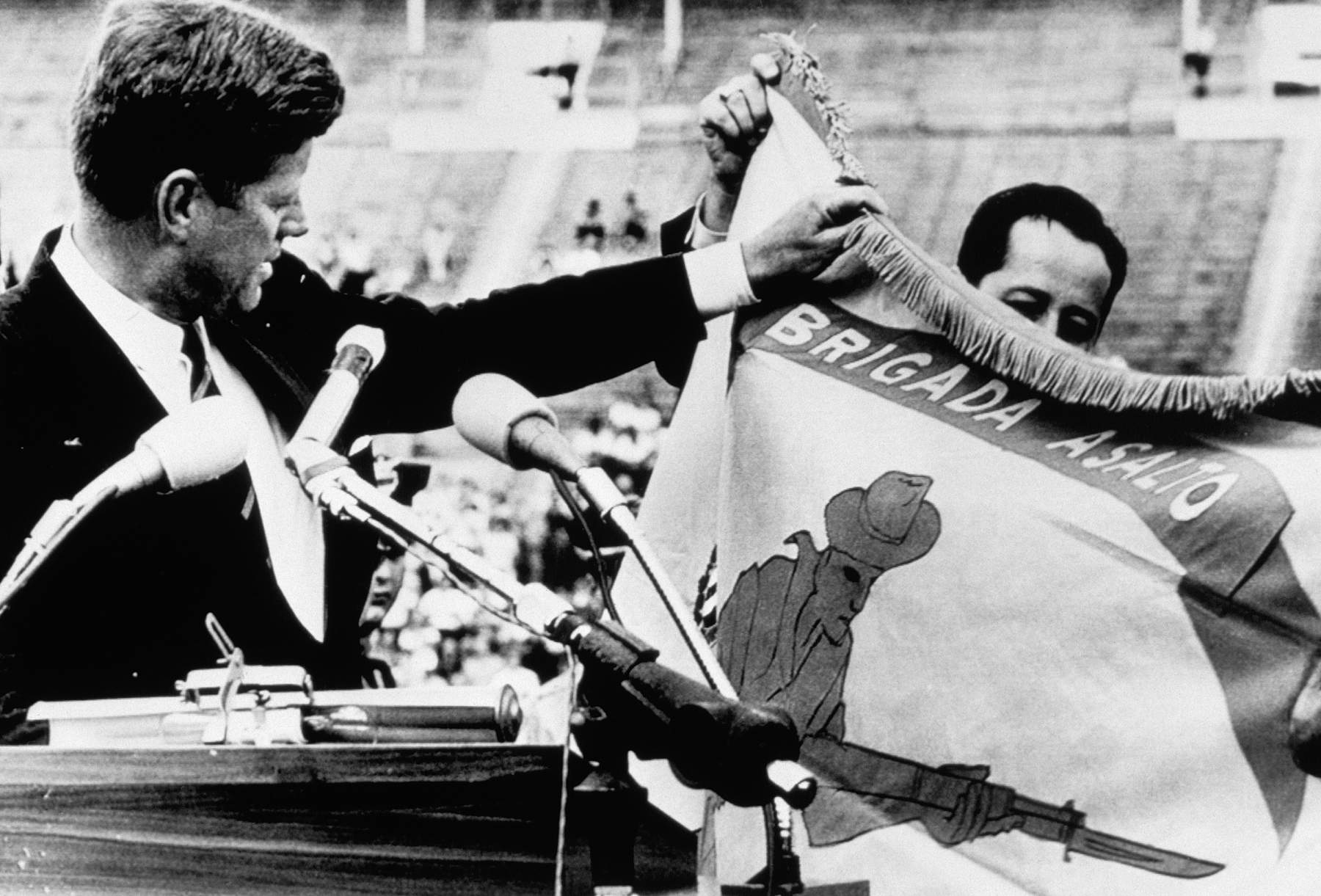
In July 1961, Castro merged the country's revolutionary factions into a single organization, the Integrated Revolutionary Organizations (ORI) — which was later reorganized into the United Party of the Socialist Revolution (PURSC) and then renamed the Communist Party of Cuba. The island, located 90 miles (145 km) from Florida, had become a one-party communist state, setting the stage for the most dangerous confrontation of the Cold War.
Meanwhile, Kennedy tightened the U.S. embargo in stages. He proclaimed a ban on all trade with Cuba on Feb. 3, 1962, and widened its authority under the Trading with the Enemy Act on March 23, 1962. The more sweeping transactions ban — freezing Cuban assets and requiring Treasury licensing for virtually all dealings with Cuba — followed later, with the Cuban Assets Control Regulations of July 8, 1963. Earlier, in January 1962, his administration had successfully lobbied for Cuba's suspension from the Organization of American States (OAS).
The Cuban Missile Crisis
Soviet Premier Nikita Khrushchev saw U.S.-Cuba tensions as an opportunity to deepen Soviet ties with Cuba, agreeing with Castro to secretly establish a military foothold on the island to defend it from potential U.S. attacks.
In July 1962, he began shipping ballistic missiles to Cuba along with technicians to operate them, believing the Kennedy administration would accept a fait accompli, as it had in Berlin. At the time, Washington had already deployed Jupiter intermediate-range ballistic missiles to Turkey and Italy, putting Soviet territory in range, and Khrushchev viewed the Cuban deployment as a strategic counterbalance and a way to demonstrate that the peaceful coexistence doctrine didn't mean abandoning Soviet allies.
Despite public warnings from Kennedy in early and mid-September 1962 that the U.S. would not tolerate offensive weapons in Cuba, an American U-2 spy plane photographed in October 1962 nuclear missile sites being built by the Soviet Union on the island. After days of talks with his advisors, Kennedy decided to place a naval blockade around Cuba, labelling it a "quarantine," to prevent the Soviets from bringing in more military supplies, and demanded the removal of the missiles already there. As the confrontation intensified, Castro urged Khrushchev not to shrink from using the missiles even if it meant Cuba would be destroyed in a U.S. counterattack.
The 13-day standoff began on Oct. 24, 1962 as Soviet ships approached the U.S. quarantine line, further escalating three days later, on the "Black Saturday," when Soviet forces in Cuba shot down an American U-2 over the island, killing Maj. Rudolf Anderson, the only combat death of the crisis.
In the meantime, Khrushchev sent Kennedy two letters: one private on Oct. 26, 1962, proposing that the Soviets would withdraw the missiles from Cuba in exchange for a U.S. pledge not to invade the island, and one broadcast publicly over Moscow radio demanding the removal of U.S. Jupiter missiles from Turkey as a condition for withdrawing from Cuba. Kennedy's advisors made the deliberate choice to ignore this second letter and respond only to the more conciliatory one.
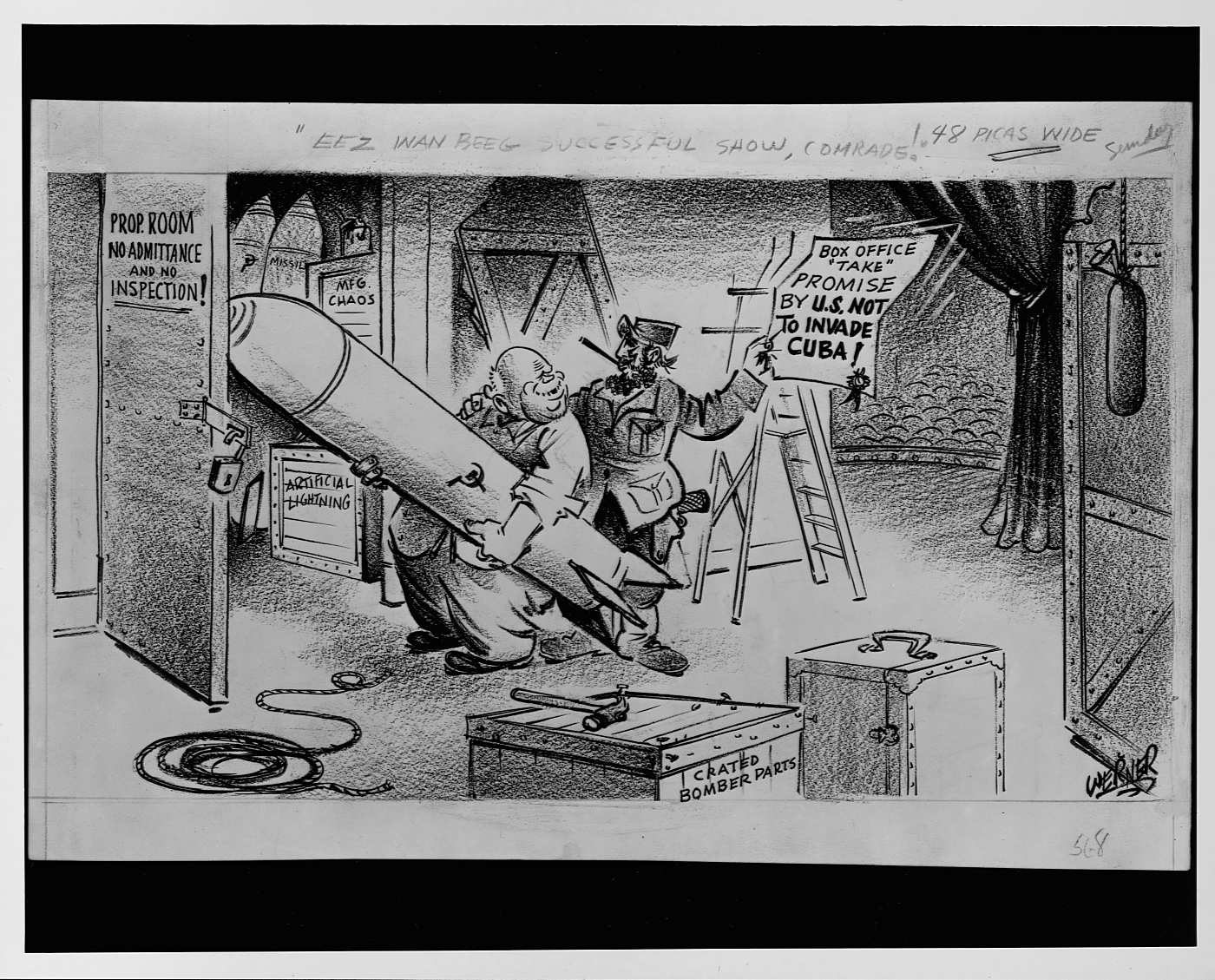
Privately, however, a diplomatic channel was already open on the Turkey question. U.S. Attorney General Robert Kennedy and Soviet Ambassador Anatoly Dobrynin reached an understanding in secret meetings that evening: the Soviet Union would withdraw the missiles from Cuba under U.N. supervision in exchange for an American pledge not to invade Cuba. In an additional secret understanding, the U.S. agreed to eventually remove the Jupiter missiles from Turkey.
On the morning of Oct. 28, 1962, Khrushchev issued a public statement that Soviet missiles would be dismantled and removed from Cuba. The naval quarantine continued until the Soviets also agreed to remove their IL-28 bombers. U.S. Jupiter missiles were quietly removed from Turkey in April 1963. Furthermore, the White House and the Kremlin established a direct telephone link, known as the Hotline, to prevent this from happening again.
Excluded from the negotiations, Castro learned about the agreement from a contact in the local press. He was angered to discover that the Soviet Union would treat Cuba just as the U.S. had and broadcast his own conditions that the U.S. must meet to validate the non-invasion pledge, demanding among other things the cessation of all commercial and economic pressure against Cuba and an end to U.S. efforts to isolate the island in the Organization of American States.
Washington ignored these requests, and Khrushchev subsequently wrote Castro a long letter acknowledging "a certain amount of resentment" about the indignities suffered by Cuba as a result of the crisis having been resolved without its participation.
The missile crisis marked the outer limit of Cold War brinkmanship, the moment the world came closest to nuclear war, and left Cuba in a paradoxical position: more secure from U.S. invasion than before, guaranteed by both superpowers, yet once again sidelined in decisions about its own future.
Continued Cold War Tensions
Though the immediate threat of nuclear confrontation had been resolved, the Cold War was far from over.
After the missile crisis ended, the U.S. resumed covert operations against Cuba with the intent to isolate Castro, but Kennedy wound down Mongoose and authorized a secret back-channel exploration of normalization with Cuba conducted via ABC News journalist Lisa Howard and William Attwood, at the time serving as U.S. Ambassador to Guinea. Castro showed tentative interest, but the initiative remained unresolved.
The CIA opposed normalization and continued planning assassination attempts against Castro that, as the Church Committee revealed in 1975, extended into the next administration. Meanwhile, in 1963, Castro made a 40-day visit to the Soviet Union, where he secured pledges of continued economic and military support.
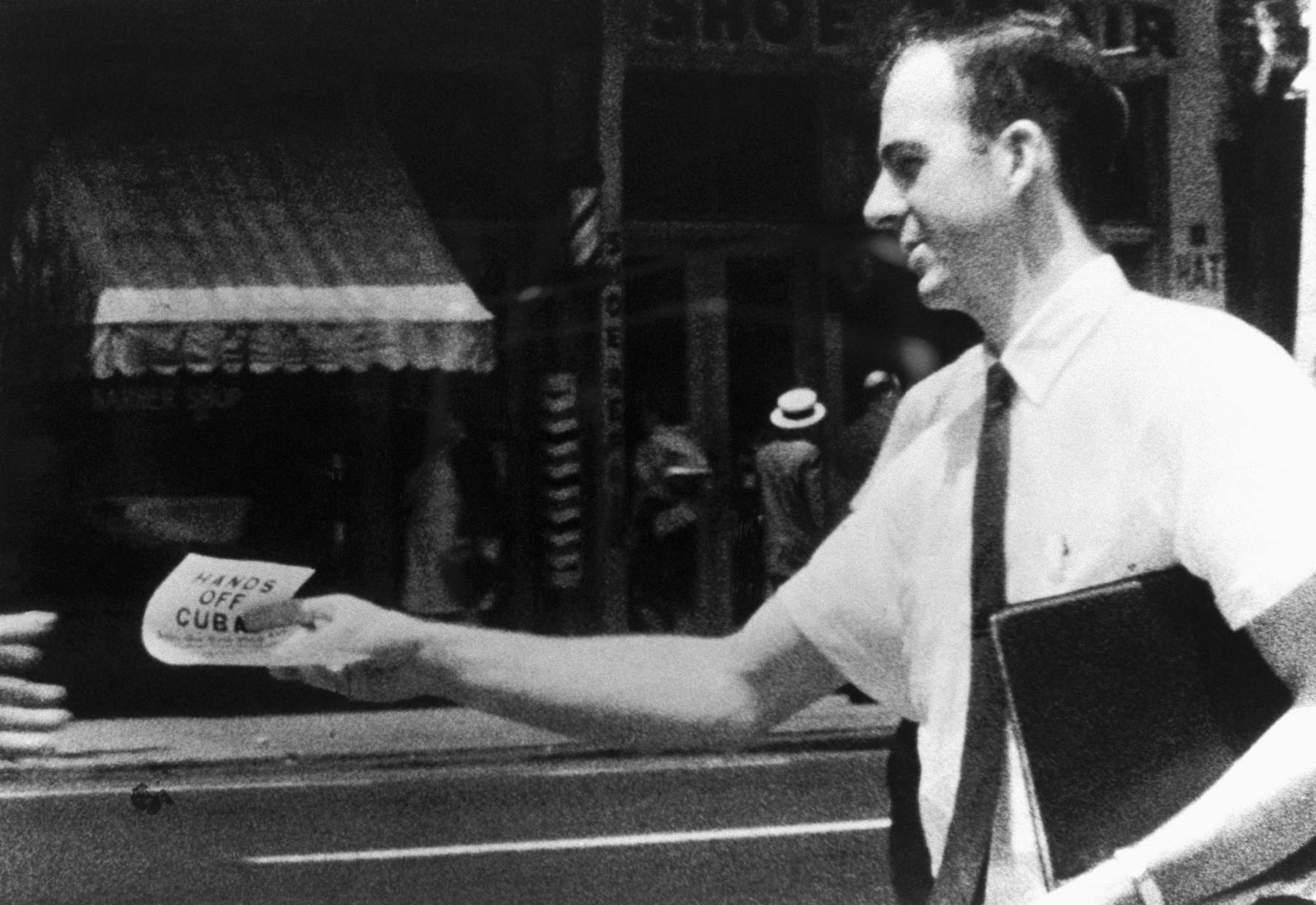
On Nov. 22, 1963, Kennedy was assassinated in Dallas. The murder further complicated U.S.-Cuba relations. Lee Harvey Oswald, the man charged with killing the president, had ties to pro-Castro organizations and had sought a visa at the Cuban consulate in Mexico City weeks before the shooting.
The Warren Commission ultimately found no evidence of Cuban government involvement in the Kennedy assassination, but public speculation persisted and made the incoming administration acutely cautious about anything that could be read as Cuba-related escalation in the weeks after. Lyndon B. Johnson quietly shelved the normalization initiative and scaled back covert operations on the island. On the diplomatic front, his administration maintained and tightened Cuba's isolation. In 1964, he cut U.S. foreign aid to nations that refused to sever commercial ties with Havana.
Meanwhile, Cuba intensified political and military ties with the Soviet bloc, hosting a signals intelligence (SIGINT) facility at Lourdes, near Havana, while Soviet subsidies supported its economy. Moscow paid well above market rates for Cuban sugar, deepening the island's dependence on its communist patron and ensuring that any U.S. path toward normalization would have to navigate the broader Cold War superpower rivalry.
The following year, Johnson sent 22,000 U.S. troops to the Dominican Republic to intervene in a civil war and prevent what he feared could become another Cuba — confirmation, in Castro's telling, of U.S. imperialism across Latin America. The intervention was also characterized as a return to the "gunboat diplomacy" the U.S. had practiced in the Western Hemisphere decades earlier.
On Oct. 10, 1965, Havana opened the port of Camarioca to allow Cubans to leave freely for the "Yankee paradise," triggering a chaotic month-long boatlift that saw the departure of roughly 3,000 Cubans and prompted negotiations between the two governments. The result was a memorandum of understanding and the subsequent Freedom Flights program, which between 1965 and 1971 allowed roughly 250,000 Cubans to enter U.S. territory.
Congress institutionalized a preferential treatment the following year with the Cuban Adjustment Act of 1966, which granted Cubans who had been present in the U.S. for at least a year the right to adjust their status to permanent residency without having to leave the country.
Cuba and the Non-Aligned Movement
Even as Havana deepened its alliance with Moscow, it worked simultaneously to position Cuba as a leader of the developing world's independence from both Cold War blocs, a tension Castro never fully resolved but managed with considerable diplomatic dexterity.
The island-nation was a founding participant in the Non-Aligned Movement in 1961 and used the forum as a platform to criticize U.S. policy in Latin America, Southeast Asia and Africa. That strategy would reach its apex nearly two decades later, when Castro chaired the Non-Aligned Movement from 1979 to 1983, hosting its Sixth Summit in Havana in September 1979. The summit was a symbolic achievement, demonstrating that Cuba could project soft power and leadership even under U.S. embargo, and Castro used it to frame Washington's economic pressure as an act of imperialism against the entire developing world rather than a bilateral dispute. The chairmanship gave Havana a sustained platform in the U.N. and complicated U.S. efforts to build international support for isolating the island.
Alongside the diplomatic push for independence from both blocs, Havana pursued a far more direct method of extending its influence: exporting revolution itself.
The Death of Che Guevara
Ernesto "Che" Guevara, an outspoken critic of Khrushchev's peaceful coexistence doctrine and of Cuba's growing dependence on the USSR, left the island in April 1965. His goal was to replicate across the developing world what had worked in the Sierra Maestra. Though he resigned his Cuban citizenship and military rank, Guevara remained in close contact with Castro as Cuba provided fighters and logistical support for his missions.
Guevara first arrived in eastern Congo with a Cuban expeditionary force to support the Simba rebellion. The mission collapsed. He withdrew after seven months, later writing a devastating private account of the experience describing it as a story of failure.
He secretly returned to Cuba, then spent months training the team he would lead into Bolivia. Guevara arrived in Bolivia in November 1966, intending to use the country as the launching pad for a continent-wide revolution based on his foco theory — the belief that a small guerrilla force could create the conditions for revolution without waiting for them to develop organically. It did not work. The Moscow-aligned Bolivian Communist Party refused to support him, peasants didn't rally to his cause and the U.S.-backed Bolivian Army tracked his movements with growing precision.
On Oct. 8, 1967, Bolivian Rangers wounded and captured Guevara in the Quebrada del Yuro ravine, taking him to the village of La Higuera and executing him there the following day in the presence of Félix Rodríguez, a Cuban-American operative working with the CIA.
Nixon and the Frozen Conflict
In 1969, Richard Nixon entered the White House with no appetite for revisiting Cuba policy as his main foreign policy goal was to promote a détente with the Kremlin, with a special focus on Vietnam. The embargo remained in place, diplomatic relations stayed severed and the broader framework of isolation Johnson had inherited and maintained was left untouched. Cuba was too sensitive to revisit, too entrenched to dislodge, and too symbolic to Moscow to be easily bargained away.
One exception emerged from necessity rather than diplomacy. A wave of aircraft hijackings in the late 1960s and early 1970s, many of them ending in Havana, where Cuban authorities were holding American fugitives, created pressure on both governments to act. In February 1973, they signed a memorandum of understanding on the hijacking of aircraft and vessels, the first formal bilateral agreement between the two countries since the revolution. It was a functional arrangement that addressed a shared problem without implying any broader normalization. Cuba formally denounced it in 1976, and the agreement stayed in force until 1977.
As Watergate consumed his presidency, Nixon's National Security Advisor Henry Kissinger quietly explored whether a broader accommodation with Cuba might be possible. Working through intermediaries, he sent a private signal to Havana in 1974 that Washington was open to preliminary discussions. Cuba responded cautiously. Nixon resigned in August 1974 before anything could materialize, and the initiative passed unresolved to his successor.
In parallel, Cuba was deepening its involvement in Africa to support revolutionary movements across the continent. A foreign military engagement that was, in many ways, the institutional expression of what Guevara had attempted to do a decade earlier in Congo.
Ford and the Angola Rupture
Gerald Ford inherited the frozen conflict and, briefly, the possibility of thawing it. Kissinger, now secretary of state, kept pursuing secret normalization talks with Havana — with outlines of a deal apparently within reach after a three-hour meeting in New York in July 1975. Negotiations collapsed a few months later.
In Angola, civil war broke out among three rival factions seeking to fill a power vacuum following Portugal's withdrew from its African colonies, and Cuba intervened at the request of the Marxist Popular Movement for the Liberation of Angola (MPLA), eventually deploying some 36,000 troops. This was far beyond anything Washington had anticipated, infuriating and embarrassing Kissinger while fueling concerns that the Caribbean island was acting as a Soviet proxy in the developing world. Years later, declassified Cuban and Soviet documents established that Castro had dispatched soldiers without consulting the Kremlin.
Other countries across the Western Hemisphere had begun normalizing relations with Cuba after the OAS lifted multilateral sanctions on the island, but the Ford administration publicly ruled out any normalization with Cuba for as long as its troops remained in Africa.
Any remaining goodwill from the secret talks was shattered on Oct. 6, 1976, when a bomb destroyed the Cubana de Aviación Flight 455 just after takeoff from Barbados, killing all 73 people aboard, including Cuba's national fencing team, in the deadliest act of aviation terrorism in the Western Hemisphere in the 20th century.
Havana accused Washington of complicity, and declassified CIA cables later confirmed the agency had advance intelligence of the plot but failed to act on it before the bombing. Cuban exile militants Luis Posada Carriles and Orlando Bosch, both with past ties to the CIA, were arrested in Venezuela days later for allegedly orchestrating the attack. A military court acquitted them in 1980 but the case ended up shifting to civil trial following an appeal from the prosecution. Posada escaped from prison on Aug. 7, 1985, before conviction, and Bosch was released in 1987 after the court found evidence against him insufficient.
U.S.-Cuba relations remained frozen as Ford left office in January 1977.
Carter and the Missed Opening
Once in office, Jimmy Carter signaled a break from the frozen hostility of his predecessors. Within months, the U.S. and Cuba had established so-called Interests Sections in each other's capitals — the first formal diplomatic presence since Eisenhower had severed relations in 1961.
Carter eased restrictions on U.S. citizens traveling to Cuba and opened negotiations on fishing rights and maritime boundaries, producing the first substantive bilateral agreements since the 1973 hijacking memorandum.
The opening had real momentum. However, it clashed with Cuba's Africa policy almost immediately. Though Cuban officials had told their U.S. counterparts that their participation in Angola had been an exception that would not be repeated elsewhere, the island's troops remained deeply embedded in Angola and thousands more were deployed to intervene in the 1977 Ogaden War in support of Ethiopia. The normalization track stalled once more: Cuba wanted the U.S. to lift its embargo before serious talks, while the U.S. demanded that Cuba first sever its ties with Moscow and end its military involvement in Africa.
Then, in 1979, amid the broader deterioration of Cold War détente, U.S. intelligence confirmed a Soviet combat brigade, equipped with tanks and modern military hardware, stationed in Cuba. Carter called the arrangement's status quo unacceptable, but the Soviets offered only assurances that the brigade wouldn't be enlarged or given new capabilities. This resolution satisfied no one and further soured the bilateral atmosphere.
The most dramatic blow came in April 1980. Thousands of Cubans went to the Peruvian embassy seeking asylum, prompting Castro to announce that anyone wishing to leave Cuba could do so through the port of Mariel, west of Havana. In the six months that followed, some 125,000 Cubans crossed the Florida Straits into the U.S. in a chaotic flotilla of boats, overwhelming U.S. immigration infrastructure, hardening public opinion toward Cuba and putting pressure on Carter in a presidential election year.
The Reagan Years
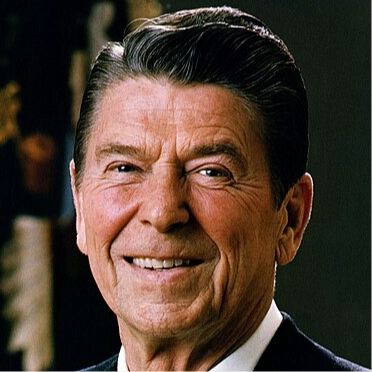
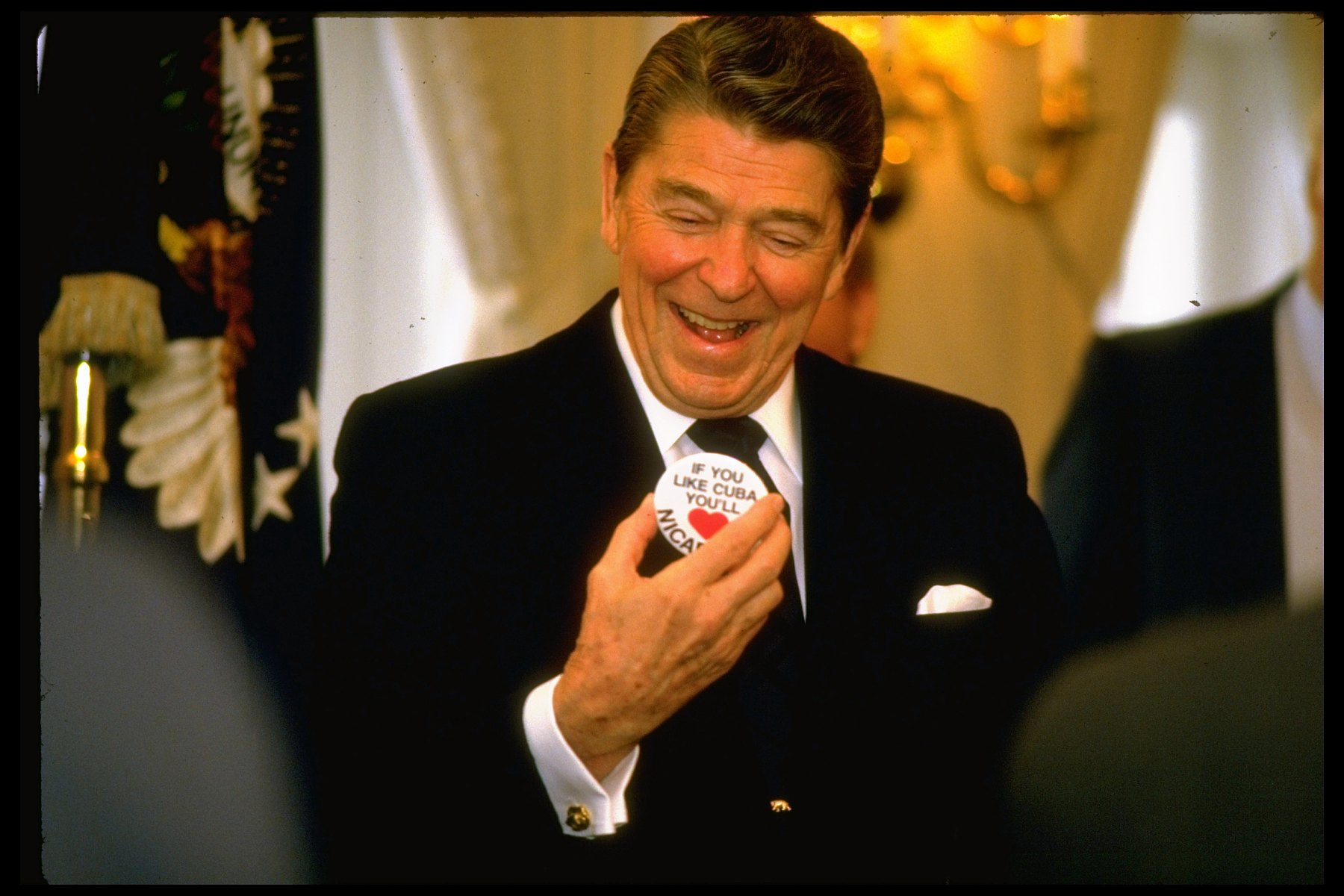
The Reagan administration treated Cuba as a frontline Soviet proxy and a direct threat to U.S. interests from day one, moving immediately to tighten policy toward Cuba by reimposing the travel ban Carter had lifted, restricting remittances and significantly expanding the embargo's reach, and adding the island to the U.S. State Department’s list of states sponsoring international terrorism.
The primary theater of U.S.-Cuba tensions in the early 1980s was Central America, where Cuba was accused of funneling Soviet weapons to leftist guerrillas in El Salvador as part of a campaign to destabilize the region. Meanwhile, Reagan covertly funded and armed the Contras in Nicaragua in a program that eventually unraveled in the Iran-Contra scandal.
He launched U.S. government-funded broadcast station Radio Martí in 1985 to broadcast anti-Castro news and commentary into Cuba over Cuban objections. Havana retaliated by suspending a migration agreement the two countries had reached in 1984, which had been designed to regularize immigration procedures and address the return of Mariel detainees still held in U.S. detention. A new immigration deal was eventually reached in November 1987, immediately triggering riots in federal detention centers housing Mariel-era Cubans who feared deportation.
Throughout the Reagan years, Cuba maintained its military presence in Angola, with its troops engaged in a costly war against South African troops supporting the UNITA rebel movement — and one that lasted until the U.S. brokered the 1988 New York Accords, under which the island agreed to withdraw from Angola in exchange for South African withdrawal and the independence of Namibia.
The deeper shift, however, was taking place in Moscow as Mikhail Gorbachev rose to power in 1985 and set in motion a gradual Soviet retrenchment that would have profound consequences for Cuba.
Post-Cold War
The collapse of the USSR removed the ideological and economic support that had sustained Cuba for decades, forcing the island to survive on its own terms.
Until its collapse in 1991, the Soviet Union provided Cuba with significant subsidies as well as substantial political and military support, selling oil to Cuba at below-market prices and allowing the island to re-export the surplus to the world market to get hard currency worth more than 40% of its total revenues.
That ended virtually overnight with catastrophic consequences. Cuba rapidly lost around 80% of its export markets and its main supplier of food and fuel. Industries that depended on oil imports, such as transportation and agriculture, were severely disrupted. Calories consumed on a daily basis per person fell from about 3,000 in 1989 to some 2,000 in 1993, and the death rate among the elderly increased by 20% between 1982 and 1993.
Castro named this crisis the "Special Period in Time of Peace," a term borrowed from military contingency planning for wartime scarcity. The government introduced strict rationing, promoted urban agriculture and dramatically cut fuel allocations. Farmers' markets were reauthorized, self-employment was expanded and a new foreign investment law in 1995 opened the island to joint ventures with the state in tourism, mining and telecommunications. To survive, the Castro government accepted the U.S. dollar as a means of payment and opened the island to mass tourism, which had until then been banned.
The Special Period could have created an opening for normalization. Instead, Washington moved to tighten sanctions. With the Cuban Democracy Act of 1992, also known as the Torricelli Act, Congress extended the embargo to prohibit U.S. subsidiaries operating in third countries from trading with Cuba, over the objections of Washington's Western allies.
The Maleconazo and the Rafter Crisis
The accumulated pressure of the Special Period boiled over on Aug. 5, 1994, when thousands of Cubans took to the streets around the Malecón seawall in Havana, chanting "Freedom!" and "Down with the Castros" while some engaged in vandalism. Security forces allegedly responded with beatings and arrests, resulting in at least three deaths, hundreds of injuries and around 370 detained.
This was the most significant public dissent against the Castro government since it took over the island. The uprising had been preceded by weeks of tension, particularly after the sinking of the 13 de Marzo tugboat on July 13, 1994, in which 37 people died under disputed circumstances while attempting to emigrate.
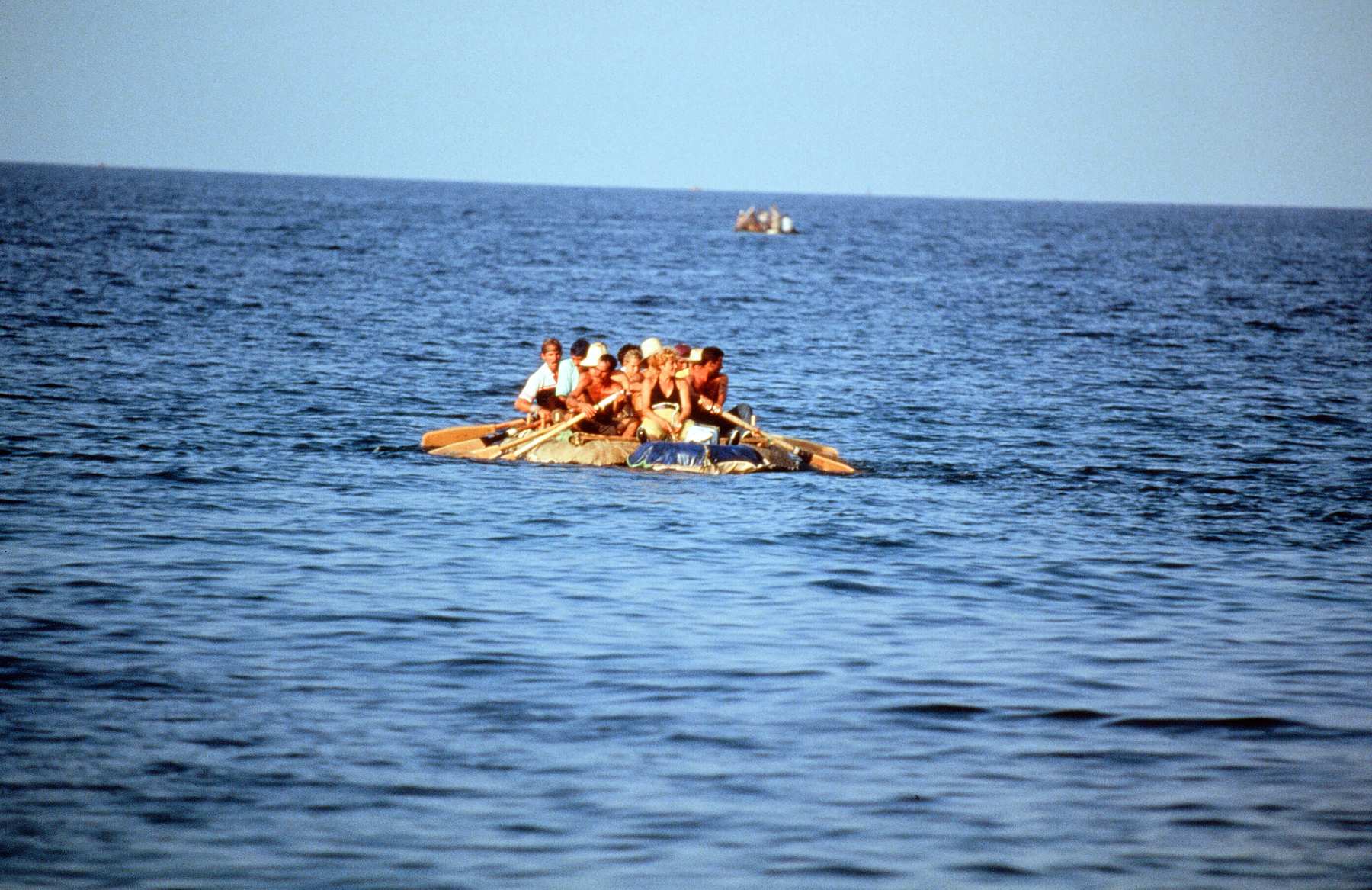
Following the unrest, Castro announced that anyone wishing to leave Cuba could do so — triggering the rafter crisis. Over 30,000 rafters left the island in the weeks that followed. U.S. President Bill Clinton announced that any rafters intercepted at sea would be detained at Guantánamo Bay Naval Base, and around 20,000 were held there.
The crisis produced a negotiated immigration agreement. Under the resulting "wet foot, dry foot" policy, a Cuban caught on the waters between the two nations would be returned to Cuba, while one who made it to U.S. shore would be allowed to remain and eventually qualify for permanent residency under the Cuban Adjustment Act of 1966.
The policy resolved the immediate crisis but created a strong migration incentive structure: Cubans who made it to land were safe; those intercepted at sea were not. It would govern Cuban migration for over two decades, until Obama ended it on Jan. 12, 2017, days before leaving office.
Brothers to the Rescue and Helms-Burton
As the rafter crisis subsided, a new flashpoint emerged as Cuba shot down two Brothers to the Rescue planes on Feb. 24, 1996, killing four aviators. The group, a Cuban-American exile organization, had been flying small planes over the Florida Straits since 1991 to spot rafters and alert the U.S. Coast Guard. After the "wet foot, dry foot'"policy reduced the flow of rafters, it shifted its mission, beginning to fly into Cuban airspace and drop anti-government leaflets over Havana.
The shootdown transformed U.S. domestic politics on Cuba overnight. Before the shootdown, Clinton had signaled an inclination to veto the pending Helms-Burton Act, which critics argued infringed upon executive authority and created trade friction with U.S. allies.
The deaths of three U.S. citizens and one legal permanent resident instantly consolidated bipartisan outrage in Washington. On March 12, 1996, surrounded by the grieving families of the four, Clinton signed the Helms-Burton Act into law. The legislation enshrined the existing U.S. economic embargo on Cuba into statutory law, formally defining the conditions the island would have to meet for the embargo to be lifted and effectively stripping future presidents of the authority to do it without an act of Congress.
Over three decades later, on May 20, 2026, the U.S. Justice Department unsealed a superseding indictment charging Raúl Castro, Cuba's defense minister at the time of the shootdown, along with five other Cuban officials and pilots, with conspiracy to kill U.S. nationals, murder and destruction of an aircraft. Havana condemned the largely symbolic indictment as illegitimate, with President Miguel Díaz-Canel calling Castro's actions in 1996 an act of "legitimate self-defense."
The Elián González Affair
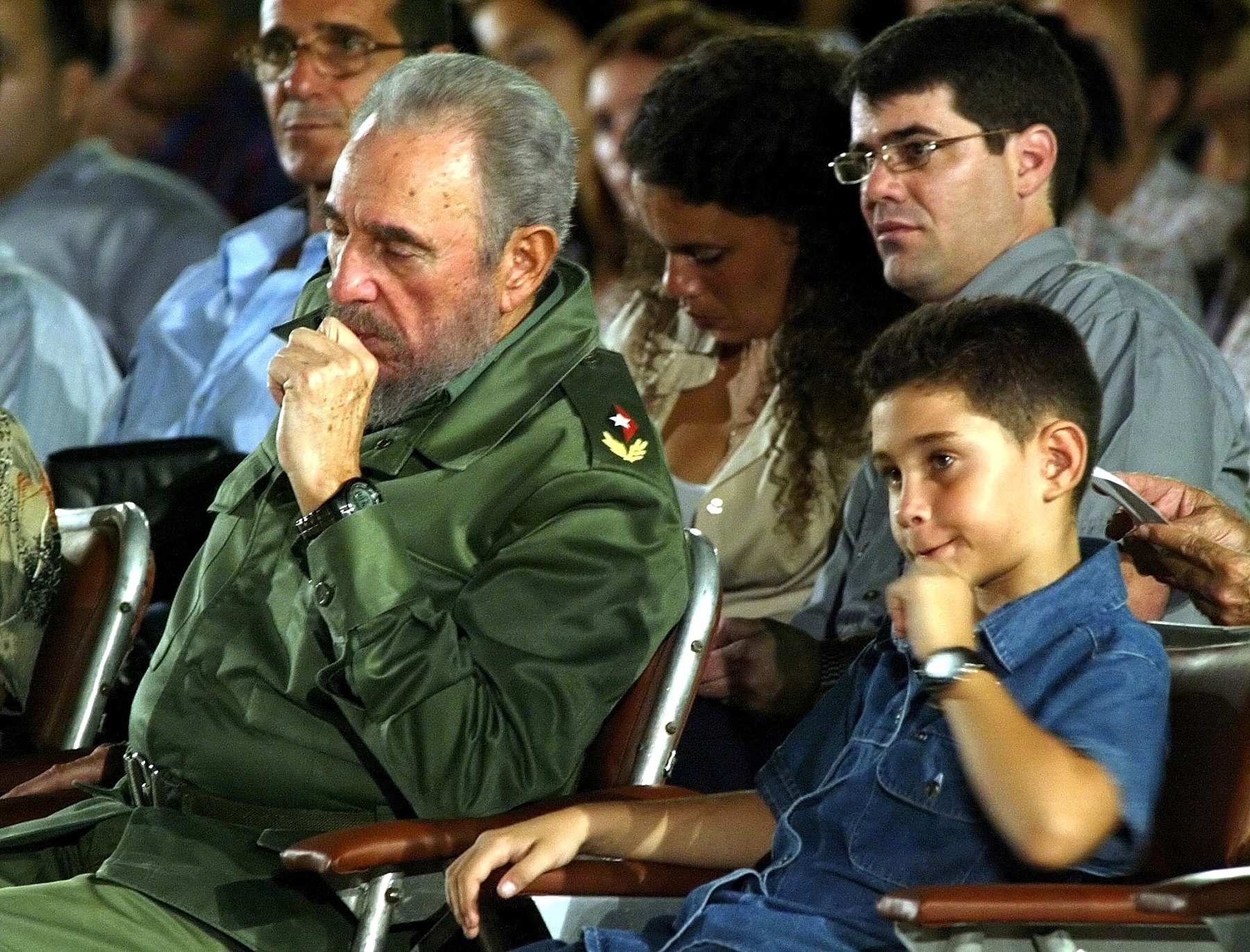
Years later, the fate of a six-year-old boy would expose the contradictions of U.S.-Cuba relations. In November 1999, Elián González was found floating off the Florida coast, one of three survivors of a crossing that had killed his mother and ten others. His relatives in Miami refused to return him to his father in Cuba, and Cuban-American exiles held vigils outside the house where he was staying, while Havana organized mass rallies demanding his return.
In April 2000, U.S. Attorney General Janet Reno ordered a pre-dawn raid by federal agents to seize the boy from his relatives' home. A Pulitzer Prize-winning photo of a federal agent in tactical gear standing in the room where the child was found became the defining image of the episode. González was reunited with his father and returned to Cuba in June. The episode inflamed Cuban-Americans against the Clinton administration, becoming part of the political backdrop to the bitterly contested Florida vote in the 2000 presidential election.
Bush Administration
Cuban-American hardliners proved key to George W. Bush's successful presidential bid, and he rewarded them once in office. His administration tightened travel restrictions, reduced the amounts Cuban-Americans could send in remittances to relatives on the island, and limited the frequency and circumstances under which Cuban-Americans could visit family. A 2004 commission on Cuba policy produced recommendations for accelerating regime change and further restricting Cuban-American travel.
In 2001, the so-called Cuban Five, a group of Cuban intelligence agents who had been arrested in 1998 after spending years in Miami monitoring exile militant groups, were convicted in a U.S. federal court on charges including espionage and conspiracy to commit murder. Celebrated in Cuba as heroes defending their country from terrorist exiles, they became a prolonged source of diplomatic friction. They would be released after a decade in prison.
Beyond exile politics, the post-Sept. 11, 2001, landscape reshaped how Washington framed Cuba. U.S. Secretary of State Colin Powell included the country on a list of states that had demonstrated a limited capacity to develop biological weapons.
Cuba's New Allies
Meanwhile, Cuba's survival through the Special Period required finding a replacement for Soviet support. The island moved on multiple fronts simultaneously to rebuild the network of relationships that would sustain it through the following decades.
The first pillar was ideological infrastructure. Cuba seized on the São Paulo Forum — a coalition founded in 1990 to coordinate left-wing parties and movements across Latin America and the Caribbean — to keep politically embedded in hemispheric life. Initially dismissed as a talking shop, the Foro grew into the connective tissue of the regional left through the electoral success of its member parties over the following decade, ending Cuba's regional isolation and creating a diplomatic environment far more sympathetic to Havana than anything it had known since the Cold War.
The most consequential regional partnership was with Venezuela. In October 2000, Venezuelan President Hugo Chávez and Castro signed the Integral Cooperation Agreement, which included a landmark oil-for-services deal: Venezuela would supply Cuba with subsidized crude oil in exchange for professional services — primarily doctors, teachers and technicians. Cuba's quota under the arrangement eventually reached up to 100,000 barrels of oil per day at its peak, while in return some 40,000 Cubans worked in Venezuela annually.
This arrangement effectively replaced Soviet subsidies with Venezuelan ones, giving Cuba the economic oxygen it needed to survive, and embedded Cuban personnel so deeply in Venezuelan state institutions that the two governments' fates became structurally intertwined in ways that would outlast both Chávez and Castro themselves.
China, too, became a significant source of investment, credit and trade for Cuba. Beijing's interest was primarily economic and diplomatic: Cuba offered trade opportunities and a consistent vote in international forums aligned with China's positions. The relationship deepened steadily through the 2000s and 2010s, accelerating as Venezuela's own economic crisis began to erode the reliability of its oil shipments after Chávez's death in 2013 .
The relationship between Havana and Moscow, which had gone cold through the 1990s, was systematically rebuilt in the 2010s as the Kremlin wrote off most of Cuba's Soviet-era debt and agreed to supply military equipment and training to the island, reestablishing itself as a significant political patron, though not at Soviet-era levels.
Guantánamo Bay
The U.S. overseas military base established as part of the Platt Amendment's legacy in 1903 acquired a new and internationally contested dimension after Sept. 11, 2001. The U.S. used Guantánamo to hold so-called enemy combatants captured in the war on terror outside the reach of U.S. federal courts.
For Cuba, the detention camp compounded the original grievance over the base's existence with a new one: being made an unwilling host to a facility widely condemned as a venue for indefinite detention without trial. Havana had refused to cash the annual lease check of $4,085 since 1960, maintaining that the lease was illegal and the base's occupation was a violation of Cuban sovereignty. The post-9/11 detention facility gave that longstanding demand renewed international resonance and a new argument to deploy in any future negotiation with Washington.
Cuban Leadership Transition
Fidel Castro survived U.S. pressure and internal dissidents, but the passage of time eventually loosened his grip on power. His successors have inherited a revolution that would see its greatest diplomatic opening and its swiftest reversal.
As the world's attention was fixed on the U.S. invasion of Iraq in March 2003, Cuba carried out its largest alleged crackdown on dissidents in decades, which became known as "The Black Spring," arresting dozens of journalists, librarians, human rights activists and opposition figures in the span of a few days and sentencing them to terms ranging from six up to 28 years in jail in summary proceedings. Havana said this was a response to U.S.-backed subversion, pointing to contacts between some of the detainees and the U.S. Interests Section on the island.
The international reaction was swift: Brussels suspended high-level talks and imposed diplomatic sanctions against Havana; sympathetic governments across Latin America found the crackdown difficult to defend; and the U.S. imposed further restrictions on travel to Cuba and expelled 14 Cuban diplomats. Most of those arrested were released over the following years, many under pressure to accept exile in Spain.
However, it was Fidel's declining health that quietly set in motion the succession the state had never formally planned for.
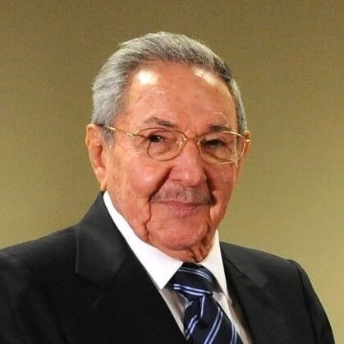
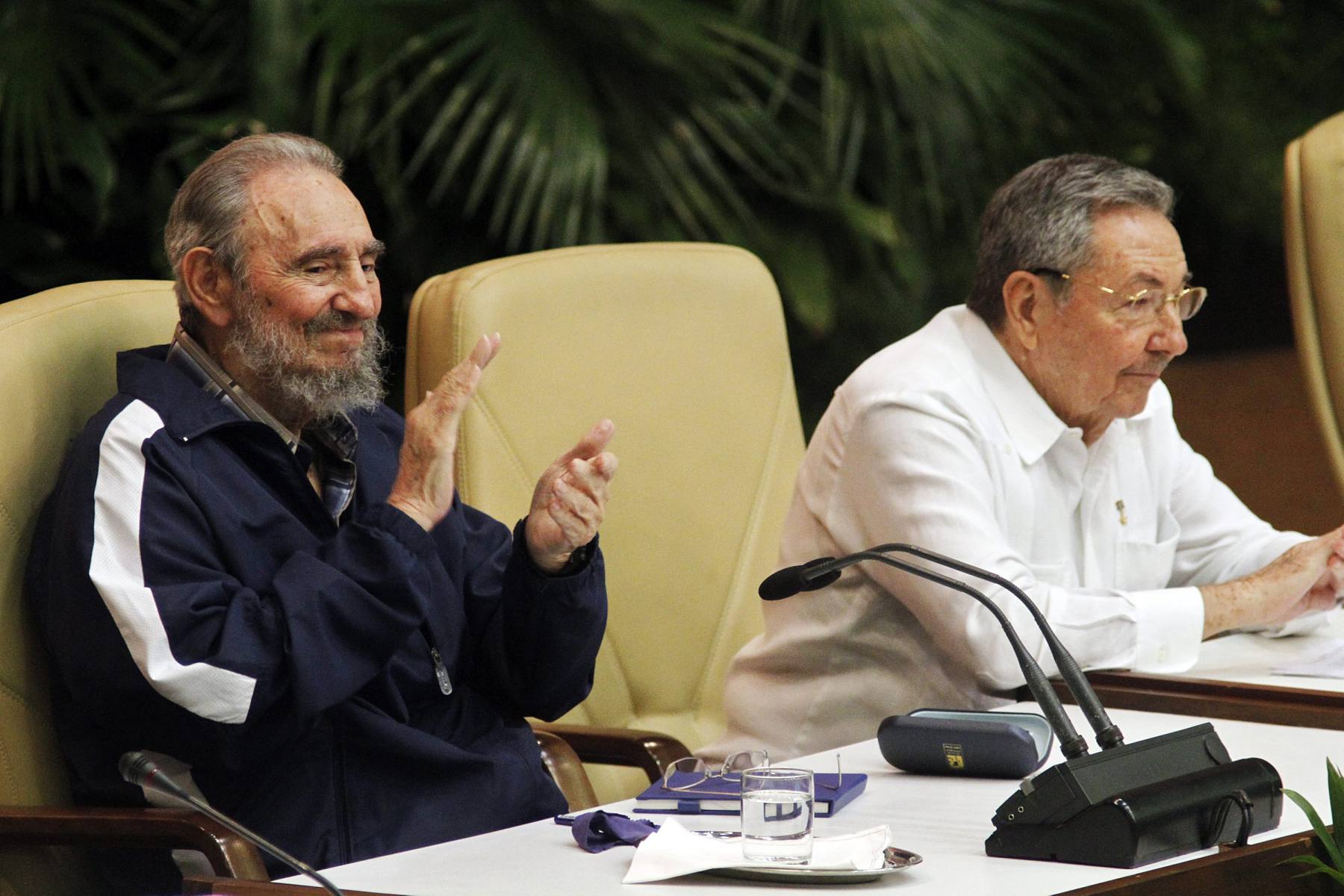
His exit from power was gradual rather than abrupt. On July 31, 2006, he underwent emergency intestinal surgery, with reports pointing to diverticulitis and subsequent complications, though a diagnosis has never been formally disclosed. In response, power was passed on a provisional basis to his brother Raúl. Fidel never recovered sufficiently to resume his duties. After less than two years, Raúl was elected president by the National Assembly after Fidel resigned from his positions as president of the Council of State and Commander in Chief. Fidel remained the leader of the Communist Party until 2011, passing away on Nov. 25, 2016.
Reforms Under Raúl
Raúl had long been considered the more pragmatic of the two brothers, and once in power he introduced a series of reforms aimed at modernizing the existing state-controlled economy, including expanding private enterprise and decentralizing some aspects of economic management.
Cuba abolished its equal pay system, removing wage restraints that had been in place since the early 1960s. Cubans were allowed to purchase cell phones and personal computers and to stay at hotels formerly reserved for foreigners. Buying and selling private property became legal, and the number of self-employed workers, known as cuentapropistas, rose from some 150,000 in 2008 to about 580,000 in 2017.
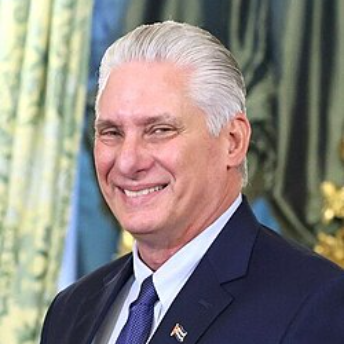
He handed the presidency on Apr. 19, 2018 to Miguel Díaz-Canel, a party official who had risen through party structures rather than through the revolutionary struggle, stepping down as First Secretary of the Communist Party three years later.
The Obama Opening
The economic reforms prompted a shift in U.S. policy, formally announced on Dec. 17, 2014, in simultaneous statements by U.S. President Barack Obama and his Cuban counterpart Raúl Castro, often called the "Cuban Thaw," that followed more than 18 months of secret Vatican-brokered negotiations in Canada.
The U.S. released three of the five Cubans still jailed in Florida for espionage while Cuba released USAID subcontractor Alan Gross after years under arrest for setting up unauthorized internet access. Diplomatic ties were formally restored, culminating with each country's Interests Section abroad being upgraded to a full embassy.
Obama visited the island in March 2016, becoming the first sitting U.S. president to do so since Calvin Coolidge in 1928. While rich in symbolism, the visit was limited in substance. While Cuba's list of demands for full normalization included the lifting of the embargo, the return of Guantánamo Bay and compensation for decades of economic damage, the U.S. Congress not only had no appetite to end the embargo — at least until the island demonstrated progress on human rights and democratic governance — but it had also blocked Obama's executive orders toward closing Gitmo. Cuba and the U.S. did reopen the channels of communication but remained in a deadlock.
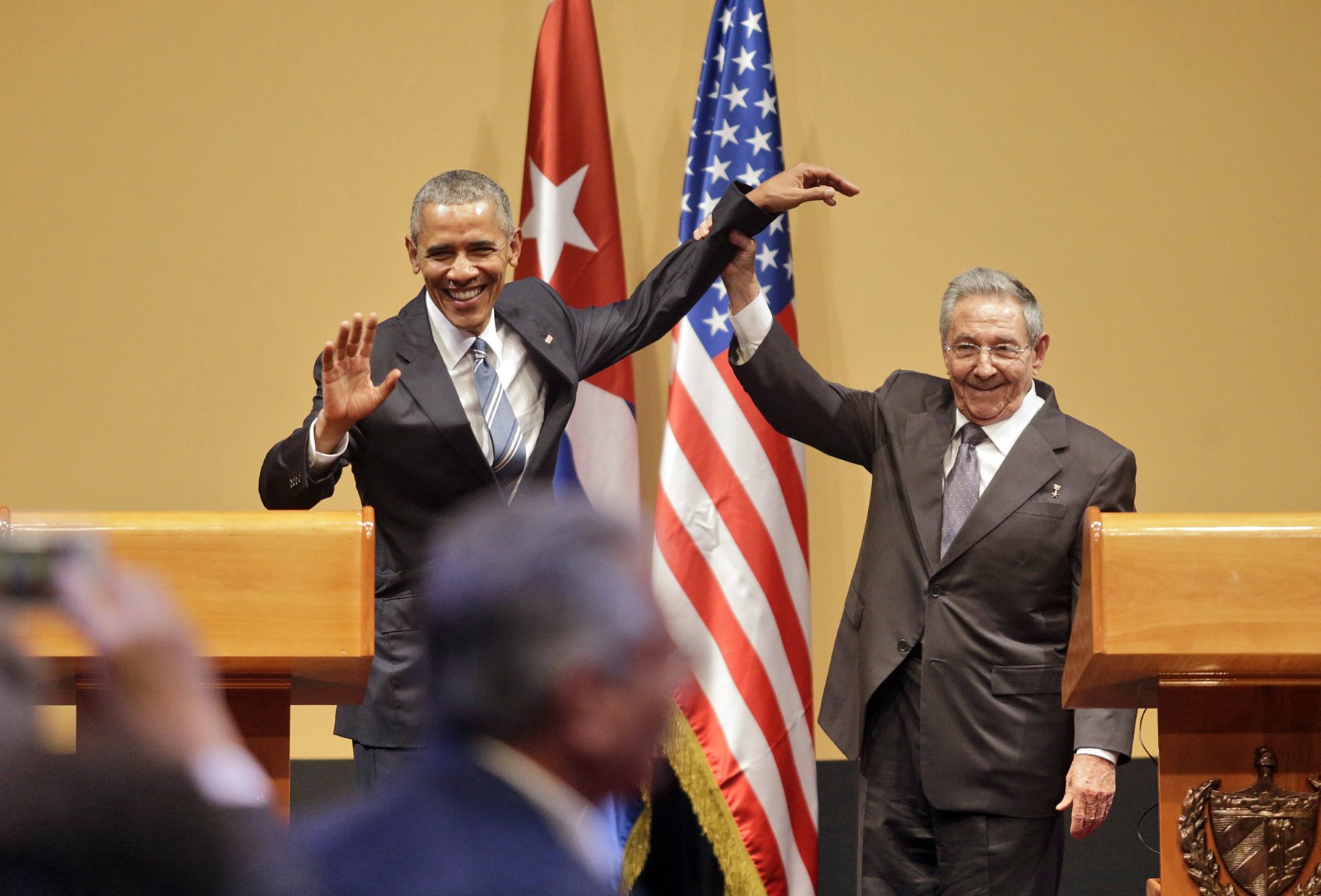
The opening began to unravel even before Obama left office. In late 2016, U.S. diplomats in Havana began reporting a series of strange incidents, including waking late at night feeling unwell and hearing sounds resembling insects or metal dragging across the floor, with no identifiable source.
The health incidents, which eventually became known as "Havana Syndrome," left dozens of U.S. personnel with symptoms including hearing loss, headaches and cognitive impairment. The cause has never been definitively established, with investigations pointing variously to sonic weapons, microwave radiation and psychosomatic factors. Cuba denied any involvement, but the mystery poisoned the atmosphere of the normalization process.
The First Trump Administration
U.S. President Donald Trump took office in January 2017, reversing much of the Obama-era opening toward Cuba. In June, he announced the cancellation of what he called a "completely one-sided deal" with Cuba, further restricting travel to the island and financial transactions with entities linked to the Cuban military, which controlled a large share of the tourism economy.
Against the backdrop of Havana syndrome, Trump had a practical justification for a more drastic step: a drastic reduction in the staffing of the U.S. embassy in Havana. The mission effectively suspended visa processing for Cubans, severing one of the most tangible links the normalization process had created for ordinary people on both sides.
In 2019, his administration took a step every president since Clinton had avoided: activating Title III of the Helms-Burton Act, which allows U.S. nationals to sue foreign companies doing business with properties confiscated by the Cuban government after the revolution. Additional rounds of sanctions targeted Cuban military and security entities, steadily narrowing the space for any economic engagement with the island.
With days remaining in his first term in January 2021, Trump reimposed Cuba's designation as a state sponsor of terrorism — more than five years after Obama had removed it as part of the normalization package — after Cuba gave asylum to Colombian guerrillas and refused to extradite U.S. fugitives. The move reinstated a sweeping set of financial restrictions that complicated the island's ability to conduct basic international banking transactions and left bilateral relations at their lowest point since before the Obama opening.
The Biden Years
About six months into the Joe Biden administration, thousands of Cubans took to the streets across the island in the largest public demonstrations since the revolution, chanting "freedom" and "down with the dictatorship," with chronic shortages of food, electricity and medicine as the immediate triggers. More than 1,000 people were reportedly arrested, with many receiving sentences of up to 30 years.
The island's economic crisis deepened steadily through Biden's term, with long blackouts becoming routine. Cuba saw its largest exodus ever as over one million people left the country between 2021 and 2024, overwhelming U.S. immigration infrastructure and hardening the political environment in which any Cuba policy would have to be made.
The Biden administration moved cautiously, easing some remittance restrictions and expanding authorized travel categories, but stopping well short of restoring the full scope of the 2014–2016 opening. The Helms-Burton framework remained in place and the most significant moves — the removal of the state sponsor of terrorism designation, a six-month waiver of Title III of the Helms-Burton Act and the rescission of a Trump memorandum that had imposed additional restrictions on engagement with Cuban entities — came only in the final days of his presidency as unilateral gestures of goodwill in the context of Cuba's Vatican-brokered prisoner release.
Recent Escalations
Donald Trump's return to the White House has ushered in the most aggressive U.S. pressure campaign against Cuba in decades.
Within hours of his second inauguration on Jan. 20, 2025, Trump signed an executive order restoring Cuba's designation as a state sponsor of terrorism while his Department of State reissued the Cuba Restricted List adding over 200 entities to it, reinstated financial restrictions and withdrew Biden's temporary suspension of Title III of the Helms-Burton Act.
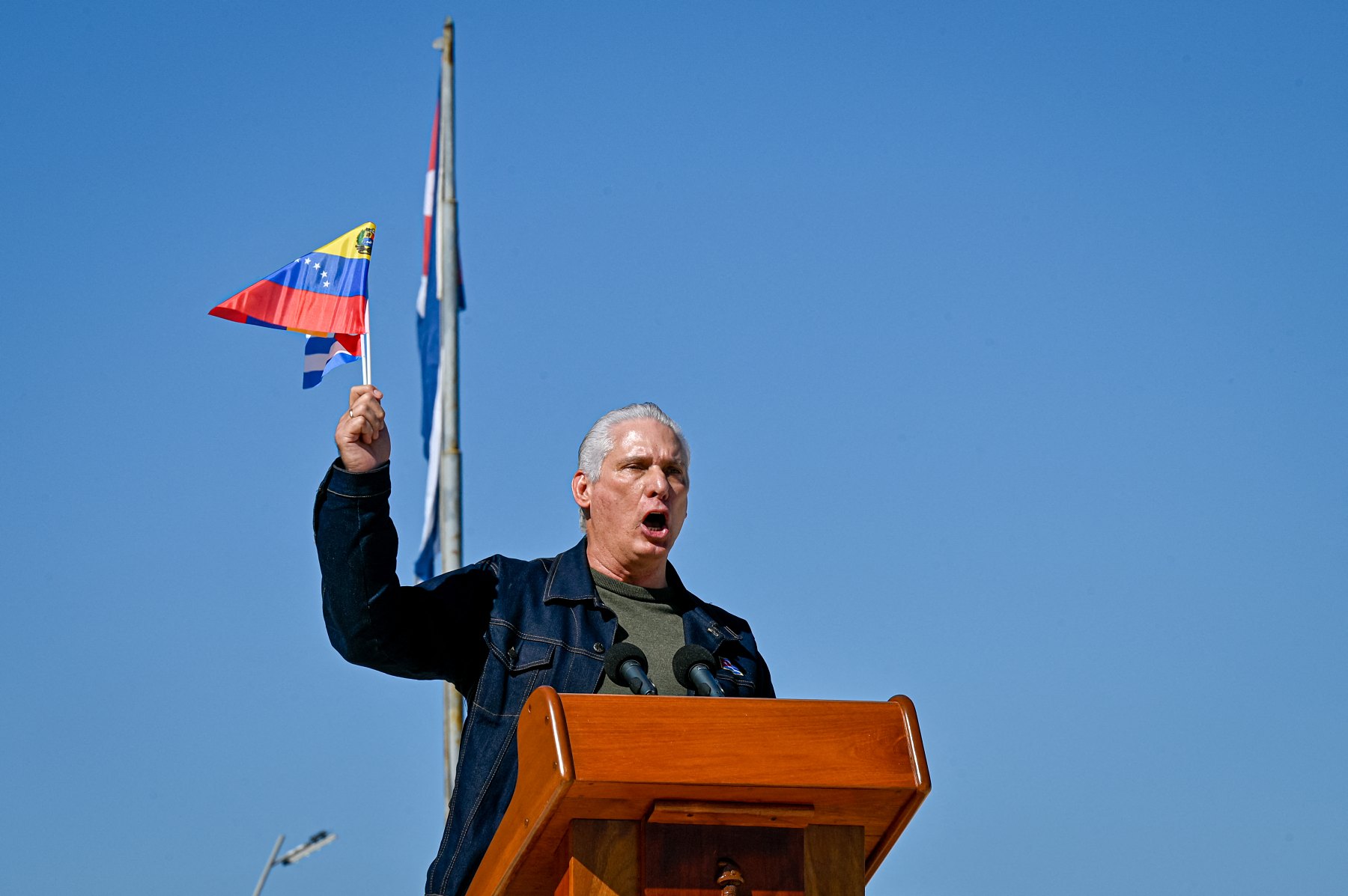
This approach has been framed explicitly as a maximum pressure strategy with the stated goal of forcing political and economic liberalization in Cuba. In June 2025, Trump reimposed strict restrictions on U.S. travel to the island, restricted financial transactions with entities controlled by the Cuban military and doubled down on support for the decades-old economic embargo.
Venezuela Domino
The most consequential development was not a policy directive but a geopolitical event: the U.S. seizure of Venezuelan President Nicolás Maduro on Jan. 3, 2026, in an operation that left 32 Cuban fighters dead.
For two decades, Venezuela had replaced Soviet subsidies to Cuba, providing the island with crude oil and refined products worth approximately $1.3 billion annually. When that supply collapsed, Cuba had no substitute.
Trump declared on social media, in capital letters, that there would be "no more oil or money going to Cuba — zero" and signed an executive order declaring a national emergency over the alleged threat posed by Cuba and establishing a framework to impose tariffs on any country that continued selling or supplying oil to the island. The move imposed the first effective blockade on Cuba since the Cuban Missile Crisis.
Oil imports dropped to effectively zero for the first time since 2015, with only two small oil-carrying vessels reaching the island in the entire first quarter of 2026.
The national electrical grid has since collapsed completely several times, with prolonged blackouts becoming routine, affecting water supply, lighting, refrigeration and communications across the island. Cuba attributed the crisis primarily to U.S. sanctions and the oil blockade.
The island's power generation infrastructure, much of it built with Soviet equipment in the 1970s and 1980s and never fully modernized, was already operating beyond its service life by the 2010s. By the early 2020s, Cuba was experiencing blackouts of eight to twelve hours a day in provincial areas.
U.S. Sanctions
On May 1, 2026, Trump signed Executive Order 14404, which provides broad authority to place sanctions on parties participating in key sectors of Cuba's economy. The order also authorized secondary sanctions against foreign financial institutions dealing with sanctioned Cuban entities, threatening their access to U.S. markets.
The U.S. Department of State made the first designations under the new authority six days later, including Cuba's military-owned conglomerate GAESA, which controls much of the island's tourism, finance, retail and import sectors.
That same month, the administration issued an indictment against Raúl Castro for the 1996 shootdown of the Brothers to the Rescue aircraft — a move with more symbolic than legal force, given that Castro, turning 95, is unlikely to ever face a U.S. court, but one timed deliberately to coincide with Cuba's May Day parade, where Raúl had made a rare public appearance widely interpreted as a signal that he remained the power behind Díaz-Canel.
The sanctions continued to escalate through the following months as the U.S. took action against Díaz-Canel, his wife and three other individuals, including Raúl Castro's son Alejandro Castro Espín. Furthermore, the U.S. has also sanctioned several Cuban entities, including state-owned companies, surveillance organizations and armed civilian groups, and individuals.
U.S.-Cuba Talks
U.S. officials close to Secretary of State Rubio secretly met with Cuban power brokers in February 2026, including Raúl Castro's grandson Guillermo Rodríguez Castro on the sidelines of a Caribbean Community summit in St. Kitts.
In May, CIA Director John Ratcliffe arrived in Havana aboard the first U.S. government flight to land in Cuba outside Guantánamo since 2016 to deliver to senior Cuban officials Trump's message that the U.S. was prepared to engage on economic and security issues, but only if Cuba made fundamental changes. No breakthrough was announced.
Later that month, SOUTHCOM Commander Gen. Francis Donovan met with Cuban Army Corps Gen. Roberto Legrá Sotolongo at the perimeter of Naval Station Guantánamo Bay, the first such meeting by a SOUTHCOM commander in recent memory. Both sides described the meeting as positive and agreed to maintain communication.
While officially framed as a discussion of perimeter security, the meeting came amid a U.S. military buildup in the region, including an increase in reconnaissance flights, the presence of the Iwo Jima Amphibious Ready Group in the Caribbean and photos of Rubio alongside Donovan in front of a map of Cuba in early May.
Market Reforms
On June 19, 2026, for the first time in the revolution's history, Cuba adopted something resembling a genuine economic rupture, passing a package of 176 economic reform measures that included no longer requiring foreign investors to form joint ventures with the state, authorizing large private enterprises, allowing private investors to acquire stakes in state companies, allowing private banks to enter the market and allowing the diaspora to invest on the island.
Díaz-Canel said the measures were modeled on the Vietnamese and Chinese examples — communist states that had opened their economies without abandoning one-party rule. Whether the reforms represent a genuine structural shift or a tactical concession under maximum pressure, and whether they will be sufficient to break the diplomatic and economic deadlock, remains an open question.
Stalemate
Trump stated in a speech praising U.S. military actions in Venezuela and Iran in March 2026 that Cuba would be the next target. Months later, however, neither the maximum pressure campaign nor bilateral talks nor market reforms in Cuba produced any known progress in bilateral relations.
The U.S. Department of State framed Cuba as a "major threat" in a 100-page report released on July 20, 2026, alleging that the Communist-run Caribbean island has a decades-long history of espionage and subversion operations in the U.S. to carry out a long war of attrition designed to turn the country against itself, even infiltrating the highest reaches of the U.S. government. In response, Díaz-Canel said that the U.S. was judging Cuba by its own standards, levying allegations of U.S. regime-change efforts and crimes in Cuba.
The following day, Catholic Relief Services (CRS) sent the first flight of humanitarian aid under Rubio's $100-million assistance plan to the island's residents, carrying 700 packages of food and hygiene kits. Neither the Cuban government nor its press publicized the flight. Earlier that month, Foreign Minister Bruno Rodríguez dismissed U.S. aid announcements as fantasy, adding that the amount would only last five days given the blockade.
Bloomberg News reported in mid-August, citing anonymous source familiar with the Trump administration's thinking, that the White House is "increasingly focused on" sanctions to cut off all revenue sources for Cuba rather than resorting to military action, echoing a similar shift in strategy toward Iran. This comes as Rubio has expressed confidence that Cuba "will be on an irreversible glide path toward a different future" by 2029, when the second Trump administration ends. Meanwhile, Díaz-Canel told Brazilian newspaper Folha de São Paulo that talks with the U.S. are stalled, and that Cubans have been left no alternative but to resist.
Questions About Official Narrative
U.S.-Cuba history is also one of competing interpretations, suppressed evidence and questions that the official record has never satisfactorily answered.
Some of these questions concern facts deliberately hidden that have been partially recovered. Others concern interpretation: the same documented events read entirely differently depending on which actors' motives one credits. And a few remain genuinely unresolved, contested by serious historians, intelligence professionals and the participants themselves.
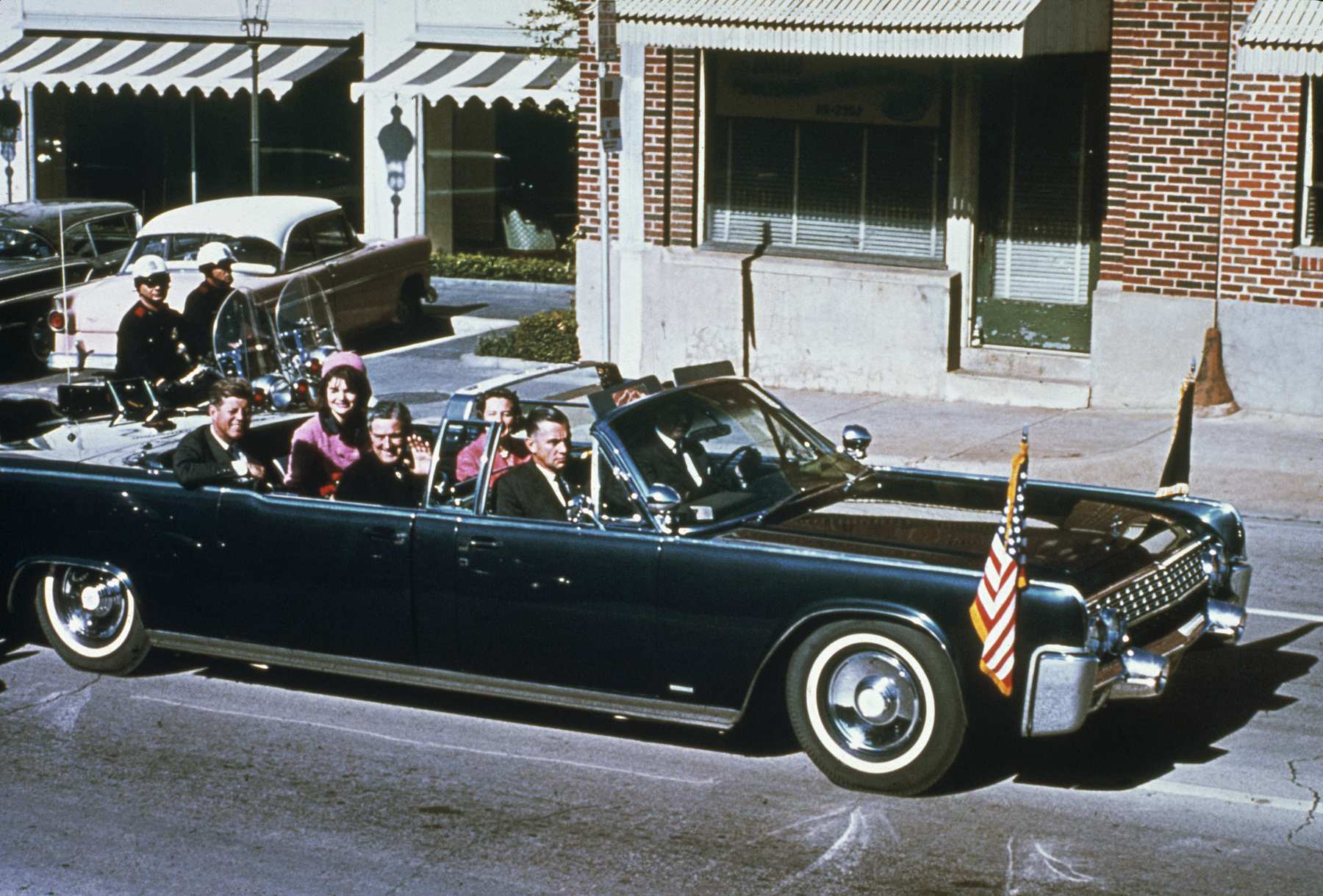
Who Sank the USS Maine?
The explosion that killed 266 U.S. sailors in Havana on Feb. 15, 1898 remains officially unexplained. While the original 1898 U.S. Navy inquiry and a new board of inquiry in 1911 blamed an external mine and provided the political pretext for war, an investigation commissioned by Adm. Hyman Rickover in the 1970s concluded that the explosion was internal, most likely spontaneous combustion of coal dust igniting a nearby magazine, consistent with a design flaw common in ships of that class — echoing doubts raised by naval ordnance expert Capt. Philip R. Alger just days after the sinking, who argued no mine could plausibly detonate a ship's magazine.
In 1998, a National Geographic Society study partially supported the internal explosion theory, though it could not rule out an external trigger. No conclusive physical evidence of a mine was ever recovered.
The question matters beyond engineering. If the explosion was accidental, then the rallying cry "Remember the Maine" and the subsequent Spanish-American war were built on a misattribution that the American press turned into a national cause before any facts were established.
The episode is frequently cited as an early example of what later became known as "yellow journalism," in which sensationalist press coverage shapes public opinion toward war ahead of any established facts. The Spanish government, which had every reason to avoid confrontation with the U.S. at that moment, consistently denied responsibility. Whether the war was the product of genuine outrage, manufactured hysteria or deliberate manipulation remains, in the view of some historians, genuinely open.
How Communist Was Castro Before 1959?
The received wisdom, which the Eisenhower and early Kennedy administrations initially accepted, is that Castro was a nationalist whose radicalization into Marxism-Leninism was accelerated — if not caused — by U.S. hostility after 1959. On this reading, the embargo and the Bay of Pigs pushed Cuba into the Soviet orbit rather than responding to an alignment that was already determined. The alternative view holds that Castro was a committed communist well before taking power, that his public nationalism was a tactical disguise and that the Soviet alliance was pre-planned.
Declassified CIA documents offer ammunition to both sides: some early assessments dismissed communist influence in his movement; others flagged it as significant and were allegedly suppressed or minimized. Castro's own retrospective statements are unreliable guides. He had reasons at different moments to emphasize both his early Marxism and his late conversion.
What is clear is that his brother Raúl and "Che" Guevara were committed communists before the revolution. Whether Fidel shared their convictions from the outset, or adopted them as U.S. pressure removed other options, has significant implications for how one assigns responsibility for the breakdown of relations in 1959–61.
Did the CIA Set Up the Bay of Pigs to Fail — and Why?
The standard account holds that the Bay of Pigs failed because Kennedy cancelled the second wave of air strikes and refused to authorize direct U.S. military intervention, leaving Brigade 2506 without adequate air cover. CIA officers who ran the operation, including Richard Bissell and Allen Dulles, maintained this account for the rest of their lives.
A revisionist interpretation, developed by journalist Seymour Hersh and later by historian James Blight, argues that the CIA knew the operation could not succeed without direct U.S. military involvement and deliberately planned it that way, expecting that Kennedy would have no choice but to authorize air and naval support once the invasion was underway rather than accept a visible defeat.
In this reading, the agency was attempting to maneuver a reluctant president into a war, not simply executing a plan it believed in. Kennedy's refusal to be maneuvered made him, in this account, the operation's killer and, paradoxically, the obstacle to a wider war.
A further variant, harder to document but persistent in the literature, suggests that some elements within the CIA — aware the operation was likely to fail regardless — saw its failure as useful: a humiliating defeat would destabilize Kennedy, harden public opinion against Cuba and create pressure for more aggressive action. Kennedy himself reportedly told an aide shortly after the disaster that he wanted to "splinter the CIA into a thousand pieces."
Who Really Killed Kennedy — and Did Cuba Have Anything to Do With It?
The Warren Commission concluded that Lee Harvey Oswald acted alone in assassinating President Kennedy on Nov. 22, 1963. That conclusion has been disputed by a majority of the American public and by a significant number of researchers ever since. The Cuba dimension of the JFK assassination is one of its most persistent and complex threads.
Oswald is said to have distributed pro-Castro leaflets in New Orleans in the summer of 1963 under the name of a Fair Play for Cuba Committee chapter that had no other members, attempted to infiltrate an anti-Castro exile group, sought a visa at the Cuban consulate in Mexico City in late September 1963 and had contact with Soviet KGB officers there. What these facts mean is deeply contested.
The Havana involvement theory holds that Castro, aware of CIA assassination plots against him, authorized or facilitated Oswald's action as preemptive retaliation. Its proponents include former Cuban intelligence officer Fabian Escalante, who claimed that he had evidence of CIA plots that makes this reading plausible, and journalist Brian Latell, who alleged that Cuban intelligence had advance knowledge of the assassination.
The anti-Castro exile involvement theory holds that Cuban exile groups manipulated Oswald, possibly with CIA involvement, as they wanted Kennedy dead for abandoning them at the Bay of Pigs and for the secret non-invasion pledge. New Orleans exile networks with which Oswald had contact have been extensively investigated.
The House Select Committee on Assassinations, which reinvestigated the case in 1979, concluded, based on acoustic evidence that has since been challenged, that there was probably a conspiracy and that organized crime figures were the most likely co-conspirators. Document releases over the past decade, while not resolving the central questions, have revealed that the CIA had withheld information from the Warren Commission about its contacts with anti-Castro groups that interacted with Oswald, as well as the extent of its pre-assassination knowledge of his activities.
The CIA's Plots Against Castro: How Far Did They Go?
The Church Committee's 1975 investigations established that the CIA had organized at minimum eight attempts to assassinate Fidel Castro between 1960 and 1965, several of them involving operational cooperation with organized crime figures including Sam Giancana, Santo Trafficante and Johnny Roselli. The plots included poisoned cigars, a contaminated wetsuit, exploding seashells and, most seriously, a collaboration with Mafia intermediaries who had their own financial grievances against Castro for closing Havana's casinos.
What the Church Committee could not definitively establish is whether these operations were authorized at the presidential level. The committee found evidence that Eisenhower authorized the broader program of covert action against Cuba and that Attorney General Robert Kennedy supervised Operation Mongoose with exceptional personal intensity, but the paper trail on specific assassination authorization was thin or absent.
The Mafia connection raises a further question that has never been resolved: whether Santos Trafficante, who had Cuban connections and who some investigators suspected of being a double agent, may have used his CIA contact to tip off Castro about the plots rather than to execute them, making the chosen assassination subcontractors unwitting protectors of the man they were paid to kill.
Did the U.S. Deliberately Introduce Crop and Livestock Diseases into Cuba?
Cuba has alleged for decades that the U.S. has conducted biological warfare against the island's agriculture, introducing diseases designed to destroy crops and livestock and deepen economic hardship.
Declassified documents from Operation Mongoose explicitly referenced the contamination of sugar exports bound for the USSR and the possible introduction of crop diseases as among the program's authorized activities. Whether these plans were executed, and to what degree, has never been definitively established by any independent investigation.
The most specific allegations concern the 1971 outbreak of African swine fever in Cuba, the first recorded appearance of the disease in the Western Hemisphere, which led to the slaughter of the island's entire hog population. U.S. newspaper Newsday reported in 1977, citing a CIA source, that the virus had been introduced by operatives working through a third country — the CIA denied the claim and no documentary evidence directly linking the agency to the outbreak has been released.
A 1980 outbreak of tobacco blue mold, which devastated Cuba's most important cash crop, prompted similar accusations. Cuba also alleged that in 1996, a U.S. State Department plane on an authorized overflight dropped the agricultural pest Thrips palmi over Matanzas province — a U.N. investigation found the claim inconclusive.
Havana Syndrome: Weapon, Accident or Mass Psychosis?
Beginning in late 2016, U.S. diplomats and intelligence officers in Havana began reporting a cluster of symptoms that had no obvious explanation. The incidents spread to U.S. personnel in China, Russia, Vienna and dozens of other locations worldwide, eventually affecting hundreds of people.
The initial leading hypothesis was a directed-energy weapon, possibly employing microwave radiation, wielded by a hostile intelligence service, with Russia as the primary suspect. This theory was consistent with the physics of microwave auditory effects, known since the 1960s, and with Russia's documented interest in such technologies. It was taken seriously enough that the U.S. reduced embassy staffing in Havana significantly and Congress passed the HAVANA Act in 2021 to compensate affected personnel.
A 2023 assessment by the Office of the Director of National Intelligence, representing the consensus of multiple agencies, concluded that it was "very unlikely" that a foreign adversary was responsible and that the most plausible explanation for most cases was a combination of environmental factors, pre-existing conditions and "functional neurological disorder" — a clinical term that encompasses what critics characterized as mass psychogenic illness.
That assessment was itself contested, both by affected personnel who disputed the psychosomatic framing and by some intelligence professionals who believed the ODNI had minimized evidence pointing to Russia to avoid diplomatic complications. The question of what actually happened to hundreds of U.S. government employees — and who, if anyone, was responsible — remains officially unresolved and actively disputed within the U.S. intelligence community.
Overview