Europe Marks Significant Solar Eclipse
The Facts
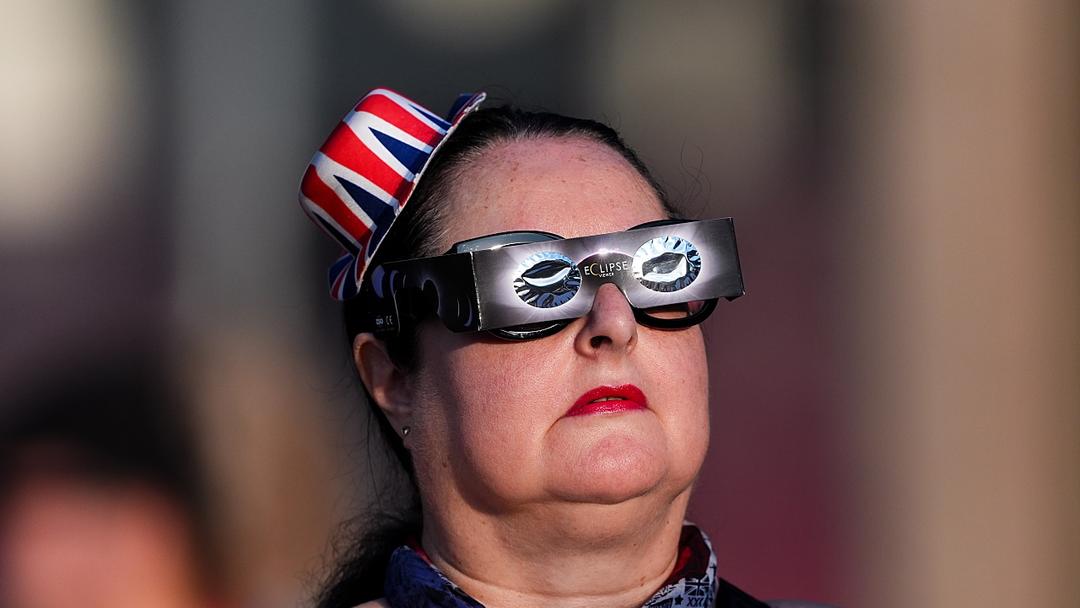
- A total solar eclipse crossed Greenland, Iceland, northern Russia, Spain and part of Portugal on Wednesday, darkening skies for about two minutes, while the U.K. saw a partial eclipse covering up to 96% of the sun.
- The U.K. experienced its most significant solar eclipse since 1999, with coverage peaking between 94% and 96% in Devon, Cornwall and western Pembrokeshire around 7:16 p.m.
- In Spain, totality lasted about 84 seconds in Benavente. Meanwhile, the Ebro Observatory, built in 1904 near Tortosa in Catalonia, witnessed only its second total solar eclipse from near-totality.


Sources Split
LEFT
CENTER
RIGHT
+1


ESTAB
CRIT
CENTER
PRO
ESTAB
The Spin
Narrative A
This once-in-a-generation eclipse — the most dramatic in nearly 30 years — was a genuine spectacle, pulling millions outside across the U.K. and Europe to share a rare, awe-inspiring moment. From James Middleton watching with his young son Inigo to Cornwall beach parties and total darkness in Spain, the event proved nature still has the power to bring people together in pure amazement.
Narrative B
The eclipse was a spectacular reminder that staring at the sun is no joke. Even a quick peek can leave lasting eye damage, with symptoms sometimes taking hours or days to appear. So next time, grab proper eclipse glasses — and don't assume your phone is a safe shortcut either.
Metaculus Prediction
© 2026 Improve the News Foundation.
All rights reserved.
Version 7.18.3