South Korea Shares Images After SpaceX Moon Crash
Is SpaceX proving commitment to safe innovation or adding to dangerous space clutter?
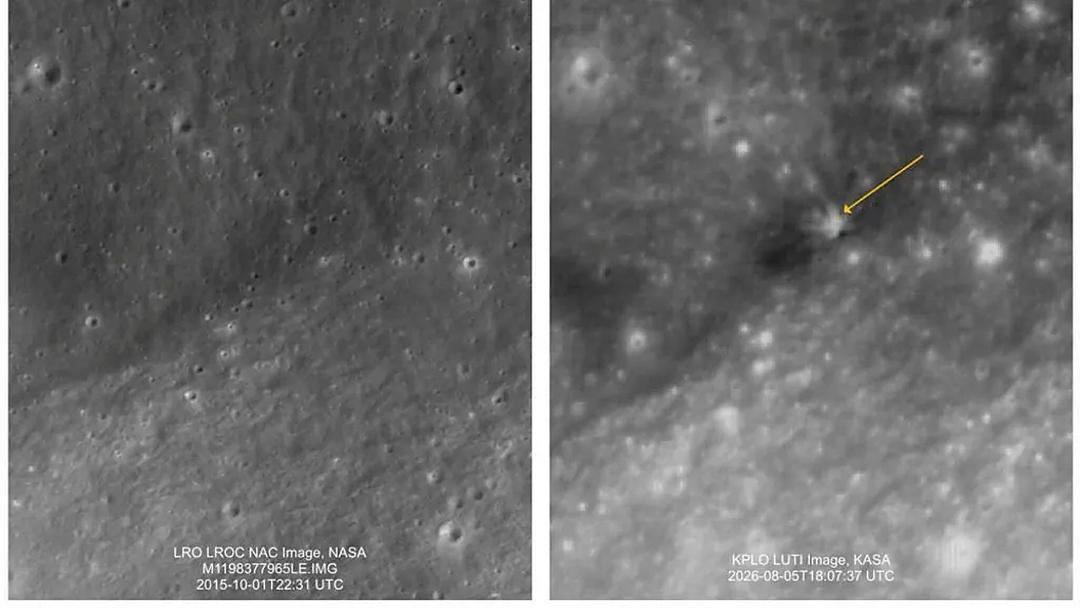
Above: Images of the moon after the SpaceX rocket crash from the Korean AeroSpace Administration. Image credit: Reuters/BBC via KASA
The Facts
- South Korea's Danuri lunar orbiter captured before-and-after images of the moon's surface following the unintentional crash of a SpaceX Falcon 9 upper stage on Aug. 5, 2026. The orbiter began observations about 30 minutes before impact and completed eight imaging sessions.
- The Falcon 9 upper stage struck the lunar surface near the Einstein Crater at approximately 5,400 mph (8,700 kph), with NASA estimating the collision carved out a crater roughly 60 feet wide and 12 feet deep.
- The spent rocket stage, weighing approximately 4,000 kg and roughly the size of a five-story building, had been drifting in space since its January 2025 launch, which carried Firefly Aerospace's Blue Ghost and ispace's Resilience lunar landers toward the moon.


Sources Split
LEFT
CENTER
RIGHT
+1
+2
+1


ESTAB
CRIT
CENTER
PRO
ESTAB
The Spin
Narrative A
SpaceX takes every precaution possible yet accidents happen in the harsh environment of space proving their commitment to safe innovation. This crash poses zero risk to Earth while delivering key research opportunities for scientists. Overstating debris concerns only slows down vital progress in reaching the stars.
Narrative B
SpaceX leaves rocket parts drifting without enough planning and adds to dangerous space clutter that endangers future trips. Experts highlight how this buildup could block access to orbit and soon make exploration impossible. Ignoring these growing hazards invites disaster for everyone involved in space.

Metaculus Prediction
The Controversies
Go Deeper


© 2026 Improve the News Foundation. All rights reserved.Version 7.18.3
© 2026 Improve the News Foundation.
All rights reserved.
Version 7.18.3