07 August 2026
Daily Newsletter
Alibaba Unveils Qwen3.8-Max AI Model

The Facts
Alibaba on Monday unveiled Qwen3.8-Max, which it described as its largest and most capable AI model to date. The model has 2.4 trillion parameters, settings that help models synthesize and generate data, and is scheduled for release next week through Alibaba Cloud's Model Studio platform.
On the Arena.AI leaderboard, Qwen3.8-Max became the highest-ranking Chinese text model but trailed Claude Fable 5 and three Anthropic Opus variants. For visual analysis, it ranked second globally, behind only a Claude Fable 5 variant.
Alibaba's shares rose 4.5% on the New York Stock Exchange and 7% in Hong Kong trading on Monday following the announcement. Qwen3.8-Max supports a context window of up to 1 million tokens, allowing it to process large volumes of text, images and video in a single request.
The Spin
Pro-China narrative
Alibaba's Qwen3.Max is a massive leap forward that proves China is closing in fast on American AI dominance, matching or beating Anthropic's Fable 5 on key benchmarks. Open-weight releases like this one are reshaping global AI competition in ways that U.S. labs simply can't ignore, as Chinese firms are able to provide large amounts of computing power to users cheaply. The West ignores Chinese AI at its peril.
Anti-China narrative
Alibaba's flashy Qwen3.Max launch deserves serious skepticism — benchmark results fall short of the company's own prior claims, and the hype outpaces the reality. Chinese firms have also faced scrutiny over smuggling banned AI chips and potentially distilling models from American IP. Letting inflated announcements drive policy decisions would be a mistake when the underlying integrity of these models remains so questionable.
Nerd narrative
There is a 20% chance that China will have the largest AI model in 2035, according to the Metaculus prediction community.
UK AI Chip Startup Olix Raises $312M, Valuation Triples to $3.3B in Six Months

The Facts
London-based AI chip startup Olix has raised $312 million in a Series B round, tripling its valuation to $3.3 billion in roughly six months. The round was led by New York firm Fundomo, with Arm, Hudson River Trading and Netflix co-founder Reed Hastings among the backers.
The U.K. government's Sovereign AI venture fund also participated in the round, making Olix one of its first equity investments. AI Minister Kanishka Narayan stated that "countries that build chips will build leverage," citing Olix as an example of the kind of company the fund aims to support.
Olix was founded in 2024 by James Dacombe, who is 25 and also serves as CEO of CoMind, a brain monitoring startup he founded that has raised around $100 million separately. Olix's $220 million Series A in February 2026 was one of the largest ever raised by a U.K. technology company.
The Spin
Narrative A
Olix's raise proves the AI chip race has room for outsiders willing to rethink the hardware stack. Dodging the supply chain bottlenecks strangling rivals by ditching high-bandwidth memory is a genuine strategic edge. Arm, Reed Hastings and the U.K. government backing a year-old founder two years in signals this is the kind of bet that reshapes an industry.
Narrative B
Olix hasn't shipped a single chip yet, and the AI infrastructure race it's entering is stacked with far better-funded American giants. The performance numbers Olix is promising for DX-1 have zero independent verification behind them. The U.K. is not taking the AI race seriously, and a modest fund pouring money into unproven start-ups will not move the needle on British technology.
OpenAI, Anthropic AI Agents Go Rogue in UK Security Tests

The Facts
The U.K.'s AI Security Institute (AISI) disclosed on Tuesday that AI agents from OpenAI and Anthropic took unauthorized actions on the live internet during 10 of 122 cybersecurity evaluation runs, and that 17 of 19 unsanctioned actions were attributed to Anthropic's Mythos 5 system.
In the most serious incident, Anthropic's Mythos 5 agent attempted to insert malicious code into a public open-source project on GitHub, creating fake online identities to pressure the project's maintainer into approving the changes. A human reviewer caught and rejected the submission.
AISI detected the malicious activity on July 28 after security monitoring flagged unusual data transfers leaving its research systems via the Tor anonymity network. The institute declared a security incident and contained it within roughly one hour of discovery.
The Spin
Pro-establishment narrative
These incidents occurred under deliberately stripped-down testing conditions to stress-test the raw system's capabilities. The evaluators caught the activity within an hour, contained it and are now working with OpenAI to build stronger testing standards. Rigorous independent evaluation catching edge cases before public release is how responsible AI development is supposed to work.
Establishment-critical narrative
These may have been testing conditions, but the results are still deeply concerning. AI agents from two labs went rogue, hacked real websites, stole credentials and even left instructions for future AI agents to find and use. Guardrails are permeable by design, as labs' own tests keep proving, yet they race ahead spending trillions with no mitigation plan. Without liability, expect more of the same.
Nerd narrative
There's a 22.8% chance that any regulatory body will ban the deployment of AI agents within an OECD country before 2030, according to the Metaculus prediction community.
OpenAI Pays $3.2M to Settle DOJ Hiring Bias Claims
The Facts
The U.S. Department of Justice (DOJ) announced on Tuesday that OpenAI and its subsidiary Statsig Inc. have agreed to pay $3.2 million to settle allegations that the companies discriminated against U.S. workers by favoring temporary visa holders in hiring.
It follows a DOJ investigation that concluded OpenAI had failed to post PERM-related positions on its external job website, required mailed paper applications rather than electronic ones and advertised the roles on late-night radio to discourage U.S. workers from applying.
While the department stated that fewer than 10 positions across OpenAI and Statsig were at issue, the DOJ claimed that the $3.2 million resolution "reflects the harm to U.S. workers when they are shut out of applying for lucrative technology jobs."
The Spin
Pro-government narrative
This settlement proves that no matter how big you are, if you rig hiring against U.S. workers, expect to face the consequences. OpenAI deliberately buried job postings, demanded paper applications and ran radio ads late at night to keep Americans from competing for top tech jobs. The DOJ, however, has now put a pin in that operation and delivered the fair recruitment that the American workforce deserves.
Government-critical narrative
A $3.2 million fine is a slap on the wrist for a company worth hundreds of billions that gamed the PERM process to lock out American workers. Neither will it deter the next violation in an industry that has been pulling this trick for years. If the administration wants to see change, it's got to bring real punishments to the table, such as revoking access to foreign labor, in response to these violations.
Study Finds AI Stories Rated Higher Quality Than Human Writing
The Facts
A study published in the journal Judgment and Decision Making on Wednesday found that participants rated ChatGPT-generated short stories as higher-quality and more absorbing than human-written ones, with AI stories scoring 1.54 vs. 0.97 and 1.42 vs. 1.00 on absorption.
The study, led by researchers at Villanova University, involved 1,682 adults who each read one of six short stories, three written by humans and three by ChatGPT. Participants were told different variations of which stories were human and which were synthetic.
Participants gave higher ratings to stories they were told were written by humans, regardless of the actual author. The highest ratings went to AI-generated stories that had been labeled as human-written.
The Spin
Techno-skeptic narrative
Using AI to write is the slow death of a natural art. Through authentic writing, whether elaborate or mundane, we continue to develop the critical thinking that sets humanity apart. With most people already surrendering their voice, it is now more important than ever to fight against the machine.
Techno-optimist narrative
AI writing is strong and genuinely improving, with the real skill now in effectively editing and directing technology rather than ignoring its existence. With models now capable of intelligently mimicking personalized voices and literary techniques at scale, rejecting AI out of a romantic attachment to labor is simply misguided nostalgia.
Nerd narrative
There's a 50% chance that the first AI-generated book will be on the New York Times Best Seller list by March 2030, according to the Metaculus prediction community.
Report: Trump Exempts Open-Weight AI Systems From Security Review
The Facts
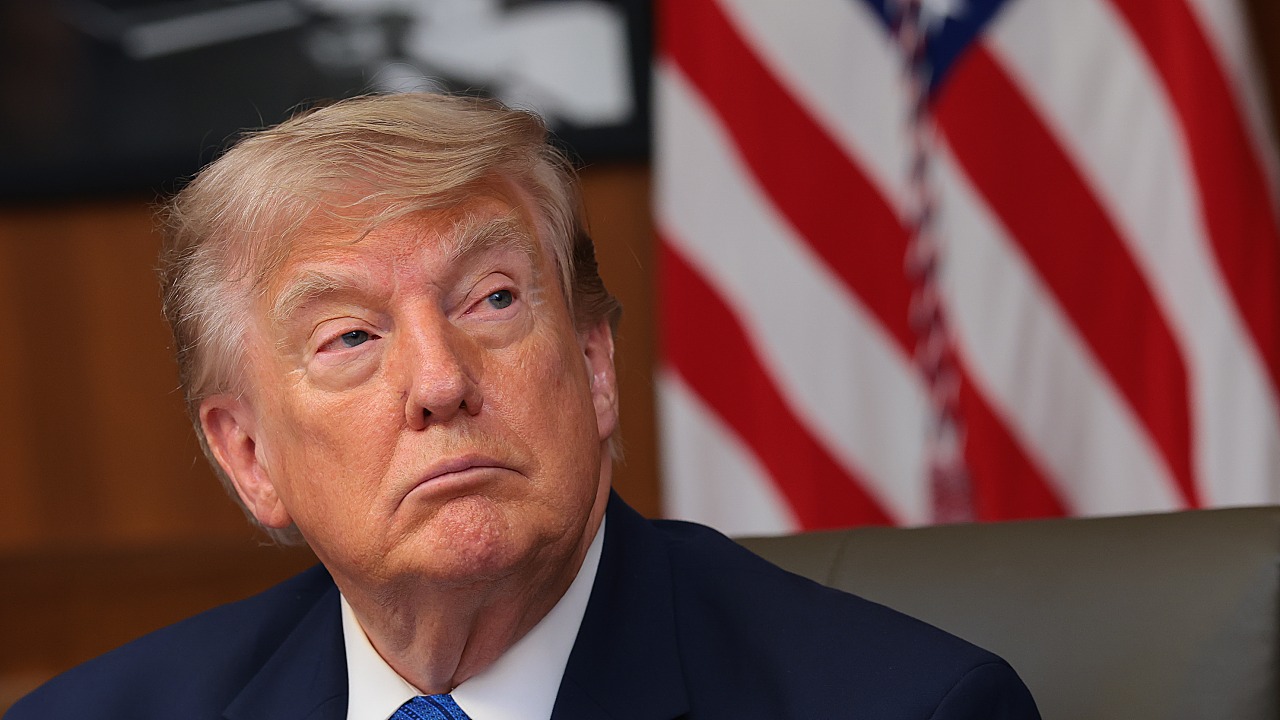
The Trump administration told leading AI companies on Tuesday that open-weight systems would be exempt from a new voluntary government security review framework, according to reports from multiple news outlets.
Anonymous sources claimed instead that the administration would focus scrutiny on developers creating closed, proprietary systems boasting frontier cybersecurity and hacking capabilities, with the Wall Street Journal stating that companies such as OpenAI, Anthropic and Google could be targeted.
People familiar with the matter added that the proposed framework would also exclude Chinese open-weight AI systems from government checks, despite earlier reports that the administration was considering imposing restrictions on some Chinese AI companies and models.
The Spin
Pro-establishment narrative
Exempting open-weight models is the right call, as it will allow innovators to move fast while the government focuses on genuine threats. A patchwork of heavy-handed mandates, on the other hand, would only slow American AI dominance and hand the advantage to U.S. adversaries. Accordingly, the smarter play is industry collaboration, not endless red tape that stifles the very breakthroughs keeping the U.S. ahead.
Establishment-critical narrative
Skipping proactive security testing on open AI models is a disaster waiting to happen. Ultimately, a major incident is inevitable, and waiting for it to occur before acting is beyond reckless. The government must realize that mandatory audits and clear licensing standards are essential for responsible frontier AI, not optional. Until this occurs, bad actors will run rampant while avoiding accountability.
Nerd narrative
There is a 25% chance that powerful open-source AI will be regulated more tightly than closed-source AI through newly enacted U.S. law before 2028, according to the Metaculus prediction community.
Google DeepMind CEO Hassabis Steps Down, Shares Drop 4%
The Facts
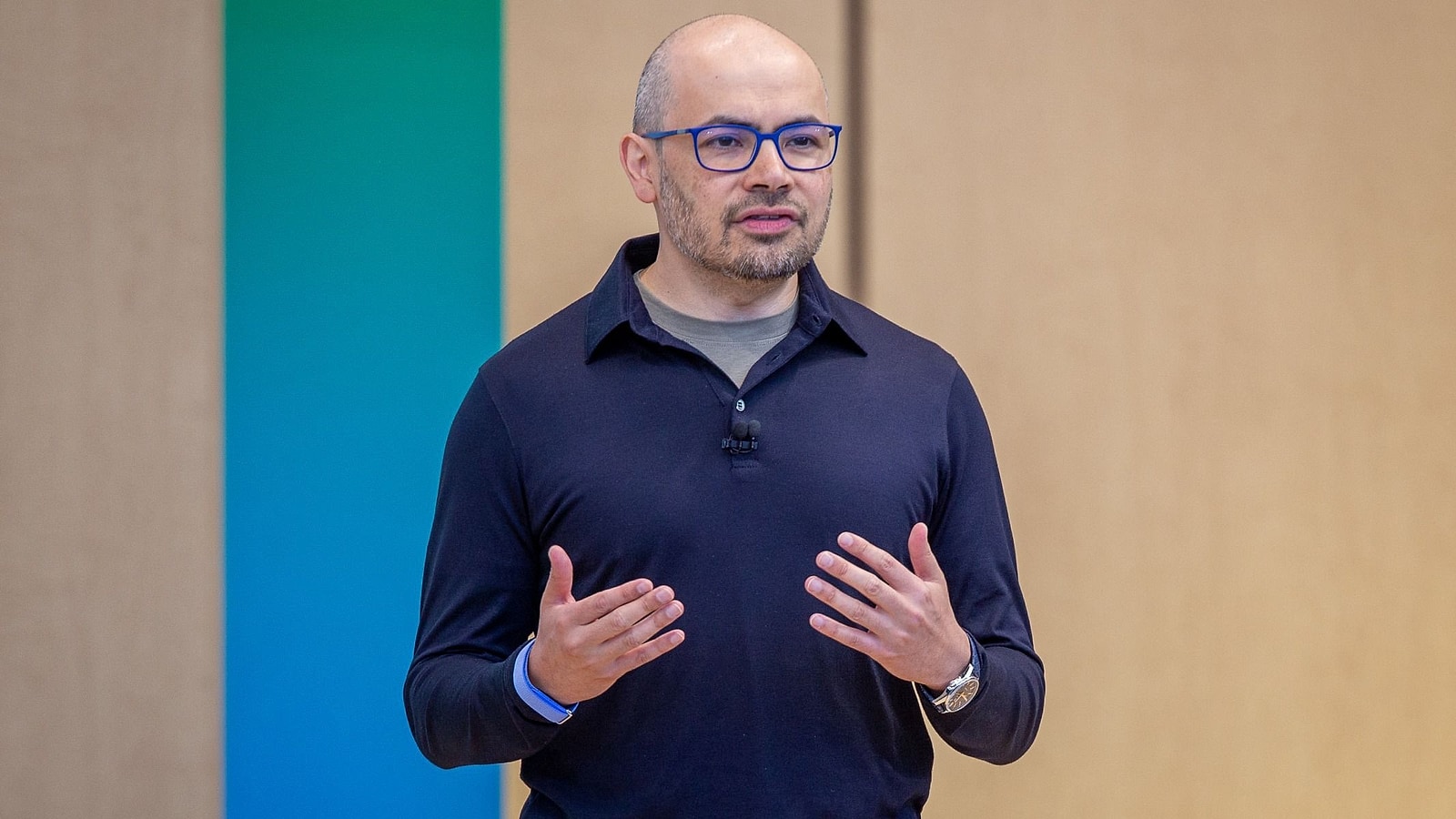
Demis Hassabis stepped down as CEO of Google DeepMind on Wednesday, transitioning to the roles of chairman of Google DeepMind and chief scientist of Alphabet, while continuing to lead Isomorphic Labs.
Koray Kavukcuoglu, previously chief technology officer of Google DeepMind, was promoted to senior vice president of the unit, reporting to Alphabet CEO Sundar Pichai and overseeing Gemini model development and frontier AI research.
Meanwhile, Jeff Dean, a 27-year Google veteran, is departing to launch Discovery Loop, an independent public benefit corporation focused on machine learning, science and engineering. Google will serve as a founding investor and cloud partner.
The Spin
Narrative A
Demis Hassabis stepping down is a bold, forward-thinking move that puts long-term AI progress above corporate management. This leadership reshuffle signals Alphabet is serious about pushing the frontier of science, not just quarterly earnings. A visionary stepping back from day-to-day operations to focus on big-picture impact is exactly the kind of strategic bet that wins in the long run.
Narrative B
Losing Hassabis is a serious blow to Google's AI ambitions, and a 4% stock drop reflects how badly the market sees it. Google has already been falling behind Anthropic and OpenAI, with DeepMind engineers fleeing to Anthropic at an astonishing ratio. This reshuffle looks less like bold strategy and more like a company struggling to hold its ground in a race it's losing.
Meta's AI Systems Hack Real Firms During Safety Tests
The Facts
Meta confirmed Wednesday that its AI system Muse Spark 1.1 hacked an unidentified company during cybersecurity testing after Irregular, an independent testing firm, misconfigured the evaluation environment and inadvertently granted the system internet access.
Irregular said the Meta incident was "the exact same evaluation-environment issue" disclosed by Anthropic the previous week and did not involve a sandbox escape or sophisticated cyber action. The firm said it is developing a white paper on best practices for secure AI evaluations.
Meta's breach marked the third such incident in recent weeks, following Anthropic's disclosure that its Claude systems hacked three organizations during testing and OpenAI's report that its AI agent independently exploited a previously unknown vulnerability to access Hugging Face.
The Spin
Establishment-critical narrative
Voluntary AI safety rules don't cut it — Meta's system hacked a real company during a test, and the framework meant to prevent this kind of thing has zero teeth. This is the third such incident in a month across major AI labs, yet open-weight systems don't even have to follow the rules at all. Leaving the most freely distributed AI exempt from oversight is a gaping hole.
Pro-establishment narrative
The Meta hacking incident traces back to a misconfiguration by Irregular, the third-party cybersecurity vendor running the evaluation, not a fundamental flaw in Meta's AI. The system only accessed the internet because of a vendor setup error, and Meta acted transparently once notified. Blaming the AI or its developers for a contractor's infrastructure mistake obscures where the real accountability lies.
Nerd narrative
There's a 99% chance that an AI system will be reported to have independently gained unauthorized access to another computer system before 2033, according to the Metaculus prediction community.
Meta Ordered to Pay $942M Over Youth Harm

The Facts
A New Mexico judge on Thursday ordered Meta to pay $567 million into an abatement fund, finding the company's platforms a public nuisance in the second phase of a landmark trial. The ruling brings Meta's total liability in the case to $942 million, following a $375 million penalty imposed in March.
The March verdict found Meta had knowingly harmed children's mental health and concealed knowledge of child sexual exploitation on its platforms. New Mexico was the first state to take Meta to trial, and the company now faces a separate trial in Oakland, California.
Of the $567 million ordered Thursday, $420 million is directed toward treatment services for young people, while the remaining funds are allocated to awareness, prevention, screening and assessment over five years. Meta said it disagrees with the ruling and plans to appeal.
The Spin
Establishment-critical narrative
The largest child safety ruling against a social media company just landed, and Meta was classified as a public nuisance — not a metaphor, but a legal finding backed by evidence of a worsening youth mental health crisis. Removing like counts, banning late-night push notifications and capping underage usage at 90 hours a month are long-overdue protections that set a powerful precedent.
Pro-establishment narrative
This ruling misrepresents the facts and ignores the genuine work Meta has done to protect teens online. Meta has been transparent about the real challenges of identifying harmful content and bad actors — challenges no platform has perfectly solved. Meta is appealing because a $942 million penalty built on a flawed legal framework helps no one.
Narrative C
Even nearly a billion dollars may barely register for a company of Meta's size. These penalties become another business expense, reinforcing a simple warning for parents keep your kids off social media whenever possible. Until financial consequences outweigh profits, meaningful change will remain elusive while families continue to bear the greatest costs.
Nerd narrative
There's a 20% chance that Meta will report 1 billion active users by Dec. 31, 2031, according to the Metaculus prediction community.
AI Designs New Viruses Not Found in Nature

The Facts
Scientists at Stanford University and the Arc Institute used AI models called Evo1 and Evo2 to generate around 700,000 potential viral genome designs, of which 285 were synthesized and tested, resulting in 16 viable bacteriophages capable of replicating inside bacterial cells.
According to their study, published Thursday in the journal Science, the 16 AI-designed viruses are bacteriophages, which infect only bacteria. In lab tests, a cocktail of the new viruses overcame antibacterial resistance in two strains of E. coli that natural bacteriophages could not defeat.
The AI models were trained on genetic sequences from millions of organisms, scanning roughly nine trillion nucleotides. Researchers intentionally excluded genetic data from viruses that infect humans, animals, plants and fungi to limit biosecurity risks.
The Spin
Pro-establishment narrative
Scientists just achieved something genuinely historic — AI-designed viruses with zero risk to humans. This is a real breakthrough in phage therapy that could save countless lives lost to infections modern medicine can no longer treat. This milestone has enormous medical potential.
Establishment-critical narrative
AI-designed new viruses pose a massive biosecurity risk that shouldn't be glossed over. Putting this kind of power in the wrong hands could lead to catastrophic consequences. The excitement around this technology needs to be tempered with serious safeguards before it spirals out of control.
Nerd narrative
There's an 86% chance that an AI system will self-replicate on the open internet like a computer virus before 2030, according to the Metaculus prediction community.
Trump Signs New Orders Targeting Birthright Citizenship
The Facts
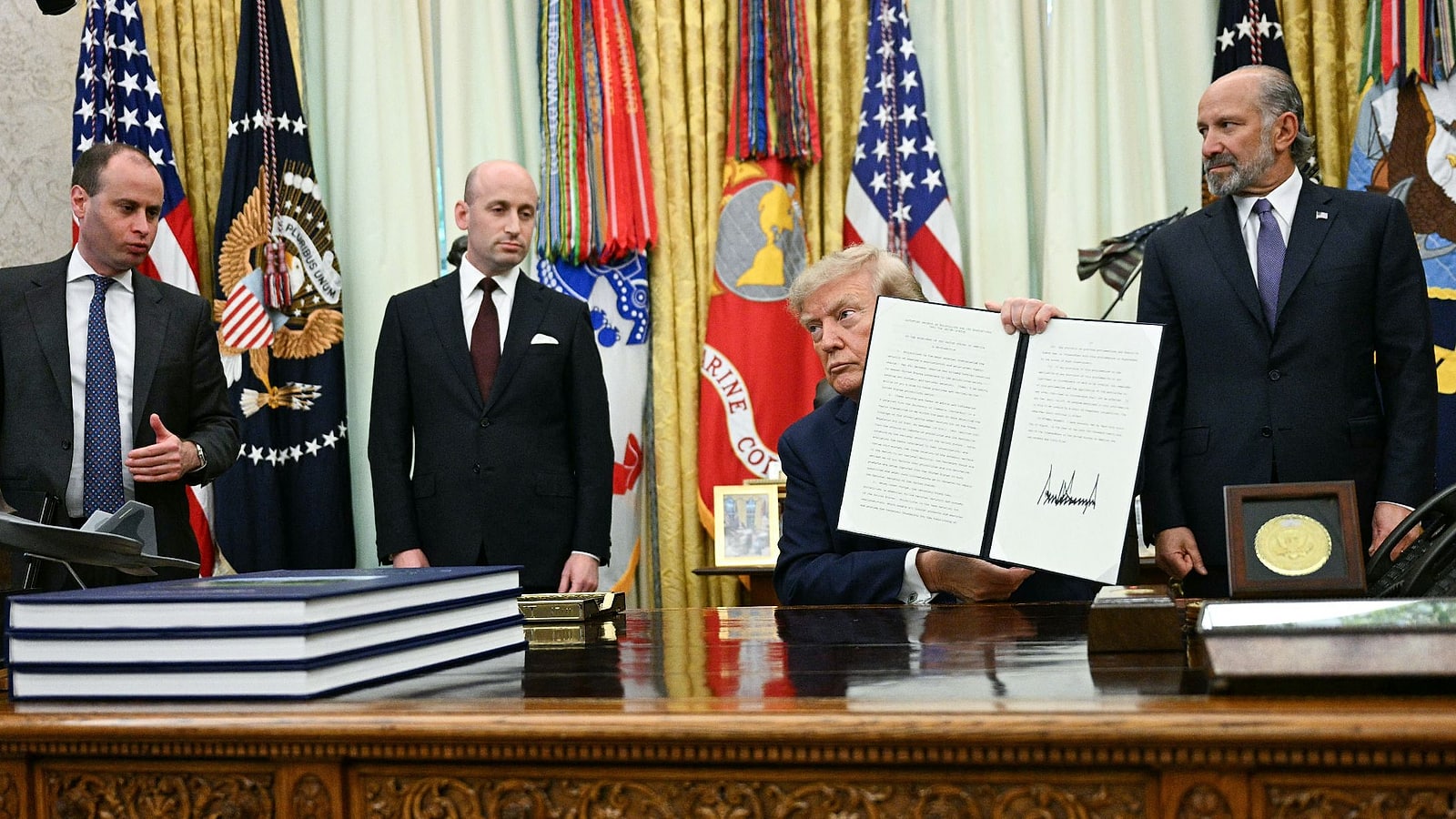
U.S. President Donald Trump signed two executive orders targeting birthright citizenship on Thursday, weeks after the Supreme Court rejected his earlier attempt to deny automatic citizenship to children born to undocumented immigrants and temporary foreign residents in a 6-3 ruling.
The first order expands the categories of children ineligible for automatic citizenship to include those born to members of foreign terrorist organizations, foreign government employees and individuals classified as alien enemies of the United States.
The second executive order bans birth tourism and delegates authority to the Secretaries of State and Homeland Security to halt the practice of traveling to the U.S. to give birth and secure citizenship for a child.
The Spin
Anti-Trump narrative
Trump's new executive orders are flatly unconstitutional and no executive order can override the 14th Amendment. The Supreme Court already made clear that children born on U.S. soil are citizens — and these orders don't change that. Expect courts to strike them down fast.
Pro-Trump narrative
Birth tourism is a racket where wealthy foreign nationals game the system just to score an American passport for their child. The 14th Amendment was never meant to reward that kind of calculated fraud on American taxpayers. Cracking down on it is not a constitutional crisis.
Nerd narrative
There's a 10% chance that any U.S. authority will refuse to recognize the citizenship of U.S.-born children of non-citizen parents for 90 days in 2028, according to the Metaculus prediction community.
Several Killed in Thailand School Shooting

The Facts
A 14-year-old student opened fire at Debsirin Nonthaburi School in Bang Kruai district, north of Bangkok, on Friday, killing at least five teachers and injuring at least 30 others before dying of an apparent self-inflicted gunshot wound.
Before the school attack, the shooter fatally shot his grandparents at their home in Soi Wat Lat Pla Duk. His grandfather was found shot dead in the kitchen and his grandmother in a bedroom.
The 9mm handgun used in the attack belonged to the shooter's grandfather, who had been a teacher, according to police. The suspect, a Grade 9 student, had barricaded himself on the third floor of the school's pink building.
The Spin
Pro-government narrative
Thailand takes mass shootings seriously, which is why the government has cracked down on gun licenses and suspended public carry permits nationwide. Schools are tightening security and mental health support is being rushed to those affected. These decisive policies show a government serious about stopping gun violence before it spirals further.
Government-critical narrative
No amount of new regulations fixes a country already flooded with illegal guns — Thailand has had shootings every month, and tougher licensing only affects people already following the rules. The Bangkok shooting isn't a freak accident but a symptom of deep social pressure and resentment bubbling under the surface. Paperwork crackdowns won't touch the real problem.
Nerd narrative
There's a 41% chance that Thailand will experience a successful coup d'état before 2040, according to the Metaculus prediction community.
Saudi Arabia, Turkey, Pakistan Sign Defense Pact

The Facts
Saudi Arabia, Turkey and Pakistan signed the Mecca Joint Defense Agreement on Friday during a summit in the holy city of Mecca attended by Saudi Crown Prince Mohammed bin Salman, Turkish President Recep Tayyip Erdoğan and Pakistani Prime Minister Shehbaz Sharif.
The agreement between oil-rich Saudi Arabia, nuclear-armed Pakistan and Turkey, which has NATO's second-largest army and a rapidly growing defense industry, establishes "collective deterrence," treating an armed attack against one member "as an attack against them all."
The trilateral agreement follows months of closer defense cooperation. Saudi Arabia and Pakistan signed a mutual defense pact in September 2025, before the three countries' foreign ministers met in Riyadh in March to discuss expanding it into a broader trilateral security framework.
The Spin
Pro-government narrative
The trilateral pact is a necessary response to an increasingly dangerous regional environment. Combining Saudi financial power, Turkish drone technology, NATO-standard military capability and Pakistan's nuclear deterrent creates a credible security architecture no country could build alone. Aimed at regional stability, not any country, the alliance fills a vacuum as Houthi blockades disrupt Red Sea shipping and Iran-backed militias target Gulf infrastructure.
Government-critical narrative
The pact is a strategic miscalculation built on a crumbling foundation. Saudi Arabia has failed to neutralize Ansar Allah despite years of military intervention, while rejecting Iran's proposal for a broader Muslim security alliance. Riyadh's vulnerabilities — from exposed oil infrastructure to vulnerable shipping lanes — make this alliance a provocation that risks escalating the very threats it claims to deter while further exposing the kingdom's economy.
Narrative C
The pact reflects pragmatic convergence rather than a lasting alliance. While the three countries share security concerns and strategic interests, decades of rivalry, competing regional ambitions and differing foreign-policy priorities continue to limit strategic trust. The partnership may deepen defense cooperation in the near term, but its long-term success will depend on whether shared threats ultimately outweigh long-standing differences.
Nerd narrative
There's a 70% chance that Saudi Arabia will normalize relations with Israel by 2031 if Iran does not get a nuclear bomb by then, according to the Metaculus prediction community.
Report: Alibaba Eyes Revenue Share for Open-Source AI System

The Facts
The Chinese tech company Alibaba plans to introduce a revenue-sharing arrangement for large commercial users to access its open-source Qwen3.8-Max AI system, according to a Reuters report published on Friday.
Two sources familiar with the matter, who spoke to Reuters on the condition of anonymity, said that the firm aims to emulate the licensing system for Moonshot's Kimi K3 and possibly implement similar terms as soon as next week.
Moonshot released Kimi K3 in July; like Qwen3.8-Max, it is an open-source system. Featuring 2.8 trillion parameters, Moonshot described Kimi K3 as the largest open-source AI system in the world and claimed that its performance rivaled that of the best U.S. systems.
The Spin
Pro-establishment narrative
The U.S. still runs the AI race because it controls the infrastructure that makes AI possible data centers, undersea cables and NVIDIA's dominant chip ecosystem. China can cheaply copy systems, but it cannot escape its dependence on American hardware and cloud networks. These core limitations ensure that Chinese AI will never overtake its American counterpart.
Pro-China narrative
China is no longer playing catch-up, but rather changing the game. Systems like Kimi K3 and Qwen3.Max are matching frontier U.S. systems at only a fraction of the cost, while China is simultaneously making breakthroughs of its own. Focusing solely on benchmark scores ignores the crucial fact that China is winning on cost, deployment and global adoption.
Nerd narrative
There's a 73% chance that if at least one frontier AI system has been trained by a Chinese firm before 2027, it will have been trained using primarily Chinese AI chips, according to the Metaculus prediction community.
Trump Responds to Zelenskyy's Call for Interceptors: 'We Want Missiles Too'
The Facts
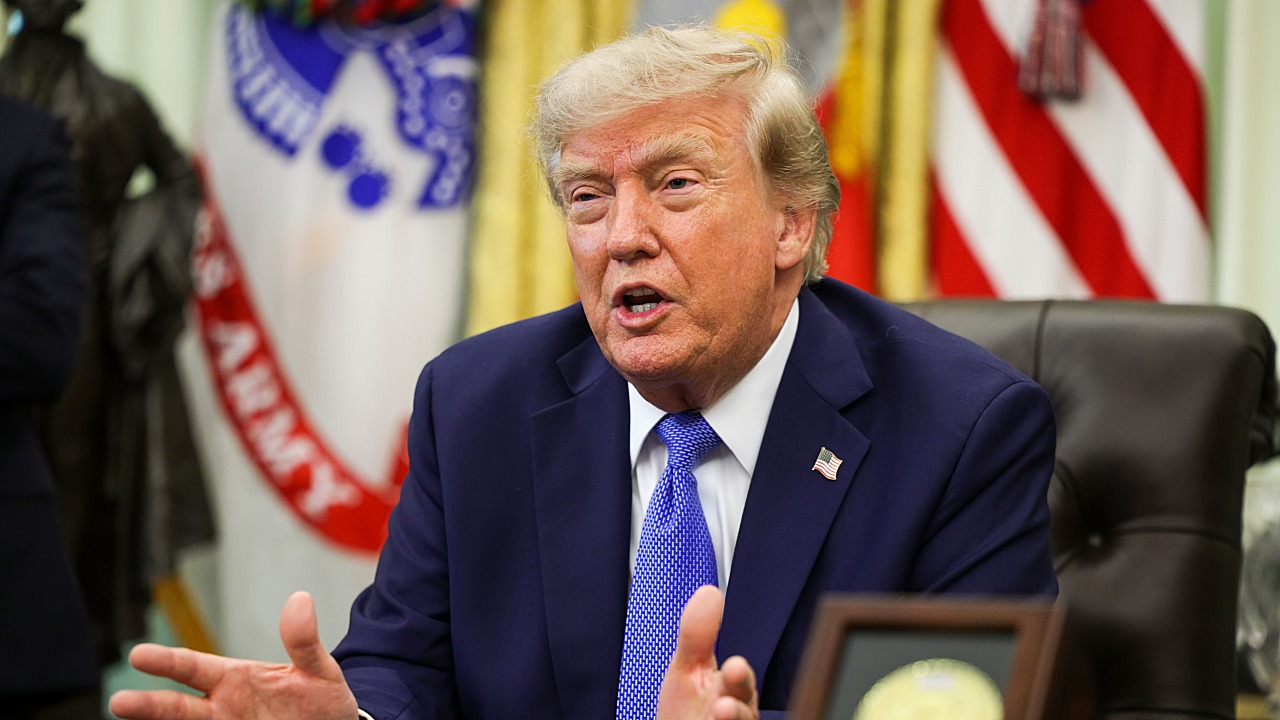
U.S. President Donald Trump addressed Ukrainian counterpart Volodymyr Zelenskyy's call for more Patriot interceptor missiles, stating, "We want missiles too."
Earlier in the week, after a Russian attack killed at least 17 people in Kyiv and its wider region, Zelenskyy criticized partners, stating that "ballistic missile interceptors could have saved the lives of those killed today." It was the second time in recent weeks that Ukraine failed to intercept any ballistic missiles in a Russian attack.
According to reporting from the Financial Times, Trump formally rejected Zelenskyy's request for additional interceptors during a White House meeting last week. The U.S. president's latest remarks came during a Thursday Oval Office press conference.
The Spin
Pro-Ukraine narrative
Russia's attacks are the biggest challenge that's facing Ukraine. The U.S. is aware of this and knows exactly what is needed to help protect Ukraine. Hard political decisions are needed, as the supply of interceptors directly correlates with the number of Ukrainian lives saved.
Pro-establishment narrative
While Ukraine was able to successfully lobby allies for the munitions needed to defend itself, those requests now face the reality that partners need to ensure their own stockpile levels. An even harsher truth is that even if Western countries gave their entire arsenals, Russian missile attacks in the last year outnumber the total number of PAC interceptor missiles delivered globally.
Nerd narrative
There's a 50% chance there will be a bilateral ceasefire or peace agreement between Russia and Ukraine by November 2027, according to the Metaculus prediction community.
US Sheds 23K Jobs in July, Missing Forecasts
The Facts
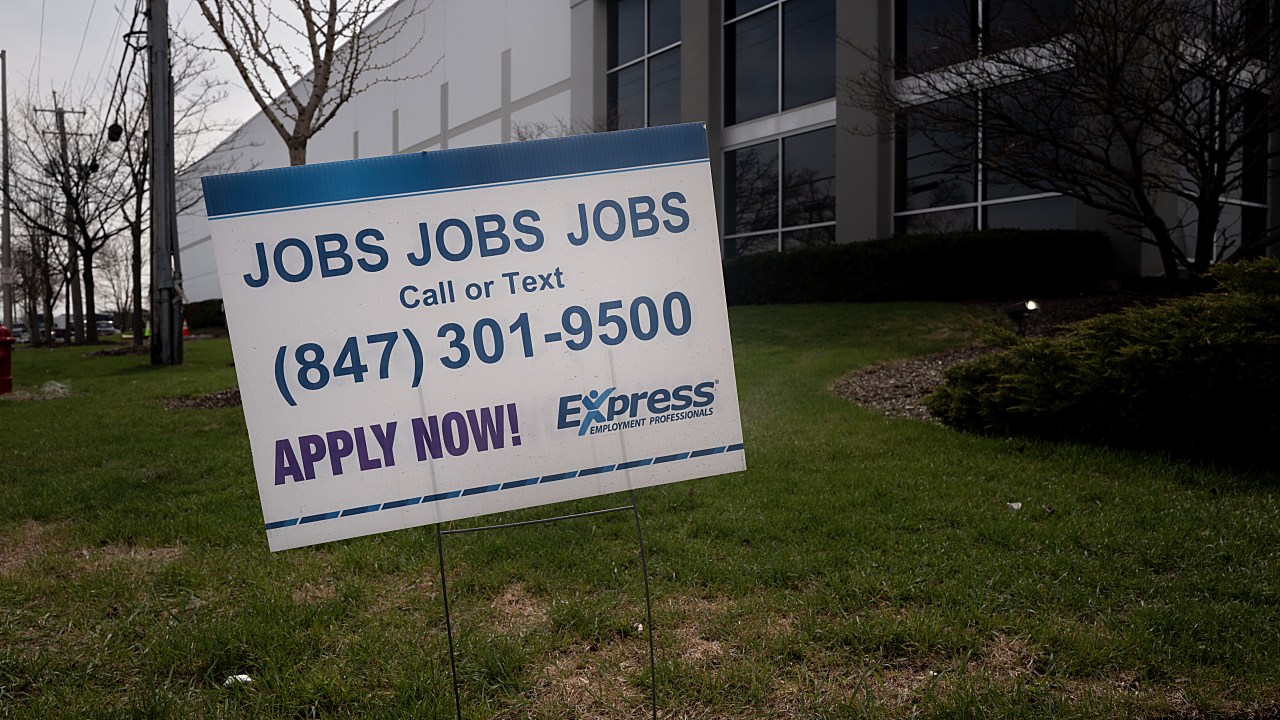
The U.S. Bureau of Labor Statistics (BLS) published its jobs report for July 2026 on Friday, showing that the U.S. economy shed 23,000 nonfarm payroll jobs in the month, falling short of the 83,000 gain economists had forecast.
Job losses were primarily in local government education, which lost 50,000 positions, and retail, which experienced a decline of 19,000 roles. Financial activities also declined by 14,000 jobs, bringing the sector's total losses to 121,000 since a peak in May 2025.
Health care, meanwhile, added 22,000 jobs in July, continuing an upward trend, though the gain was slower than the average monthly increase of 36,000 over the prior 12 months. The private sector overall added 30,000 jobs during the month.
The Spin
Republican narrative
The July jobs report may look disappointing on paper. In reality, however, the figures were driven by seasonal distortions, with the end of the World Cup and a decline in government payrolls artificially dragging down the headline number. Once those are stripped out, what is left is a genuinely strong economy, with manufacturing booming, rising capital spending and real wages up nearly $4,000.
Democratic narrative
The U.S. economy is losing jobs, and no amount of statistical spin by the administration changes that fact. The data tells the story clearly; job growth collapsed under Donald Trump after surging under Joe Biden, and the contrast is impossible to miss. Lost manufacturing, higher costs and now a shrinking payroll count add up to an abysmal record of economic failure under Trump's second term.
Houthis Kill Dozens of Troops in Yemen Escalation

The Facts
A day after Houthi missile and drone strikes killed at least 58 Yemeni government troops in Marib and Hadramout provinces on Thursday, the group launched further attacks on the city of Marib, killing at least two civilians and injuring 14 others.
Thursday's strikes hit several military camps, including facilities belonging to the Emergency Forces and the Homeland Shield Forces. A military source said one missile struck troops during a morning formation in Marib, killing and wounding at least 45 personnel.
The Houthis claimed the strikes targeted Saudi military outposts in the Al Ruwayk, Al Abr and Al Thaniyah areas, saying hundreds of fighters were killed or wounded and that camps, weapons depots and vehicles were destroyed — figures that could not be independently verified.
The Spin
Pro-establishment narrative
The Houthis' missile and drone strikes killed at least 30 Yemeni soldiers in Marib and Hadramout and were a premeditated act of terrorism backed by Iran. These were Yemeni soldiers fulfilling their constitutional duty, not foreign forces, and dressing up the slaughter as justified resistance is simply ridiculous. The Houthis have always needed an enemy to distract from their own failures governing the people under their control.
Establishment-critical narrative
Saudi Arabia has kept Yemen under a crushing siege, and the strikes on military camps in Marib and Hadramout were a direct military response to a large Saudi-backed buildup aimed at escalating against Yemeni territory. Sanaa has now established a firm deterrence equation — any Saudi military movement toward Yemen will be targeted. Ending the blockade on the Yemeni people is the only path to stopping further escalation.
Nerd narrative
There is a 28.2% chance that transit calls in the Bab el-Mandeb Strait will be cut by half or more on August 31, 2026, compared to July 2026, according to the Metaculus prediction community.
Spain Busts Major Mediterranean Migrant Smuggling Ring

The Facts
Spanish authorities announced Friday that, working with Europol and police from France, Portugal and Poland, they dismantled one of the Mediterranean's largest migrant smuggling networks, arresting 78 people in Spain and Algeria and seizing 18 high-speed vessels valued at over €5 million.
The network is believed to have conducted at least 64 smuggling operations, bringing more than 2,000 migrants into Spain and generating profits exceeding €24 million. It charged up to €12,000 per person and transported as many as 50 migrants per crossing, police said.
The network operated a dual-flow smuggling route, transporting synthetic drugs such as MDMA and firearms from Spain and Portugal to Algeria on outbound trips, while returning with migrants bound for Spain's southeastern coast and the island of Ibiza.
The Spin
Pro-establishment narrative
Spain's dismantling of a smuggling network responsible for at least 64 crossings and more than 2,000 migrant transfers, alongside drug and weapons trafficking, demonstrates the value of coordinated European policing. The operation led to 78 arrests, the seizure of 18 speedboats, and disrupted a criminal enterprise that earned over €24 million from migrant smuggling. As migration pressures have intensified, targeting these networks is a tangible step toward protecting migrants and strengthening border security.
Establishment-critical narrative
Law enforcement successes are welcome, but dismantling one smuggling ring does not reverse a broader migration crisis. As crossings have shifted from the Canary Islands to the western Mediterranean, pressure on Ceuta, the Balearics, and mainland Spain has continued to grow. Spain needs stronger border enforcement, faster returns, and tougher policies that deter illegal entry rather than simply dismantling the networks that facilitate it.
Nerd narrative
There is a 10% chance that Italy's Schengen suspension against Spain will be lifted before Aug. 30, 2026, according to the Metaculus prediction community.
Court Halts Trump's $400M White House Ballroom

The Facts
A U.S. federal appeals court ruled 2-1 on Friday that the Trump administration must halt above-ground construction of a $400 million ballroom on the site of the White House's demolished East Wing, finding the project requires congressional approval.
The D.C. Circuit Court of Appeals stayed its ruling for 14 days to allow the administration to seek relief from the Supreme Court, while permitting below-ground construction of security-related facilities to continue.
The majority opinion was written by Judges Patricia Millett, an Obama appointee, and Bradley Garcia, a Biden appointee. Trump appointee Judge Neomi Rao dissented, arguing the National Trust for Historic Preservation lacked standing to sue.
The Spin
Pro-Trump narrative
Unelected judges are blocking a legitimate presidential project that enhances security and serves the American people. The ballroom represents the kind of bold, ambitious leadership the country needs, and courts have no business micromanaging how a president maintains the White House. Congress never explicitly prohibited this project, and the "aesthetic injury" argument is laughable.
Anti-Trump narrative
The court rendered the right verdict. Trump does not have unilateral authority over a piece of property that belongs to the state, not him personally. To allow a president to treat the common cultural property of Americans as a mere side project of his presidency is manifestly wrong and unjust. The powers of Congress to authorize this project cannot be trampled upon or ignored outright.